
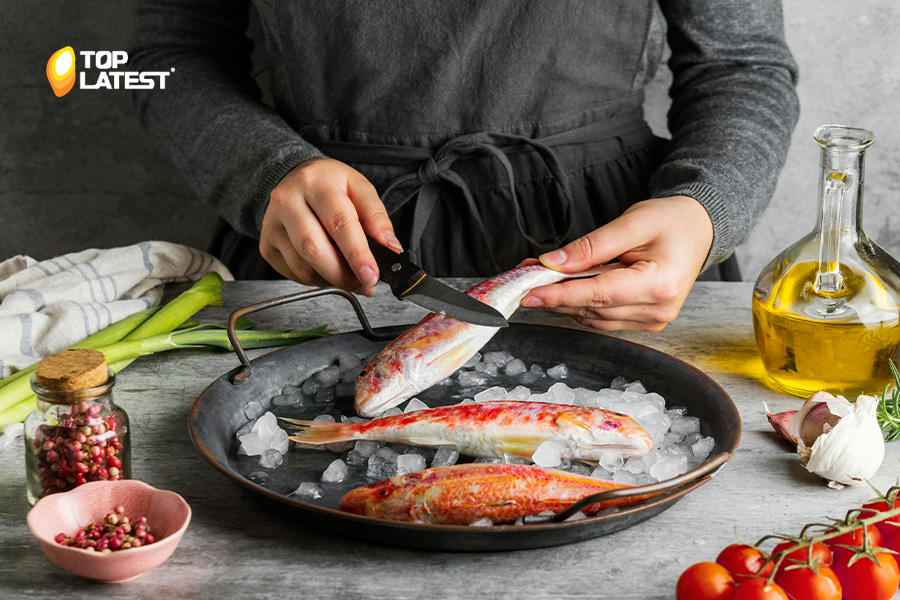
Fresh fish was feeding families on this coastline long before the first tower went up. Today, buying local seafood in Dubai still means early starts, ice-packed counters, and traders calling out the day’s catch in Arabic, Malayalam, and English. For residents who cook at home, it is also one of the most rewarding food experiences the city offers.
This guide brings together the practical side of the topic in one place: where to buy fish in Dubai, how to read a market counter with confidence, which local species are the most sustainable choices, and how to cook them in a way that suits a UAE kitchen. Whether you have just moved into a Deira apartment or have been cooking here for a decade, you will come away with a clearer plan for your next market visit.
Why Local Seafood Deserves a Place in Your UAE Kitchen
Local fish travels a short distance from dhow to counter, often landing the same morning it is sold. That freshness shows up on the plate in firmer texture and cleaner flavour, and buying whole fish at a market usually works out better value than pre-packed fillets.
There is also a strong sustainability story behind it. Over the past few years, UAE regulators have introduced gear restrictions, minimum size limits, and seasonal closures to help fish stocks rebuild. The results have been significant. The Environment Agency Abu Dhabi reported that its Sustainable Fisheries Index climbed from 8.9 per cent in 2018 to 97.4 per cent by the end of 2024, a sign that most of the commercial catch in the emirate’s waters is now harvested within sustainable limits.
For home cooks, this means local seafood is an opportunity rather than a dilemma. When you understand which species to favour and when, every market trip supports a fishery that is recovering well.
Dubai Fish Markets Worth Knowing
Dubai has one flagship market and several smaller harbour markets. Each suits a different kind of shopper.
Waterfront Market, Deira
The Waterfront Market on the Deira Corniche is the city’s best known destination for seafood. It opened in 2017 as the successor to the historic Deira Fish Market, which traded from 1958, and it carries that heritage into a modern, air-conditioned building.
The fish hall is the heart of the market. Counters are stocked with local favourites such as jesh, faskar, and kanaad alongside prawns, crabs, squid, and imported varieties. The fish section operates around the clock, with short daily closures for deep cleaning, including a midday break on Fridays. Timings can shift during Ramadan, so it is worth checking the market’s official channels before a special trip.
Two features make the Waterfront Market especially practical. A dedicated cleaning and cutting section prepares your fish for a small fee, scaling, gutting, filleting, or cutting into steaks as you prefer. Meat, fruit, vegetable, and spice sections sit under the same roof, so you can shop for an entire meal in one visit. Early morning is the most rewarding time to go, when the overnight catch is on display and the aisles are calmer.
Jumeirah and Umm Suqeim Fishing Harbour Markets
For residents in Jumeirah, Umm Suqeim, Al Safa, and Al Barsha, the fishing harbour markets along the coast offer a closer alternative. The market at Umm Suqeim fishing harbour, run by Dubai Municipality, is compact, clean, and organised, with a separate cutting area that keeps the main hall fresh.
The range is smaller than in Deira, but the atmosphere is part of the appeal. You can watch boats come in, pick your fish, and have it cleaned within minutes. Seafood restaurants along the harbour make it easy to turn the trip into a relaxed weekend lunch.
Fish Markets Across the Wider UAE
If you live outside Dubai, you have strong options too. Abu Dhabi’s Mina Zayed fish market is one of the busiest in the country, with its own cleaning service and nearby restaurants that grill fish to order. Sharjah and Ajman also have well-established markets close to their ports, popular with families who shop in bulk for the week.
How to Read a Fish Counter Like a Regular
A confident market visit comes down to a few simple checks. Experienced shoppers look for these signs before buying:
- Clear, bright eyes that sit full rather than sunken.
- Gills that are red or deep pink, not brown or grey.
- Firm flesh that springs back when pressed lightly.
- A clean, briny sea smell rather than a strong fishy odour.
- Shiny, intact skin with scales that hold firmly.
Buying whole fish lets you check every one of these points. It also gives you the head and bones for stock, which adds depth to soups and rice dishes.
Bring an insulated cool bag with ice packs, particularly between April and October, when outdoor temperatures climb quickly. Ask the trader which fish arrived that morning. Most are happy to point you to the freshest catch and suggest how to cook it.
A Practical Guide to Sustainable Seafood Choices in the UAE
Sustainable seafood choices in the UAE come down to three habits: favouring abundant local species, following the seasonal calendar, and rotating what you buy.
Local Species That Are Easier on Fish Stocks
The Choose Wisely consumer guide from Emirates Nature-WWF groups local species by stock health. Several well-loved fish have long appeared among its recommended options:
- Jesh um al hala (orange-spotted trevally): meaty, mild, and excellent grilled or in curries.
- Faskar (two-bar seabream): delicate white flesh, ideal for pan-frying whole.
- Yanam (sordid sweetlips): affordable and flavourful, a traditional choice for Emirati home cooking.
- Anfooz (yellow-bar angelfish): firm texture that holds up well in stews.
- Dhil’e (talang queenfish): a versatile fish that works well in spiced marinades.
Stock assessments are updated regularly, so species can move between categories over time. Asking your trader for the season’s most plentiful local catch is a simple way to stay current.
Understanding the Seasonal Calendar
Two of the UAE’s most popular fish, safi (rabbitfish) and sheri (spangled emperor), are protected during their breeding season. Under Ministerial Decision No. 501 of 2015, fishing and trading of both species, local or imported, pauses from 1 March to 30 April each year, as Khaleej Times reporting on the Ministry of Climate Change and Environment’s ban explains. Shark fishing and trade are also restricted during a seasonal window that runs from March to the end of June.
These pauses are a positive part of the system. They give breeding stocks time to rebuild, and when safi and sheri return to counters in May, they are often in excellent condition. Planning your menus around this calendar adds variety and keeps your cooking in step with the sea.
Where Hamour Fits In
Hamour is the UAE’s signature fish, and it remains a favourite on menus and dining tables. It has also historically been one of the most heavily fished species in local waters, which is why it has been a focus of recovery efforts. Encouragingly, regulators have recorded healthier hamour indicators in recent years, including larger fish appearing in Abu Dhabi’s catch.
A balanced approach works well here. Enjoy hamour as an occasional treat, consider UAE-farmed hamour, and rotate in the species listed above for everyday meals. You will discover new flavours while supporting the recovery that is already underway.
UAE-Farmed Fish as a Growing Option
Aquaculture is an exciting part of the UAE’s food security story. Because the climate makes outdoor ponds impractical, local farms rely mainly on recirculating systems that control water quality and temperature. Research by United Arab Emirates University and James Cook University found that most seafood consumed in the country is imported, while blind tasting panels rated farmed barramundi, sold locally as Asian seabass, highly for taste and texture. Locally farmed barramundi and hamour are increasingly available in supermarkets and are a reliable, traceable choice.
Cooking Local Fish the UAE Way
Emirati seafood cooking is built on warm spices, dried lime, and slow-cooked rice. These three dishes suit sustainable local species beautifully.
Samak Mashwi: Grilled Whole Fish
Score a cleaned faskar or jesh um al hala on both sides. Rub it with a paste of garlic, cumin, turmeric, red chilli, lime juice, and a little oil, and let it rest for 30 minutes. Grill over high heat or roast in a hot oven until the flesh flakes at the thickest point. Serve with flatbread, a tomato and cucumber salad, and lime wedges.
Saloona Samak: Fish Stew
Saloona is the everyday stew of Emirati homes. Fry onions until golden, add garlic, tomato, and a spoon of bezar, the local spice blend, then add water and a dried lime. Simmer chunks of potato and courgette until tender, then add pieces of anfooz or yanam for the final eight to ten minutes. Firm-fleshed fish hold their shape and soak up the sauce.
Machboos Samak: Spiced Fish and Rice
Machboos is a celebratory one-pot dish. Lightly fry seasoned fish pieces and set them aside. Build a base of onions, tomatoes, bezar, and dried lime, add rinsed basmati rice and fish stock made from the heads and bones, and cook until the rice is almost done. Lay the fish on top, cover, and steam gently. It makes a generous centrepiece if you are planning to host a majlis style dinner party in your Dubai apartment.
Making Fish Market Trips Part of Your Routine
The easiest way to cook more local seafood is to build the market into your week. A Saturday morning trip to Deira pairs naturally with breakfast by the creek and a walk through the heritage quarter. This local’s guide to Old Dubai, Bur Dubai, and Deira is a helpful companion for planning the rest of the morning.
Once home, refrigerate fish immediately on the coldest shelf and cook it within one to two days. For longer storage, portion and freeze it in airtight bags, labelled with the species and date. Keep heads and bones in the freezer for stock.
Local seafood also fits neatly into a wider approach to eating well and seasonally. Pairing your fish with vegetables from the city’s produce markets is covered in our guide to sourcing organic produce and farmers markets in Dubai and Abu Dhabi. If you are looking to extend these habits beyond the kitchen, these practical habits for sustainable living in the UAE offer simple, everyday ideas.
Bringing It All Together
Cooking with local UAE seafood rewards you with fresher meals, better value, and a genuine connection to the country’s maritime heritage. Start with the Waterfront Market or your nearest harbour market, check the counter with a confident eye, favour abundant local species, and plan around the seasonal calendar. Each choice supports a fishery that has made remarkable progress in a short time.
For more ideas on cooking, entertaining, and living well in the Emirates, explore the Food and Recipes section on toplatest.ae.
Top 5 Sources
- Environment Agency Abu Dhabi, Sustainable Fisheries Index results and The State of Abu Dhabi Fisheries and Aquaculture 2023
- Ministry of Climate Change and Environment, Ministerial Decision No. 501 of 2015 on safi and sheri and Ministerial Resolution No. 43 of 2019 on shark fishing and trade
- Emirates Nature-WWF, Choose Wisely sustainable seafood consumer guide
- United Arab Emirates University and James Cook University, Consumer Preferences for Seafood Inform Aquaculture Development in the United Arab Emirates, published in Aquaculture
- Waterfront Market Dubai, official market history, operating hours, and visitor services
Frequently Asked Questions
The Waterfront Market on the Deira Corniche is Dubai’s largest and most popular destination for fresh fish. It replaced the historic Deira Fish Market in 2017 and offers local and imported seafood, a cleaning and cutting service, and meat and produce sections under one roof. Residents in Jumeirah and Umm Suqeim often prefer the smaller Dubai Municipality fishing harbour markets nearby, which are clean, convenient, and well suited to quick weekly shopping trips.
Local species that Emirates Nature-WWF’s Choose Wisely guide has recommended include jesh um al hala (orange-spotted trevally), faskar (two-bar seabream), yanam (sordid sweetlips), and anfooz (yellow-bar angelfish). These fish are flavourful, affordable, and widely available at Dubai fish markets. UAE-farmed barramundi and hamour are also reliable choices. Stock assessments are updated regularly, so asking your trader which local catch is most plentiful that week helps keep your choices current and sustainable.
Safi (rabbitfish) and sheri (spangled emperor) are not sold in UAE markets from 1 March to 30 April each year. The Ministry of Climate Change and Environment introduced this seasonal pause under Ministerial Decision No. 501 of 2015 to protect both species during their breeding season. The rule covers fishing and trade of local and imported fish. Both species return to counters in May, often in excellent condition and at good prices.
Yes. The Waterfront Market in Deira has a dedicated cleaning and cutting section where staff scale, gut, fillet, or cut your fish into steaks for a small fee. You hand over your purchase, receive a token, and collect it when it is ready. Prawns, crabs, and squid can be cleaned too. Waiting times are usually shortest in the early morning, which is also when the freshest overnight catch is on display.
Fresh fish has clear, bright, full eyes, red or deep pink gills, and firm flesh that springs back when pressed. It should smell clean and briny rather than strongly fishy, with shiny skin and scales that hold firmly. Buying whole fish makes these checks easy. Carry an insulated bag with ice packs, especially during the warmer months, and refrigerate your fish on the coldest shelf as soon as you reach home.