
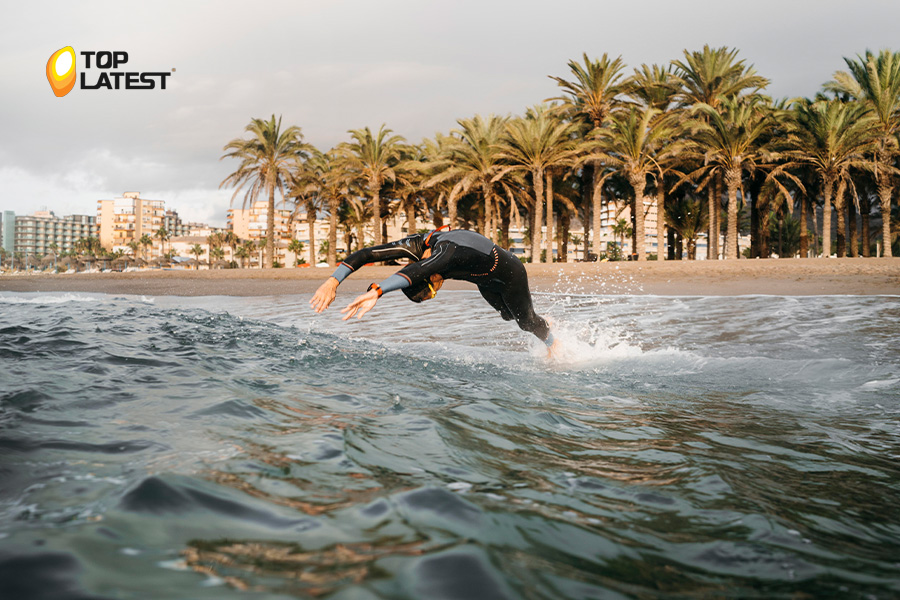
There is a particular kind of calm that comes from swimming past the shoreline at Kite Beach as the sun lifts over the city. The water is warm, the horizon is wide, and the only sound is your own breathing. For many residents, that first sea swim is the moment a pool habit turns into a lasting outdoor routine.
Open water swimming in Dubai is easier to start than most beginners expect. The coastline is long and gently shelving, public beaches are staffed by trained lifeguards, and a friendly community of swimmers, triathletes, and coaches meets on the sand most weekends between autumn and spring. What helps is knowing where to swim, when conditions suit beginners, and how to build skills step by step.
This guide brings that knowledge together. You will find the beaches most popular with sea swimmers, the groups that welcome newcomers, a simple progression from pool to sea, and the habits that make every swim feel safe and enjoyable.
Why Dubai Suits Beginner Open Water Swimmers
Dubai offers a combination few coastal cities can match: warm, generally calm water, a long public coastline, and beaches designed around supervised swimming. Most public beaches mark swimming zones with buoys, and lifeguards patrol these areas during set hours. For a beginner, that structure removes much of the uncertainty of the first few sessions.
Interest in sea swimming is clearly growing. Dubai Municipality introduced lit night swimming beaches in 2023, and according to Gulf News reporting on Dubai’s night swimming beaches, visitor numbers climbed from around one million in 2024 to nearly two million in 2025, with plans to extend the concept to more public beaches. That growth reflects how naturally the sea fits the rhythm of life in the emirate. People swim before work, after sunset in the warmer months, and in long, social sessions on cool winter weekends.
The community side matters just as much. Triathlon clubs, masters swimmers, coached programmes, and rescue trained volunteers all use the same stretches of coast. Once you show up a few times, you start to recognise faces, and the sea quickly stops feeling like unfamiliar territory.
When to Swim: Seasons, Times, and Sea Conditions
The Prime Season Runs From October to April
The cooler months are the most comfortable window for open water swimming in Dubai. Sea temperatures settle into the low to mid twenties Celsius in winter, which suits longer sessions without a wetsuit for most swimmers. This is also when clubs run their busiest calendars and community events return to the beaches. For many swimmers, the arrival of the Dubai Fitness Challenge each autumn signals that the season is properly under way.
Summer Swimming Works Best Early or After Dark
From June to September, the Arabian Gulf becomes very warm and air temperatures regularly pass 40°C. Swimmers who keep going through summer usually shift to sunrise sessions or to the designated night swimming beaches, and keep each session shorter. Hydration becomes part of the plan rather than an afterthought, and our practical guide to staying hydrated during a Dubai summer covers simple routines that work well around early training.
Check the Sea Before You Get In
Conditions change with the wind. Mornings are usually the calmest part of the day, while afternoon breezes can bring chop. The National Centre of Meteorology issues alerts when the sea is rough in the Arabian Gulf, and on those days the guidance is to stay out of the water. On the beach itself, Dubai Municipality uses flag poles and signage to show whether swimming is open. A red flag means the water is closed to swimmers, so it is always worth checking before you walk in.
The Best Beaches for Open Water Swimming in Dubai
The beaches below are listed in order of popularity with sea swimmers, starting with the stretch most of the community treats as home base.
Kite Beach, Umm Suqeim
Kite Beach is the heart of Dubai’s open water scene. Its long, gently sloping shoreline, lifeguard cover, showers, changing rooms, and running track make it a natural meeting point for swim groups and triathletes. Coached beginner sessions run here on weekend mornings, and international open water events such as Oceanman have used the beach as a venue. For a first sea swim, the combination of supervision and company is hard to beat.
The Night Swimming Beaches at Jumeirah 2, Jumeirah 3, and Umm Suqeim 1
These three stretches let you swim after sunset under floodlights. As set out in Dubai Municipality’s announcement of its night swimming beaches, each beach covers 800 metres and is equipped with lighting systems, electronic safety screens, and qualified lifeguards. Swimming runs from sunset to sunrise within the designated zones. They are especially useful in summer, when evening water feels far more comfortable than the midday sun.
Jumeirah Beach Residence (JBR) Open Beach
JBR attracts swimmers who enjoy a lively setting and a long, straight shoreline for steady swims parallel to the sand. Early morning sessions, before the beach fills up, tend to be the most relaxed. Staying within the marked swimming areas matters here, since boats and watersports operate along this part of the coast.
Al Mamzar Beach Park
On the Deira side, Al Mamzar offers sheltered, calmer water across a series of small bays, which many beginners find reassuring. It is also an area of active investment, with Dubai Municipality planning round the clock swimming at parts of Al Mamzar Creek Beach as part of its wider beach development programme.
Swim Groups and Coached Sessions for Newcomers
Joining a group is the most effective way to build open water confidence in Dubai. You learn faster, you swim alongside people who know the local conditions, and you always have company in the water. These are the main types of groups, starting with the most widely attended.
- Triathlon communities. TriDubai, founded in 2012, is one of the city’s best known and has historically been free to join. Members swim in the sea on weekend mornings along the Jumeirah coastline, and sessions are announced through the group’s social channels, so checking the latest schedule before you go is a good habit.
- Coached beginner programmes. Several swim schools run small group open water courses at Kite Beach, typically on Saturday and Sunday mornings. Sessions focus on sighting, breathing in waves, and the shift from pool to sea, with coaches keeping groups small.
- Masters swimming clubs. Clubs such as Dubai Masters Swimming offer structured, fitness focused training, and many members combine pool sets with open water sessions in the cooler months.
- Rescue led communities. Pirates Surf Rescue UAE, a Dubai based group of open water, diving, and marine rescue professionals active since 2010, has partnered with Dubai International Marine Club on community swims, including an 18 hour challenge around The World Islands.
Community events add motivation too. Mass participation swims during the Dubai Fitness Challenge offer short, timed distances, giving beginners a friendly first goal to train towards.
A Beginner’s Progression From Pool to Sea
Open water feels different from the pool. There is no line on the floor, no wall every 25 metres, and the water moves. A gradual progression turns those differences into skills.
- Build pool readiness. Aim to swim 400 to 800 metres of continuous front crawl comfortably before your first sea session, and practise breathing to both sides.
- Practise sighting. Every six to eight strokes, lift your eyes just above the surface to spot a buoy or landmark, then return to your normal stroke.
- Start parallel to the shore. Early sessions work best inside the buoyed zone, swimming along the beach in standing depth, so you can pause at any point.
- Add distance gradually. Build from 10 or 15 minutes towards 30 minutes over several weeks, swimming two or three times a week across pool and sea.
- Join a group swim. Once short sessions feel relaxed, a coached or club swim introduces longer distances with experienced company.
Many beginners notice that their first sea swims feel more tiring than the same distance in the pool. That is completely normal. Waves, sighting, and a little adrenaline all use extra energy, and comfort usually improves within a few sessions.
Safe Practice Habits That Build Confidence
The swimmers who enjoy the sea most in Dubai tend to share a few consistent habits.
- Swim in designated zones during lifeguard hours. On standard public beaches, swimming is allowed in the marked areas while lifeguards are on duty. After dark, use only the official night swimming beaches.
- Wear a bright cap and use a tow float. Both make you easy to spot for lifeguards, boats, and fellow swimmers, and a tow float gives you something to rest on.
- Swim with a buddy or a group. Company is the simplest safety measure and makes every session more enjoyable.
- Follow lifeguard instructions and flags. Lifeguards know the day’s currents, and their guidance always takes priority.
- Keep jellyfish season in mind. The Environment Agency Abu Dhabi notes that jellyfish colonies tend to appear as UAE waters warm in summer and fade as temperatures fall. Most stings cause only mild irritation, and lifeguard stations can help if you are stung.
- Protect your skin and stay hydrated. Reef friendly sunscreen, a long sleeved swim top for longer sessions, and water before and after every swim keep recovery simple.
A Simple Open Water Kit
A beginner’s kit is modest: a comfortable swimsuit, tinted goggles for bright mornings, a brightly coloured cap, a tow float, sunscreen, a towel, and a refillable water bottle. Wetsuits are rarely needed in Dubai’s warm water, which keeps the cost of starting low.
Making Sea Swimming Part of Your Dubai Lifestyle
Open water swimming fits naturally into life in Dubai, especially for residents who live near the coast. Communities along Jumeirah, Umm Suqeim, and Dubai Marina put a beach within a short walk or drive, which makes a 7am swim realistic even on a working day. If you are weighing where to live with an outdoor routine in mind, our guide to family friendly communities in Dubai and Abu Dhabi looks at how location shapes daily life.
For many residents, the Saturday sea swim becomes the anchor of the week, followed by coffee on the sand with fellow swimmers. That kind of routine features in our look at the weekend rituals of successful Dubai residents, where time outdoors is a recurring theme.
Your First Sea Swim Is Closer Than You Think
Dubai makes open water swimming unusually accessible. Lifeguarded beaches, a long cool season, lit night beaches, and a welcoming community mean the main step is simply to begin. Start in the buoyed zone at Kite Beach or one of the night swimming beaches, practise your sighting, and join a group swim once short sessions feel easy. Within a single season, the sea can become one of the most rewarding parts of your week.
For more practical guides to health, fitness, and everyday life across the UAE, explore more on toplatest.ae.
Top 5 Sources
- Dubai Municipality, announcement of night swimming beaches at Jumeirah 2, Jumeirah 3, and Umm Suqeim 1, and night beach visitor and expansion updates
- National Centre of Meteorology, UAE sea state forecasts and rough sea alerts for the Arabian Gulf
- Environment Agency Abu Dhabi, jellyfish advisory for UAE coastal waters
- Dubai International Marine Club, open water swimming challenges with Pirates Surf Rescue UAE
- Dubai Department of Economy and Tourism (Visit Dubai), Kite Beach facilities and Oceanman open water event listing
Frequently Asked Questions
Kite Beach in Umm Suqeim is the most popular starting point for beginners in Dubai. It has lifeguards, buoyed swimming zones, showers, and a regular community of swim groups and coaches on weekend mornings. Other good options include the lit night swimming beaches at Jumeirah 2, Jumeirah 3, and Umm Suqeim 1, the long JBR Open Beach, and the calmer, sheltered bays of Al Mamzar Beach Park on the Deira side of the city.
Sea swimming in Dubai is well supported when you follow local guidance. Public beaches have marked swimming zones and trained lifeguards on duty during set hours, and Dubai Municipality uses flags and signage to show when the water is open. Swimming inside the buoys, checking National Centre of Meteorology sea alerts, wearing a bright cap with a tow float, and swimming with a partner or group are the habits that keep each session relaxed and enjoyable.
Yes, at designated beaches. Dubai Municipality operates night swimming beaches at Jumeirah 2, Jumeirah 3, and Umm Suqeim 1, where swimming is permitted from sunset to sunrise. Each stretch covers 800 metres and has floodlights, electronic safety screens, and qualified lifeguards. Night swimming outside these designated zones is not permitted, so after dark it is best to use only the official night beaches. They are especially popular during the hot summer months.
October to April is the prime season for open water swimming in Dubai. Sea temperatures settle into the low to mid twenties Celsius during winter, which suits longer sessions without a wetsuit, and most clubs run their fullest calendars in these months. Summer swimming is still possible, but the water becomes very warm, so swimmers usually move to sunrise sessions or lit night beaches, keep sessions shorter, and pay closer attention to hydration.
Most open water groups in Dubai are easy to join. Triathlon communities such as TriDubai share weekend sea swim times through their social channels, while swim schools run coached beginner courses at Kite Beach on Saturday and Sunday mornings. Masters clubs such as Dubai Masters Swimming offer structured training as well. Before your first session, confirm the meeting point and time, bring a bright cap and tow float, and let the organiser know you are new.