Living in Dubai from June through September is a physiological event. Air temperatures climb past 42 degrees Celsius, humidity along the coast often sits above 70 percent, and the walk from a car to a mall entrance can feel like stepping into an open oven. Hydration in that environment is not a wellness trend, it is a daily performance requirement. Yet most residents still drink the way they did in cooler climates, which is why fatigue, headaches, and afternoon energy crashes spike across the city every summer. This guide walks you through a practical, UAE-specific approach to hydration that fits real Dubai life, from the school run in Al Barsha to a rooftop workout in Business Bay.
Why Hydration Deserves Different Attention in a Dubai Summer
The Gulf coast delivers a combination that few climates match: extreme heat plus high humidity. According to the National Center of Meteorology, daily maximums in Dubai regularly exceed 45 degrees Celsius between mid-June and early September, with relative humidity spiking above 80 percent in the early morning and late evening. Sweat is the body’s cooling system, but when the air is already saturated with moisture, sweat evaporates slowly. Your body compensates by producing more of it, which accelerates fluid and electrolyte loss even when you feel like you have barely moved. This is why a resident sitting in a shaded outdoor cafe in Jumeirah can lose the same fluid volume as someone doing a moderate indoor workout in a cooler city. The heat is not the only factor. Constant air conditioning, long car commutes, salty restaurant food, and caffeine-heavy work routines all pull water out of the body in quieter ways. Recognising that Dubai summers demand a fundamentally different hydration approach is the first shift most residents need to make.
How Much Water Your Body Actually Needs Between June and September
The general reference figure often cited comes from the National Academies of Sciences, Engineering, and Medicine, which sets adequate total daily water intake at around 3.7 litres for adult men and 2.7 litres for adult women from all fluids and foods combined. That baseline was designed for temperate climates. In a Dubai summer, most active adults need noticeably more, often in the range of 3.5 to 5 litres of actual fluid intake per day, and even higher for anyone spending time outdoors or training regularly.
A simple working approach for UAE residents:
- Start with a base of 35 to 40 millilitres per kilogram of body weight per day. For a 70 kilogram adult, that is roughly 2.5 to 2.8 litres.
- Add 500 to 750 millilitres for every hour of outdoor time in peak heat.
- Add another 500 to 1000 millilitres on days with intense workouts, long walks in humid conditions, or extended sun exposure at the beach or the pool.
- Sip consistently across the day rather than drinking large volumes at once. The kidneys process fluid better in a steady stream, and your body absorbs and retains it more efficiently.
Electrolytes: The Overlooked Half of UAE Summer Hydration
Water alone is not enough when you are sweating heavily. Sweat carries sodium, potassium, magnesium, and chloride out of the body, and replacing only the water can dilute your remaining electrolytes, leaving you feeling worse rather than better. That afternoon slump many Dubai residents describe, foggy head, cramping calves, low motivation, is often mild electrolyte depletion rather than pure dehydration.
Practical ways to keep electrolytes balanced during a UAE summer:
- Add a pinch of good quality sea salt or a squeeze of fresh lemon to your first litre of water in the morning.
- Use a sugar-free electrolyte sachet or tablet once or twice a day if you exercise outdoors, walk long distances, or work in a non air conditioned environment.
- Include potassium-rich foods such as bananas, dates, avocado, spinach, and yoghurt in daily meals.
- Rehydrate with laban, coconut water, or fresh vegetable juice after a workout rather than defaulting to plain water alone.
For most residents, this small adjustment produces a noticeable difference in energy, sleep quality, and recovery from heat exposure within a week.
Smart Daily Hydration Habits for Life in the UAE
Consistent hydration in Dubai is a system, not a series of reminders. Building it into the natural flow of your day makes it effortless.
Morning
Begin the day with 500 to 750 millilitres of water within thirty minutes of waking, ideally with a pinch of salt or slice of lemon. Overnight fluid loss is significant in an air conditioned bedroom, and the morning window is when your body absorbs fluids most efficiently. This one habit resets the day’s hydration curve.
Workday and Commute
Keep a one litre insulated bottle on your desk and refill it once by lunch. Coffee and tea count toward fluid intake in modest amounts, but pair each cup with a matching glass of water. In the car, an insulated bottle in a cup holder is far more effective than a warm plastic bottle rolling around the seat. If your work involves any outdoor movement, from site visits in Dubai South to deliveries across Deira, top up before you head out and immediately when you return.
Evening and Workouts
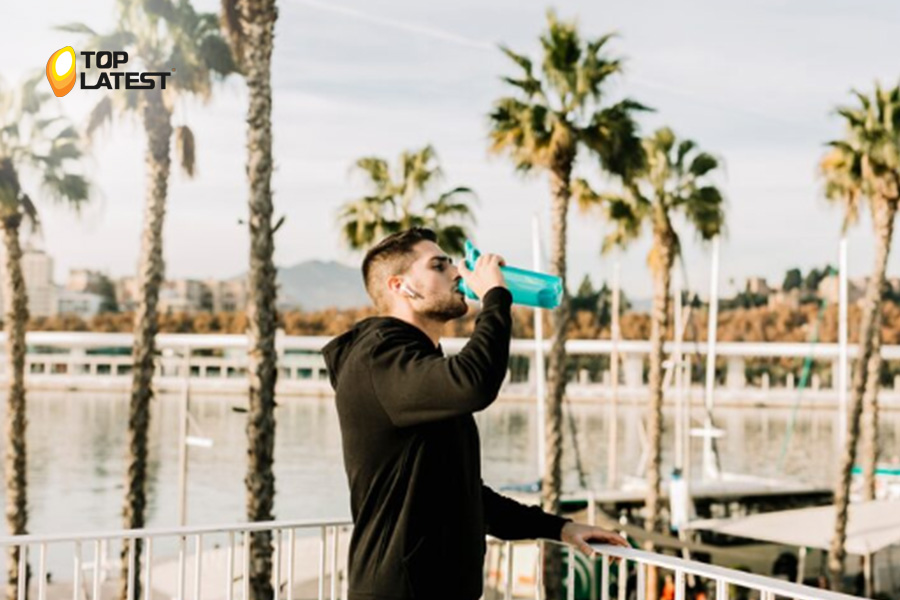
If you train after work, drink 500 millilitres in the hour before your session and sip 150 to 250 millilitres every fifteen minutes during exercise. Post-workout, prioritise a fluid with electrolytes rather than plain water. In the evening, taper intake in the last two hours before bed so sleep is not disturbed, but do not go to bed thirsty. For readers thinking about outdoor training more broadly, the seasonal timing considerations covered in this guide to the best time to exercise outdoors in the UAE pair well with a strong hydration base.
Foods That Do Half the Hydration Work For You
Roughly 20 percent of most people’s daily fluid intake comes from food, and in a Dubai summer that share can rise meaningfully if you choose well. Watermelon, cucumber, tomatoes, oranges, strawberries, celery, lettuce, and leafy greens are all above 90 percent water by weight. Traditional regional foods align beautifully with this: fattoush, tabbouleh, laban ayran, fresh fruit platters, and yoghurt-based dips all deliver fluids and electrolytes together.
A few practical swaps that add up:
- Replace one afternoon coffee with a cucumber-mint infused water or fresh lime with mint.
- Add a side salad to lunch instead of bread.
- Keep pre-cut watermelon or grapes in the fridge for late afternoon snacks.
- Choose grilled fish or chicken with vegetables over heavy, salt-cured dishes for evening meals in peak summer.
These small choices reduce the burden on your water bottle and keep sodium loads manageable, which supports better fluid retention overall. For families managing the summer heat at home, thoughtful outdoor setups also make a difference, and this practical guide to balcony and rooftop decor for UAE summers covers how residents design cooler outdoor spaces that encourage evening hydration and family time.
Signs Your Body Is Already Behind on Fluids
Thirst is a late signal. By the time you feel it, you are often already 1 to 2 percent dehydrated, enough to affect concentration, mood, and physical performance. Earlier indicators are more useful to watch for:
- Urine colour darker than pale straw.
- A dull headache that appears mid-morning or mid-afternoon.
- Dry lips, dry mouth, or a slightly sticky feeling on the tongue.
- Sudden fatigue or a drop in focus with no obvious cause.
- Muscle cramps, especially in the calves or feet, during or after activity.
If two or more of these appear together during a Dubai summer day, treat it as a signal to drink 500 millilitres of water with electrolytes and reduce heat exposure for the next hour. Sustained inattention to these signs is how residents end up with heat exhaustion, which can escalate quickly.
Special Situations: Outdoor Workers, Athletes, Pregnant Women, and Older Residents
Certain groups need a more deliberate hydration plan through the UAE summer.
Outdoor workers benefit from the country’s established protections. The UAE Ministry of Human Resources and Emiratisation enforces an annual midday break for outdoor workers from June 15 to September 15, during which work in direct sunlight is prohibited between 12:30 and 3:00 in the afternoon. Employers are required to provide cool drinking water, shaded rest areas, and electrolyte support during these months.
Athletes and regular outdoor exercisers should weigh themselves before and after a session in peak heat and drink around 1.2 to 1.5 litres of fluid with electrolytes for every kilogram lost. This is the most accurate personal calibration tool available.
Pregnant and breastfeeding women need an additional 300 to 700 millilitres per day beyond the standard baseline, with steady sipping and electrolyte support especially in the third trimester.
Older residents, particularly those above 65, experience a reduced thirst response and are more prone to silent dehydration. Scheduled sips every 30 to 45 minutes work better than relying on thirst cues, and family members can quietly support this rhythm without turning it into a fuss. Workplaces and home offices that build in these small routines see meaningful gains, a pattern reflected in this look at how UAE professionals are building sustainable wellbeing at work.
A Final Word
Hydration in Dubai is a quiet, high-return investment in how you feel every single day of summer. Get the base right, add electrolytes, eat water-rich foods, and pay attention to the early signals your body sends. The reward is sharper focus, better sleep, faster workout recovery, and the simple pleasure of moving through a 45 degree afternoon without feeling drained. For readers approaching the summer with training goals as well, the fasting and hydration principles discussed in the Ramadan fitness guide for the UAE offer useful crossover thinking on pacing fluids around heat and exertion. Explore more practical wellness guides on toplatest.ae to keep building habits that suit UAE life.
Sources
- UAE Ministry of Human Resources and Emiratisation (MoHRE), Annual Midday Break Regulations for Outdoor Workers
- UAE Ministry of Health and Prevention (MOHAP), Public Health Guidance on Heat Stress and Hydration
- National Center of Meteorology, UAE (NCM), Climate Data and Seasonal Forecasts
- National Academies of Sciences, Engineering, and Medicine, Dietary Reference Intakes for Water, Potassium, Sodium, Chloride, and Sulfate
- American College of Sports Medicine, Position Stand on Exercise and Fluid Replacement
Frequently Asked Questions
Most active adults in Dubai need between 3.5 and 5 litres of fluid per day from June to September, which is higher than the general reference intake for cooler climates. A practical starting point is 35 to 40 millilitres per kilogram of body weight, with an additional 500 to 750 millilitres for every hour spent outdoors in peak heat. Steady sipping across the day works far better than drinking large volumes at once.
Plain water alone is usually not enough once you are sweating heavily in UAE heat. Sweat carries sodium, potassium, and magnesium out of the body, and topping up only water can leave you feeling foggy, crampy, or fatigued. Adding a pinch of salt to your morning water, using a sugar-free electrolyte sachet during outdoor activity, and eating potassium-rich foods like dates, bananas, and yoghurt keeps your fluid balance genuinely restored.
Thirst is a late signal, so track earlier cues instead. Urine that is darker than pale straw, a dull mid-morning or mid-afternoon headache, dry lips, sudden fatigue with no clear cause, and calf or foot cramps are the most reliable early indicators. If two or more appear together on a summer day in Dubai, drink 500 millilitres of water with electrolytes, move to a cooler space, and rest for the next hour.
Water-rich foods can contribute meaningfully to your daily fluid intake, often around 20 percent of the total. Watermelon, cucumber, tomatoes, oranges, strawberries, celery, lettuce, and leafy greens are all above 90 percent water by weight. Regional staples such as fattoush, tabbouleh, laban ayran, fresh fruit platters, and yoghurt-based dips deliver fluids and electrolytes together. Swapping heavier, salt-heavy lunches for lighter grilled proteins with fresh salads through the summer months eases the daily hydration workload considerably.
Yes. The UAE Ministry of Human Resources and Emiratisation enforces an annual midday break for outdoor workers from June 15 to September 15, prohibiting work in direct sunlight between 12:30 and 3:00 in the afternoon. During these months, employers are required to provide cool drinking water, shaded rest areas, and electrolyte support. Workers should also sip fluids every 15 to 20 minutes, even when they do not feel thirsty.