Ramadan 2026 in the UAE runs from February 17 to March 18, with fasting hours noticeably shorter than the punishing summer fasts of recent years. That timing matters more than most fitness routines acknowledge. Cooler weather, a manageable daylight window, and a residency well practiced at organising work, family, and movement around Iftar and Suhoor make this month entirely workable for training. For most fasting adults, the constructive goal is muscle preservation, stable energy, and protecting the progress you arrived with. This guide shows you how to build a routine that supports that outcome from day one to Eid, with practical structure grounded in the way the fasting body actually behaves. Whether you train at a community gym in Dubai, a home setup in Sharjah, or a residential clubhouse in Abu Dhabi, the same principles apply once you calibrate them to your window.
Why fasting changes the way your body responds to training
When you stop eating and drinking from Fajr to Maghrib, your body shifts fuel sources. Liver glycogen drains across the day, blood sugar dips, and by late afternoon your nervous system is running on a smaller battery. Cortisol rises, recovery capacity narrows, and sleep gets fragmented around Suhoor. Muscle protein synthesis itself is not disrupted by daily fasting, but it responds to two levers: total daily protein and resistance training stimulus. Attend to both, and lean tissue stays intact. The other underappreciated factor in the UAE is fluid loss. Even in cooler months, indoor heating, AC dryness, and any sweat session compound dehydration that can only be replaced after sunset. Understanding these physiological shifts is what separates a Ramadan plan that works from a January plan pushed through a fasting body.
Choose your training window with intent
Most fasting residents have three realistic windows. Pick one and stay consistent for the month rather than rotating across all three. Consistency in timing helps your body predict energy demand and lets you fine tune nutrition around a single anchor point.
Ninety minutes after Iftar
This is the strongest option for anyone serious about preserving muscle. You have eaten, rehydrated, and your nervous system is back online. Strength output is closest to normal, and recovery begins immediately with a second meal. The consideration is timing around Taraweeh prayers and family commitments, so plan the session as a protected calendar block. A short warm up, focused compound work, and a clean finish is more productive than a drawn out session that eats into sleep.
Sixty to thirty minutes before Iftar
Useful for fat loss focused training and short conditioning. You finish depleted and refuel immediately at Maghrib. Keep sessions short, intensity moderate, and avoid heavy compound lifts that demand a high heart rate, particularly for women and anyone on lower calorie intakes. Bodyweight circuits, light kettlebell work, and controlled resistance sets fit this window well.
Before Suhoor
Suits early risers, shift workers, and home gym users. Energy is decent because you have eaten the night before. The consideration is recovery: you train, eat Suhoor, then face a long window without food or water. Reserve this slot for low to moderate sessions rather than max effort lifting, and ensure Suhoor is comprehensive rather than rushed.
The muscle preservation protocol
The most common oversight fasting lifters make is keeping their normal programme and grinding through it. Volume is what depletes you. Intensity, used sparingly, is what holds onto muscle. Reduce weekly volume by twenty to thirty percent. Keep load close to normal on your main lifts.
A workable weekly structure looks like:
- Two to three strength sessions per week, full body or upper and lower split.
- Four to six compound movements per session: squat, hinge, horizontal push, horizontal pull, vertical push or pull.
- Three working sets per movement, five to eight reps, leaving one or two reps in reserve.
- Sessions capped at thirty to forty minutes, warm up included.
- Skip metabolic finishers, drop sets, and high rep burnouts entirely.
This is enough stimulus to signal your body to hold muscle without draining the recovery you do not have. If you train at home or in a community gym, the same principles apply. Residents in well equipped neighbourhoods like Al Mahra in Arabian Ranches have an advantage because access is short and friction is low, which matters when energy is finite. The less time it takes to get to a barbell, the more likely the plan survives week three.
Cardio that supports the goal
Cardio is where many fasting fitness plans lose their footing. Two sessions a week is a sensible upper bound. Walking after Iftar, easy cycling, and pool swims at residential clubhouses such as those in Jumeirah Islands work well as low friction options. Reserve sprint intervals, long runs, and high intensity classes for after Eid. During fasting hours they burn through glycogen that cannot be replaced and elevate cortisol that recovery cannot absorb. A brisk twenty five minute walk after Iftar, done consistently, does more for body composition and mood across the month than a single punishing session that costs three days of recovery.
Nutrition that protects your training
Training is roughly thirty percent of muscle preservation during Ramadan. Nutrition between Iftar and Suhoor is the other seventy. Treat both meals as deliberate, not decorative.
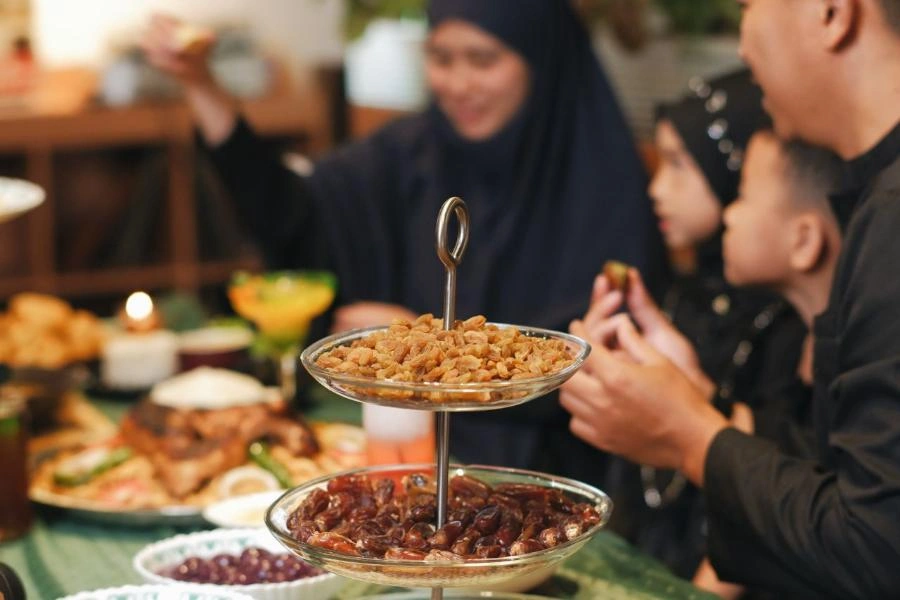
Iftar. Break the fast with dates and water, then pause ten to fifteen minutes before the main plate. This prevents the digestive crash that follows large heavy meals. Build the plate around lean protein such as grilled chicken, fish, or lentils, a fist sized portion of complex carbohydrate such as rice, freekeh, or oats, vegetables, and a moderate amount of healthy fat. Keep fried openers like samosas and pakoras as an occasional accent rather than your primary calories.
Post training meal. If you trained ninety minutes after Iftar, this becomes your second feeding. Thirty to forty grams of protein with fast digesting carbohydrate, such as white rice, fruit, or dates, refills glycogen and starts recovery before sleep.
Suhoor. This is the meal that decides how you feel at three in the afternoon. Slow protein such as eggs, Greek yoghurt, or cottage cheese, complex carbohydrate such as oats or whole grain bread, a healthy fat source, and five hundred to seven hundred millilitres of water with a pinch of salt.
Daily protein target. Aim for 1.6 to 2.2 grams per kilogram of bodyweight, distributed across Iftar, post training, and Suhoor. According to the International Society of Sports Nutrition position stand on protein intake, this range is consistently associated with muscle retention during energy deficits in resistance trained adults, which is the exact context most fasting lifters find themselves in for the month.
Hydration. Drink 2.5 to 3 litres of water between Iftar and Suhoor, spaced across the evening rather than swallowed at once. Add electrolytes if you trained, especially sodium and potassium. Limit caffeine to one coffee after Iftar to protect sleep. The World Health Organization guidance on fluid balance during Ramadan reinforces the value of steady rehydration through the eating window rather than concentrated intake at either end.
Recovery, sleep, and the local edge
The cooler February and March climate is the quiet advantage of Ramadan 2026. Outdoor walking is comfortable, gyms are less heat stressed, and recovery is easier than a summer Ramadan would allow. Residents in fitness oriented communities such as Green Community West have nearby gym access, parks, and quiet streets that make a thirty minute walk after Iftar genuinely pleasant. Sleep is the hidden cost of the month. Suhoor breaks the night in two. A short Qailulah nap after Asr, fifteen to thirty minutes, recovers more than most people expect. Protect it, and treat it as part of the protocol rather than a luxury. Track a simple daily readiness signal, resting heart rate on waking, morning mood, or grip strength, and pull back a session if two of three drift for more than a couple of days.
Five considerations that protect muscle through the month
- Anchor protein at Suhoor. A clear protein source at Suhoor covers the long window before Iftar and supports overnight recovery.
- Save heavy sessions for after Iftar. Big lifts land best when you are fed and rehydrated, not fully fasted.
- Keep Iftar balanced. Steady blood sugar through a mixed plate protects your evening energy and your next training session.
- Match cardio to recovery. Two purposeful sessions a week outperform daily grinds that erode the muscle you are trying to hold.
- Adapt the programme to the month. A Ramadan block deserves a Ramadan plan, with reduced volume and preserved intensity, then a return to full loading after Eid.
Closing the month stronger than you started
A successful Ramadan from a fitness standpoint is measured by what you keep. Hold your lean mass, hold your habit of moving, and you walk into Eid ready to push again. Train two or three times a week with intent, eat with structure between Iftar and Suhoor, sleep where you can, and trust the protocol. To explore neighbourhoods, amenities, and lifestyle resources across the UAE that support an active routine year round, browse the community and lifestyle features on toplatest.ae for further reading aligned with your next move.
Sources
- UAE Ministry of Health and Prevention
- Dubai Health Authority
- International Society of Sports Nutrition Position Stand on Protein Intake
- American Journal of Clinical Nutrition
- World Health Organization
Frequently Asked Questions
Yes, for most healthy adults already training before Ramadan. The strongest window for heavier compound lifts is ninety minutes after Iftar, when you are fed and rehydrated. Pre Suhoor sessions should stay light to moderate. Cut weekly volume by twenty to thirty percent, keep intensity near normal, and end a set early if you feel dizzy. Pregnant women, people on medication, or anyone with a medical condition should consult a doctor first.
Target 1.6 to 2.2 grams of protein per kilogram of bodyweight, spread across Iftar, your post training meal, and Suhoor. A seventy kilogram adult needs roughly one hundred and twelve to one hundred and fifty four grams daily. Anchor each meal with a clear protein source: eggs and Greek yoghurt at Suhoor, grilled chicken or fish at Iftar, and a protein rich snack or shake after training if that fits your window.
For most residents, ninety minutes after Iftar is the strongest window for strength training, because you are fed, hydrated, and neurologically ready. Sixty minutes before Iftar suits shorter, lower intensity sessions with immediate refuelling. Before Suhoor works for early risers and home gym users, kept to light or moderate loads. Pick one window and stick with it for the month. Consistency in timing outperforms variety when fasting has already trimmed your energy budget.
Maintenance is very achievable with as little as two short sessions a week focused on compound lifts at near normal intensity. Even one weekly full body session is meaningfully better than none. Detraining research suggests resistance trained adults retain most of their muscle for several weeks with minimal stimulus, provided protein intake stays high. Newer lifters benefit more from keeping the habit alive, since consistency compounds through the Eid return to full loading.
Drink 2.5 to 3 litres of water between Iftar and Suhoor, spaced across the evening rather than swallowed at once. Add a pinch of sea salt or an electrolyte mix to replace sodium, potassium, and magnesium lost through training. Eat hydrating foods like cucumber, watermelon, tomato, and yoghurt. Limit caffeine to one cup after Iftar. If you train pre Iftar, plan a deliberate rehydration window in the first ninety minutes after sunset.