Your balcony is often the only outdoor space a Dubai apartment gives you, and for much of the year it sits unused behind a closed sliding door. The encouraging part is that a balcony here does not need one design. It needs two: a shaded, heat aware setup that keeps the space comfortable through the long summer, and a softer, more social layout that makes the most of the months when the weather turns generous. This guide covers both, along with the materials, layouts, and approvals that hold up in real UAE buildings.
Why a Dubai Balcony Works Best as Two Seasonal Setups
Dubai does not really have four seasons. It has a long, intense summer and a short, exceptional winter, and your balcony registers that difference more sharply than any other room. Long term climate records published by the UAE National Center of Meteorology put average maximum temperatures in July between 39.7 and 43.8 degrees Celsius, with coastal humidity climbing through the evening. By January, daytime highs in Dubai settle closer to the mid twenties with cool, dry nights.
That gap changes how the space gets used. Between June and September, the balcony works best as a short visit place: early coffee, a shaded corner for plants, ten minutes of air after sunset. Between November and March, it becomes a genuine second room where you eat, host, read, and take calls.
Designing for both seasons, with a small changeover twice a year, keeps the space in use for twelve months instead of four. Everything below is ordered by impact.
Start With Shade, Because Everything Else Depends on It
Shade is the highest return upgrade on a UAE balcony, and the one most people skip. Surface temperatures on an exposed floor climb well above air temperature by mid afternoon, which is why a beautifully furnished balcony still sits empty at four o’clock in July. Add shade and the space becomes usable hours earlier.
Orientation decides your approach. North facing balconies in towers across Dubai Marina and Business Bay hold shade most of the day and need the least work. West facing balconies take the full weight of late afternoon sun and benefit most from a layered solution. East facing balconies stay pleasant until mid morning.
Bamboo or PVC roller blinds fitted inside the ceiling recess are the most widely used option in UAE apartments: they drop straight down, cost little, and roll away when you want the view back. Outdoor grade curtains on a tension rod or freestanding frame cut glare without touching the structure, and a weighted base parasol suits wider balconies. Retractable awnings and fixed external attachments sit in a different category, since they alter the facade and need approval first.
Flooring That Stays Comfortable Underfoot
Most UAE balconies come with pale ceramic or porcelain tile that reflects heat well but feels unfinished. Interlocking composite decking tiles are the standard fix. They click together over the existing tile without adhesive, lift out in minutes when you move, and read as a proper floor. Wood plastic composite outperforms natural teak here, since it needs no annual oiling and shrugs off coastal moisture swings.
Colour matters as much as material. Light greys, sand tones, and pale timber stay noticeably cooler than charcoal or dark walnut, which absorb heat and hold it into the evening. If you have a dark tile you cannot change, a light outdoor rug does a surprising amount of work.
Polypropylene rugs suit summer because they shed dust, rinse clean with a hose, and dry within an hour. Save wool, jute, and deeper piles for winter, when they add warmth without trapping heat. Layering a rug over composite tiles works especially well in tighter spaces, alongside the ideas in our guide to small apartment decor for studios and one bedroom flats.
Furniture and Fabrics Built for Heat, Sun, and Humidity
Balcony furniture in the UAE faces a specific set of conditions: strong ultraviolet exposure, coastal salt, sharp temperature swings, and dust from every shamal wind. Materials that perform elsewhere often fade or corrode here within a year.
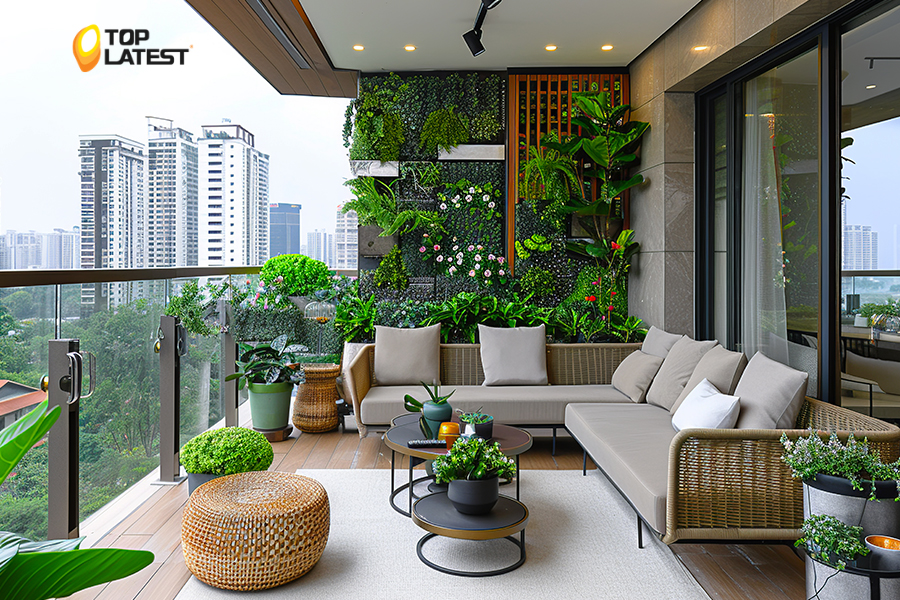
Powder coated aluminium is the most reliable frame material. It stays light enough to move for cleaning, does not rust the way untreated steel does, and keeps its finish through repeated sun exposure. Synthetic PE rattan is the next most popular choice and holds colour far better than natural cane. For cushions, solution dyed acrylic is worth the premium, because the colour runs through the fibre rather than sitting on it. Removable covers and a weatherproof storage box keep them off the balcony during dust events.
Scale is the other consideration. Most UAE apartment balconies run four to eight square metres, which rules out full sofa sets. Two folding chairs with a slim bistro table, a bench with under seat storage, or stools alongside a wall mounted drop leaf shelf all leave room to move. Our guide on where to buy affordable furniture in the UAE covers retailers carrying outdoor ranges at that scale.
Greenery That Handles Both Seasons
Plants transform a balcony faster than any other single addition, and the trick is choosing species that treat a July afternoon as normal. Bougainvillea is the established favourite: it flowers through heat, tolerates light reflected off glass, and builds privacy as it fills out. Desert rose thrives in the same conditions on far less water. Snake plant, ZZ plant, and aloe handle both the heat and a busy schedule.
Frangipani and hibiscus do well on larger, partly shaded balconies. Herbs are a winter proposition: mint, basil, coriander, and rocket grow readily from October through April, then struggle as temperatures climb.
Terracotta pots breathe and keep roots away from the heat that builds inside dark plastic, though they dry faster. Self watering planters solve that neatly if you travel over summer. Grouping pots together creates a pocket of humidity that benefits the whole cluster, and pot feet lift roots clear of a hot floor.
Lighting That Makes Evenings the Main Event
Because so much UAE balcony use happens after sunset, lighting carries more weight here than in most climates. The setup that consistently works is layered: a soft ambient layer, a small task light, and one accent element.
Solar powered string lights are the most popular starting point, since they need no wiring, no permission, and no load on your bill. Warm white around 2700 kelvin reads as inviting, while cooler temperatures make a balcony feel like a corridor. Rechargeable lanterns give you portable light for reading or dining, and battery uplights behind a large planter add depth to a narrow space.
If your balcony has an outdoor socket, check that any fixture carries an appropriate ingress protection rating, since humidity and the occasional winter shower will find their way in. Smart plugs schedule the whole setup to come on at sunset, and slot into the kind of system described in our smart home setup guide for Dubai apartments.
Cooling Additions That Extend Your Summer Hours
Air movement is what makes an outdoor space feel liveable when the temperature will not cooperate. An outdoor rated pedestal or wall mounted fan is the simplest addition and makes a measurable difference on any shaded balcony.
Misting fans are widely used across UAE terraces and work through evaporative cooling, so their effect depends on how dry the air is. In April, May, and October they perform very well. Through the humid peak of August they deliver less, which is useful to know before you buy. Portable evaporative coolers follow the same logic.
Small additions compound the effect. Light coloured shade fabric keeps radiant heat off the space, and even a tabletop water feature changes how the balcony feels. Keeping the sliding door closed while a fan runs stops you cooling the outdoors, which matters given that Dubai Electricity and Water Authority guidance identifies cooling as the largest component of household electricity use in summer.
Turning the Balcony Into a Winter Living Room
From November through March, the balcony becomes the most desirable room in the apartment. This is the season for comfort rather than protection, and the shift is mostly textiles and layout.
Roll out a wool or jute rug, add floor cushions and a low table, and the balcony converts into a majlis style seating area that suits quiet mornings and small gatherings equally. Cotton throws cover the cool January evenings, when Dubai temperatures drop into the mid teens after dark. Swapping summer curtains for heavier drapes adds warmth and softens wind on higher floors.
If the space takes a small table, a two seat dining setup is the highest value winter addition in most UAE apartments. Breakfast outdoors from December to February is one of the real pleasures of living here, and the table doubles as a work surface. Fold flat furniture clears the balcony entirely when summer returns, the reversible approach in our renter friendly decor ideas for UAE flats.
Practical Considerations Before You Begin
A few straightforward rules shape what you can do with a UAE balcony, and knowing them upfront keeps the project smooth. Dubai Municipality treats the balcony as part of the building facade, and its balcony use regulations set fines from AED 500 to AED 1,500 for misuse, covering stored goods, laundry hung over the railing, or fixtures attached to the exterior. Barbecuing is not permitted under Dubai Civil Defence fire safety provisions, and gas cylinders are excluded from balcony storage.
Anything structural sits in permit territory. Glass enclosures, fixed awnings, partition walls, and permanent screens change the facade and need approval from the developer or building management, and often the municipality too. Community developers add their own rules, so check before ordering anything fixed.
If you rent, your tenancy agreement is the reference point. Under Dubai Land Department tenancy provisions, tenants do not alter a leased property without the landlord’s consent, which is why the freestanding, clip in, and removable options throughout this guide are the practical route. Two further points: balconies carry a design load limit, so heavy planters and stone furniture need thought on upper floors, and during shamal winds anything unsecured becomes a hazard to the street below.
A Simple Twice a Year Changeover
The system works because switching between setups takes about two hours. In October, roll out the winter rug, bring cushions and throws back out, plant your herbs, add the dining table, and open the shade for light and view. The balcony is then ready for its best six months.
In May, reverse it. Store the wool rug and soft furnishings, lower the shades, move plants to the shaded corner, swap heavier textiles for quick drying outdoor fabrics, and clear the floor so what remains is easy to hose down. You are left with a shaded, low maintenance summer balcony that still earns its place at seven in the morning and nine at night.
Treated this way, a balcony stops being seasonal storage and becomes what it was designed to be: usable outdoor space, in a city where outdoor space is what people miss most. If you are weighing up an apartment with a balcony, explore more UAE property and home guides on toplatest.ae.
Sources
- National Center of Meteorology, United Arab Emirates
- Dubai Municipality
- Dubai Civil Defence, UAE Fire and Life Safety Code of Practice
- Dubai Land Department
- Dubai Electricity and Water Authority
Frequently Asked Questions
Shade is the most effective step, since it lowers surface and air temperature more than any other change. Roller blinds fitted inside the ceiling recess, outdoor curtains, or a weighted parasol all work well. Pair shade with light coloured composite flooring, an outdoor rated fan for air movement, and heat tolerant plants grouped together. Together these make a balcony genuinely comfortable in the early morning and the evening hours right through the hottest months.
Bougainvillea, desert rose, snake plant, aloe vera, and ZZ plant all handle UAE summer conditions with minimal attention. Frangipani and hibiscus do well on larger, partly shaded balconies. Herbs such as mint, basil, and coriander grow readily from October through April and are best treated as a winter crop. Terracotta or self watering pots, raised slightly on pot feet, help roots avoid the heat that builds up on exposed balcony floors.
Fixed awnings, glass enclosures, partition walls, and permanent external attachments change the building facade, so they require approval from your developer or building management, and often from Dubai Municipality as well. Tenants also need landlord consent under standard tenancy provisions. Freestanding parasols, clip in composite flooring, tension rod curtains, and roller blinds mounted within the balcony recess are the practical alternatives, and none of them needs structural approval before you begin.
Interlocking wood plastic composite decking tiles are the most widely used option across UAE apartments. They click together over existing tile without adhesive, lift out when you move, and resist the moisture swings that come with coastal humidity. Light greys, sand tones, and pale timber finishes stay noticeably cooler than dark shades. Polypropylene outdoor rugs suit summer because they rinse clean and dry fast, while wool or jute adds warmth through winter.
November through March is the peak balcony season across the UAE, with comfortable daytime temperatures and cool evenings that suit dining, working, and hosting outdoors. April, May, and October remain pleasant in the early morning and after sunset. Through the June to September peak, balconies work best for short visits before sunrise and late in the evening, particularly once shade and reliable air movement are already in place year round.