From late May to early October, many balconies and rooftops across the UAE sit unused. Daytime temperatures in Dubai and Abu Dhabi regularly cross 45 degrees Celsius, and the sun does the rest. Furniture warps, cushions fade, and plants struggle within a fortnight. The opportunity is that a balcony or rooftop in the UAE can stay usable for most of the year, including parts of summer, when it is designed for the climate rather than against it. This guide covers what works, which materials hold up, and where your budget delivers the strongest return.
How UAE Summers Shape Outdoor Spaces
UV exposure across the UAE is among the highest sustained levels anywhere outside the equator. The National Center of Meteorology records UV index readings above 11 for extended stretches between May and September, a category the World Health Organization classifies as extreme. Unprotected fabrics, plastics, and softwoods degrade in months rather than years under that intensity.
Wind is the second factor to plan around. Coastal cities such as Dubai, Abu Dhabi, and Sharjah experience high-velocity, sand-laden winds during shamal periods. Anything light, hollow, or hung from a single fixing will either lift off or fill with sand within days. Humidity adds a third consideration along the coast, particularly in Dubai Marina, Palm Jumeirah, and Corniche-facing towers in Abu Dhabi, where evening dew and salt air accelerate corrosion on unprotected metal.
Plan around four climate realities: direct sun, high heat, salty or sandy wind, and coastal humidity. A design that accounts for all four holds up. One that ignores any single factor tends to need replacing within a season.
Community Guidelines to Review Before You Decorate
Most UAE apartment buildings have community rules that shape what you can do on a balcony. Dubai Municipality and the Real Estate Regulatory Agency require balconies to stay free of stored items visible from outside, prohibit hanging items externally from the railing, and require that fire safety paths remain unobstructed. Dubai Civil Defence specifically restricts gas barbecues and certain fire pits on residential balconies. Similar frameworks apply through building management and homeowners’ associations in Abu Dhabi, Sharjah, and the Northern Emirates. Review your community handbook and tenancy contract before installing pergolas, mounted awnings, or any fixture that requires drilling into the building exterior.
For residents still weighing outdoor space against other criteria while apartment hunting, our overview of Dubai apartments for rent highlights which buildings and communities offer the most usable balcony footprints.
Shade First: The Highest-Impact Investment
Every other decor choice depends on shade. Without it, the surface temperature of a balcony floor can climb past 60 degrees in direct sun, making everything else on the balcony effectively unusable during daylight hours.
Retractable awnings are the most widely adopted shade solution for apartment balconies in the UAE because they can be packed away during shamal winds and extreme weather. Choose acrylic-coated polyester or solution-dyed acrylic fabrics, which resist UV degradation far longer than standard polyester.
Free-standing umbrella systems with weighted bases suit renters who cannot mount anything to the wall or ceiling. Cantilever umbrellas rated for wind speeds of at least 50 kilometres per hour perform best in UAE conditions. Bamboo and palm-leaf parasols look beautiful but rarely survive a full summer.
Orientation matters as much as the shade product itself. North-facing balconies stay coolest through the day and often need only light shade. East-facing balconies work well from late afternoon onward once the sun has swung west. South and west-facing balconies carry the heaviest solar load and benefit most from layered shade, ideally a fixed or retractable overhead cover combined with a vertical screen to block low-angle afternoon sun.
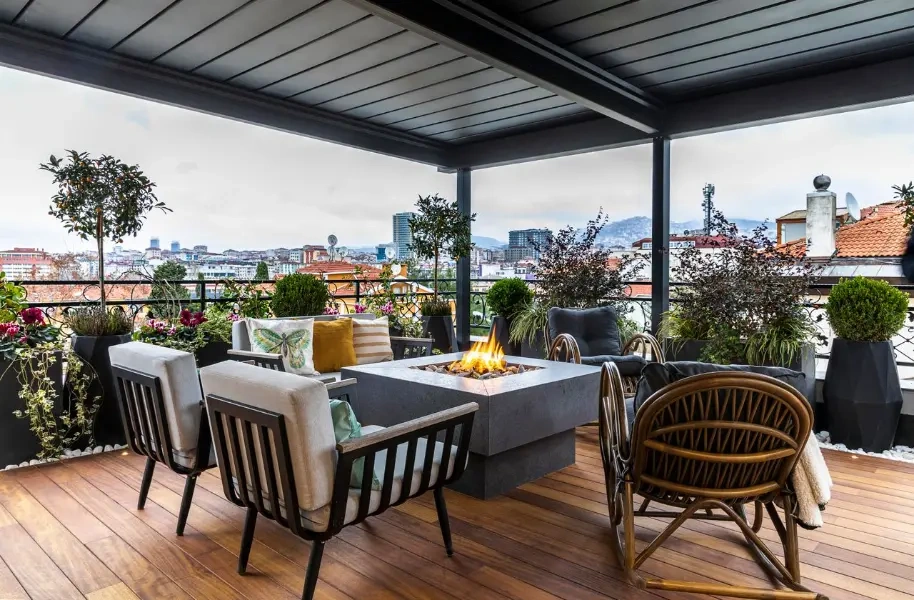
For larger rooftops and villa terraces, fixed pergolas with retractable louvre roofs in powder-coated aluminium are the regional standard. Communities such as The Meadows, Arabian Ranches, and Dubai Hills have widely adopted these systems for terraces designed with the climate in mind. Our Meadows community overview gives useful context on how villa terraces are typically configured.
Heat-Resistant Materials That Stand the Test of Time
Material choice is where balcony budgets deliver the most value. Indoor furniture rarely holds up outdoors in the UAE, and low-cost outdoor furniture often lasts a single season.
For furniture, powder-coated aluminium leads the market and suits most balconies because it resists rust, reflects heat better than steel, and stays lightweight for easy movement. Teak follows closely and handles direct sun and humidity for decades when oiled annually. High-density polyethylene wicker retains flexibility and colour in extreme temperatures, where standard plastic rattan becomes brittle within a year.
For cushions and textiles, solution-dyed acrylic fabrics such as Sunbrella and equivalent regional alternatives hold colour for years under direct UV exposure. Standard cotton and polyester cushions fade within months. Outdoor rugs in polypropylene handle heat, water, and sand without holding moisture.
For flooring, interlocking deck tiles in composite wood or porcelain are the fastest renter-friendly upgrade. They install without adhesive, lift for cleaning, and travel with you. Real wood decking is workable when you commit to seasonal oiling. Synthetic grass on balconies looks fresh for the first month and then tends to trap heat, sand, and odours.
Cooling Tactics That Extend Usable Hours
Shade and material choice go a long way, and active cooling extends usable hours further, particularly in the evenings between late June and early September.
Outdoor misting systems lower perceived temperature by 5 to 10 degrees in lower-humidity conditions and remain useful during dry evenings inland. Along the humid coast, high-pressure misting systems that produce a finer mist perform better because the droplets evaporate before wetting surfaces. Pair any misting setup with airflow from a fan for the strongest effect in Dubai Marina, Palm Jumeirah, and similar coastal locations.
Outdoor-rated standing fans and bladeless fans rated for IP44 or higher run safely in dust-prone environments. Position them to push air horizontally across seating areas rather than downward from above.
Small water features add psychological cooling. A bowl fountain or wall-mounted spillover panel introduces the sound of moving water, which environmental psychology research consistently links to a perception of lower ambient temperature. Still pools tend to collect dust and attract mosquitoes, so movement matters.
Reflective and light-coloured surfaces further reduce accumulated heat. A pale-toned outdoor rug, light cushion covers, and off-white planters lower the effective surface temperature compared with dark equivalents. When the sun sets, that stored heat radiates for longer from dark surfaces, which shortens the comfortable evening window. Simple material choices at the design stage cut later cooling effort.
Plants That Thrive in UAE Summers
Plant choice is where recurring costs on a balcony can be brought down significantly. Species adapted to the climate outperform tropical decorative plants at a fraction of the maintenance.
Bougainvillea is the most widely used flowering plant on UAE balconies and thrives in full sun once established, flowering through summer. Oleander, frangipani, and desert rose follow closely and handle extreme heat with confidence. Snake plant and ZZ plant tolerate the harshest conditions among indoor-outdoor greens, and most succulents perform well. Herbs such as rosemary, thyme, and za’atar tolerate sun better than basil or coriander, which prefer shaded morning-only positions.
Use light-coloured ceramic or concrete pots rather than dark metal or black plastic, because pot colour directly affects root temperature. Self-watering planters reduce water stress, particularly when families travel during summer. A drip irrigation kit with a battery timer keeps plants alive through a two-week absence.
Lighting and Layout for Evening Use
From October through April, evenings are the most valuable hours on a UAE balcony. Design for night use, not just daytime.
Layer three lighting levels: ambient string lights and lanterns, task lighting such as a floor lamp or reading light, and accent uplights on plants. Solar-powered fairy lights and lanterns from regional retailers including Ace Hardware, IKEA, and Home Centre perform well because they avoid outdoor wiring complications. Warm-white bulbs reduce mosquito attraction compared to cooler-temperature lights.
Arrange seating to face away from neighbouring balconies for privacy. A single low-profile sofa or two armchairs typically works better than a full dining set unless you have the depth for it. A small folding bistro table doubles as a coffee table and a meal surface, freeing space for plants and lighting.
Rooftop Considerations for Villas and Penthouses
Private rooftops on townhouses, penthouses, and villas in MBR City, Dubai Hills, and Al Barari carry different design considerations than balconies. Wind exposure is higher, parapet heights shape both views and safety, and the surface is usually waterproofed concrete or membrane.
Avoid drilling into rooftop waterproofing. Use weighted free-standing planters, gazebos with ballast bases, and modular deck tiles laid loose over the existing surface. Heavy ceramic pots that resist wind lift are essential. A structural assessment is worth arranging before installing pergolas, hot tubs, or any concentrated load.
For residents and owners in premium villa developments where outdoor design is central to the lifestyle, our District One Mansions overview highlights how high-end rooftops and terraces are typically detailed.
Bringing It Together
A well-designed UAE balcony or rooftop earns its keep across most of the year. Shade sets the ceiling on comfort, material choice sets the lifespan of everything you place outdoors, and cooling and lighting extend the hours the space is actually enjoyed. To explore more property and lifestyle guides tailored to the UAE market, browse related articles on toplatest.ae or connect with a licensed interior consultant for tailored design input.
Sources
- National Center of Meteorology, United Arab Emirates
- Dubai Municipality
- Dubai Civil Defence
- Real Estate Regulatory Agency (RERA), Dubai Land Department
- World Health Organization
Frequently Asked Questions
Yes, particularly in the early morning and late evening from October through early June. In July and August, daytime use is realistic with full shade, active misting or fans, and east or north-facing balconies that avoid direct afternoon sun. West-facing balconies receive the harshest exposure and are typically unusable between noon and 6 pm in peak summer. Evening use after 8 pm remains comfortable on most balconies through the year with basic shade and a fan.
Powder-coated aluminium frames, teak wood, and high-density polyethylene wicker outlast other materials in UAE conditions. Aluminium resists rust and salt corrosion, teak handles UV and humidity when oiled annually, and HDPE wicker retains flexibility and colour where standard plastic rattan becomes brittle within a year. For cushions, solution-dyed acrylic fabrics such as Sunbrella hold colour for years under direct UV exposure, while standard cotton and polyester options tend to fade within a few months of continuous sun.
Misting systems work well across the UAE when matched to conditions. In coastal cities such as Dubai and Abu Dhabi where humidity often exceeds 70 percent, high-pressure misting systems that produce finer droplets perform better because the mist evaporates before settling on surfaces. Inland areas and dry evenings suit low-pressure misters comfortably. Pairing any misting setup with airflow from an outdoor-rated fan produces the strongest cooling effect on Dubai Marina, Palm Jumeirah, and similar coastal balconies.
Bougainvillea, oleander, frangipani, desert rose, snake plant, ZZ plant, and most succulents handle UAE summers with weekly to twice-weekly watering during peak heat. Bougainvillea thrives in full sun once established and flowers through the hottest months. Frangipani drops leaves naturally in winter and regrows in spring. Tropical decorative plants such as ferns, calatheas, and most fiddle leaf figs tend to scorch within weeks of direct summer exposure. Light-coloured pots and self-watering planters reduce root stress considerably.
Dubai Municipality, the Real Estate Regulatory Agency, and Dubai Civil Defence maintain rules that prohibit hanging items from the external railing, storing visible clutter, blocking fire evacuation routes, and using gas barbecues or open flames on residential balconies. Most buildings also have community management rules covering awnings, satellite dishes, and external paint. Review your community handbook and tenancy contract before installing fixed structures. Penalties for violations can include warnings, fines, and forced removal at the tenant’s expense.