
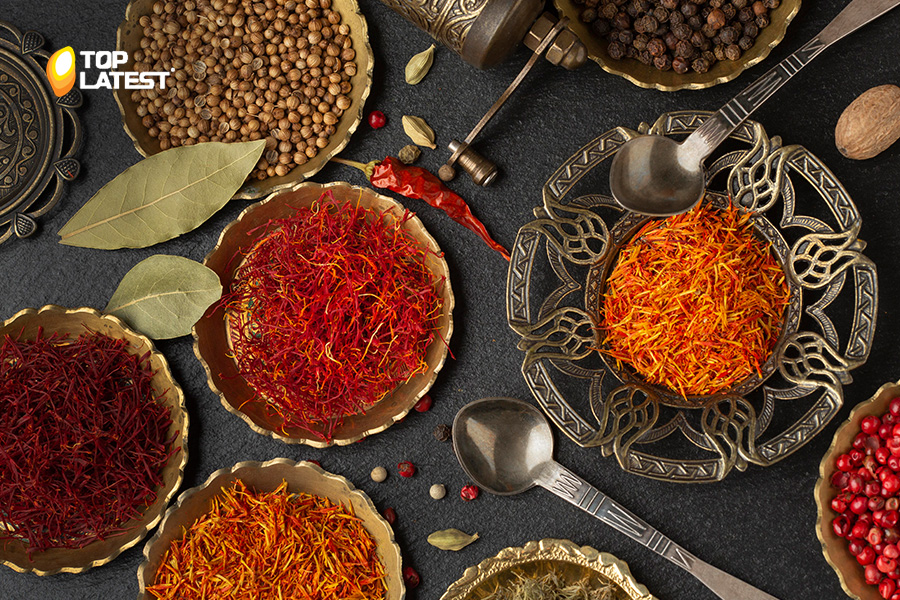
Open any Emirati kitchen and three aromas tend to greet you first: the floral warmth of saffron, the sour, smoky depth of loomi, and the toasted richness of bezar. Together, these spices of Emirati cooking shape the dishes families across Dubai, Abu Dhabi, Sharjah, and the wider UAE have cooked for generations, from fragrant machboos to slow cooked saloona and sweet balaleet.
For residents and newcomers, these three spices are also the simplest way to bring Emirati flavour home. You do not need specialist equipment or a long shopping list. You need good saffron, a few dried limes, a jar of well made bezar, and a clear sense of how each one behaves in the pot.
This guide explains what each spice is, how Emirati cooks use it, how to prepare it for the best flavour, and where to buy it across the UAE.
What Shapes the Flavour of Emirati Cooking
Emirati cuisine grew out of a coastal and desert way of life, and its pantry reflects centuries of trade. Pearl divers, fishermen, and merchants moved goods along the Arabian Gulf and across the Indian Ocean, and the spices that arrived at ports like Dubai Creek became part of everyday home cooking.
The result is a cuisine that layers warmth rather than fiery heat. Emirati food is aromatic and gently spiced, built around rice, meat, fish, dates, and slow cooking. The MICHELIN Guide’s feature on bezar spice traces how the blend absorbed influences from many trading cultures and now appears across Emirati stews and even a few traditional desserts, prepared in homes and handed down through generations.
A useful way to think about the three headline spices:
- Saffron brings colour, fragrance, and a sense of occasion.
- Loomi adds sourness, depth, and a gentle smoky bitterness.
- Bezar provides the warm, rounded backbone of most savoury dishes.
Once you understand those three roles, most Emirati recipes start to make intuitive sense.
Saffron (Zafaran): The Golden Thread of Emirati Kitchens
Saffron is the dried stigma of the saffron crocus, and each flower yields only three delicate threads. In Emirati homes, saffron is known as zafaran and signals generosity. It colours rice for guests, perfumes coffee, and finishes the desserts served at Eid and family gatherings.
Dubai holds a special place in the saffron story. A Khaleej Times report on Dubai’s saffron trade describes how the emirate grew into a global hub where traders bring in the spice and re-export it to buyers around the world. For you as a resident, that means a wide choice of grades within easy reach.
How Emirati Cooks Use Saffron
- Gahwa: a few threads steeped with cardamom in Arabic coffee, served in the majlis.
- Machboos and other rice dishes: bloomed saffron drizzled over the rice before serving for golden streaks.
- Balaleet: sweet vermicelli flavoured with saffron, cardamom, and rosewater, topped with a thin omelette.
- Chebab and khameer: saffron folded into pancake batter and breads for colour and aroma.
- Luqaimat syrup and puddings: a few threads in date or sugar syrup lift simple sweets.
Saffron is also one of the easiest ways to make a table feel celebratory. Our guide to traditional Emirati beverages you can recreate at home shows how saffron and cardamom come together in gahwa and other warming drinks.
How to Bloom Saffron for Full Colour and Aroma
- Crumble 10 to 15 threads between your fingertips, or grind them with a pinch of sugar.
- Steep them in two to three tablespoons of warm water, milk, or rosewater.
- Leave them for 15 to 20 minutes, until the liquid turns a deep orange.
- Add the liquid and threads near the end of cooking to protect the aroma.
Dropping dry threads straight into a large pot spreads their flavour thinly, so blooming is the step that makes your saffron go further.
How to Recognise Quality Saffron
Good saffron has deep red threads with slightly lighter tips, a dry and brittle feel, and a sweet, hay like aroma. In warm water, genuine threads release a golden colour gradually over several minutes while the threads themselves stay red. Food sold in Dubai’s markets is also subject to routine inspection and laboratory sampling by Dubai Municipality, which adds confidence when you shop. Buying from established spice merchants, and checking for a clear origin and packing date, keeps your purchase reliable.
Loomi: The Dried Lime That Gives Emirati Dishes Their Depth
Loomi, also called black lime or dried lime, is a small lime that has been briefly boiled in salted water and left to dry in the sun until it turns hard and hollow. Drying concentrates the fruit’s acidity and adds an earthy, slightly fermented note that fresh lime cannot replicate.
In Emirati cooking, loomi balances rich meat, rice, and fish. It cuts through fat, brightens slow cooked sauces, and gives machboos its distinctive tang.
Light Loomi and Dark Loomi
You will usually find two styles in UAE markets. Light, tan coloured loomi is milder and more citrusy, which suits fish, chicken, and lighter stews. Dark, almost black loomi has dried for longer and offers a deeper, smokier sourness that pairs well with lamb and beef.
Three Ways to Cook With Loomi
- Whole: Pierce each lime two or three times with a knife or fork and drop it into stews, soups, or rice as they cook. The holes let liquid flow through, so flavour spreads evenly. Press the lime against the side of the pot near the end to release more juice.
- Ground: Crack the lime, remove the seeds, which taste bitter, and grind the shell to a powder. Sprinkle it over grilled fish, roasted vegetables, or rice, or rub it into meat before cooking.
- Infused: Simmer a cracked loomi in water with a little honey or sugar for a tangy, refreshing drink that many families enjoy on cooler evenings.
Start with one or two limes per pot for four people. Loomi intensifies as it cooks, so adding more later is easier than softening a dish that has turned too sharp.
Bezar: The Signature Emirati Spice Blend
Bezar is the spice mix that gives Emirati home cooking its recognisable warmth. It seasons machboos, saloona, thareed, margooga, and fried fish, and many families describe it as the foundation of their savoury cooking. There is no single correct recipe. Each household keeps its own balance.
What Goes Into Bezar
Most bezar blends share a consistent core:
- Cumin and coriander seeds for earthy, citrusy body
- Fennel seeds for gentle sweetness
- Cinnamon or cassia for warmth
- Black peppercorns and dried red chillies for mild heat
- Turmeric for colour and an earthy finish
Some families add cardamom, cloves, nutmeg, dried ginger, or fenugreek. Traditionally, whole spices were sun dried before roasting and grinding, which gave the blend a deep, mellow character.
A Simple Home Bezar Method
- Dry roast 2 tablespoons each of cumin, coriander, and fennel seeds with 1 tablespoon of black peppercorns, 2 dried red chillies, and a 5 cm cinnamon stick in a heavy pan over low heat for 3 to 4 minutes, until fragrant.
- Spread the spices on a plate and let them cool completely.
- Grind them to a fine powder, then stir in 1 tablespoon of ground turmeric.
- Store the blend in a clean, airtight jar away from heat and light.
Toasting is what matters most. It turns raw, sharp seeds into a rounded, nutty blend, and it is the main reason homemade bezar tastes so much livelier than many shelf versions.
Where Bezar Shines
Use one to two teaspoons per kilo of meat or chicken. Bloom it in ghee or oil with onions at the start of cooking so the spices release their oils evenly. Bezar also travels well beyond tradition. Try it on roasted vegetables, lentil soup, or grilled prawns, or mix it into softened butter for warm bread.
Supporting Spices That Complete the Emirati Pantry
Saffron, loomi, and bezar lead the way, and a handful of supporting ingredients round out the flavour:
- Cardamom: the most widely used aromatic after saffron, essential in gahwa, desserts, and rice.
- Turmeric: golden colour for rice, fish marinades, and stews.
- Cinnamon: whole sticks perfume rice and meat, while ground cinnamon appears in sweets.
- Cloves: used sparingly in rice and stock for a warm, aromatic note.
- Rosewater: not a spice, yet a natural partner for saffron and cardamom in sweets and drinks.
How the Three Spices Work Together in Machboos
Machboos, often described as the signature rice dish of the UAE, shows how saffron, loomi, and bezar each play a distinct role.
- Onions are softened in ghee, then bezar and turmeric are bloomed in the fat.
- Chicken or lamb is browned, then simmered with tomatoes, water, and two pierced loomi.
- The meat is lifted out and the rice cooks in the spiced, tangy stock.
- Bloomed saffron and rosewater are drizzled over the rice before the pot is covered to steam.
Bezar builds the base, loomi seasons the stock from within, and saffron finishes the dish with colour and fragrance. Machboos is also a natural centrepiece for generous gatherings, and our guide to hosting a majlis style dinner party in your Dubai apartment covers how to serve it with traditional warmth.
Where to Buy Emirati Spices Across the UAE
- Dubai Spice Souk, Deira: the best known destination, with open sacks of loomi, fresh bezar, and several grades of saffron. Pair a visit with our local’s guide to Old Dubai, Bur Dubai, Deira, and the Al Fahidi Historical District for a full afternoon of heritage and flavour.
- Mina Zayed markets, Abu Dhabi: produce and spice stalls that are popular with home cooks.
- Traditional souks in Sharjah, Ajman, and Al Ain: reliable sources of household style bezar, sometimes blended by local producers.
- Supermarkets and hypermarkets: packaged bezar, loomi, and saffron from regional brands, convenient for weekly shopping.
- Seasonal farmers’ markets: the cooler months bring stalls run by Emirati home producers selling small batch blends.
At the souk, it is normal to smell the spices, ask questions, and request a fresh grind.
Keeping Your Spices Fresh in the UAE Climate
Heat and humidity are the main factors that shape shelf life in UAE kitchens, especially through summer.
- Store saffron in a small, dark, airtight tin in a cool cupboard. Used within a year, it keeps strong colour and aroma.
- Keep whole loomi in a sealed jar. It lasts for many months, while ground loomi is best used within a few weeks.
- Make bezar in small batches and aim to use it within two to three months.
- Keep jars away from the hob and oven, and skip the fridge, where condensation can introduce moisture.
Bringing Emirati Flavour Into Your Kitchen
Saffron, loomi, and bezar are more than ingredients. They carry the story of the UAE’s trading past and the hospitality that still defines Emirati homes. Knowing their roles, saffron for fragrance, loomi for depth, and bezar for warmth, gives you the confidence to cook the classics and to experiment with your own versions.
Start with one dish, such as machboos or saloona, and build your spice shelf from there. For more ideas on UAE food, culture, and home life, explore the Food and Recipes section on toplatest.ae.
Top 5 Sources
- MICHELIN Guide, Bezar Spice: The Flavourful Ingredient Used Across Traditional Emirati Dishes
- Khaleej Times, The Rise of the Red Gold: How Dubai Emerged as a Global Hub for Saffron
- Dubai Municipality, Food Safety Department and the Dubai Food Code
- American Botanical Council, Botanical Adulterants Prevention Program Bulletin on Saffron
- Dubai Department of Economy and Tourism (Visit Dubai), Dubai Spice Souk and Emirati Cuisine Guides
Frequently Asked Questions
Emirati cooking relies on a small set of aromatic spices. Saffron adds colour and fragrance to rice, coffee, and desserts. Loomi, or dried lime, brings sourness and depth to stews and machboos. Bezar, the signature blend of cumin, coriander, fennel, cinnamon, pepper, chilli, and turmeric, forms the base of most savoury dishes. Cardamom, turmeric, cinnamon, cloves, and rosewater complete the pantry, creating food that is warm and fragrant rather than fiery.
Loomi is a small lime that has been boiled in salted water and dried in the sun until hard and hollow. It gives Emirati dishes a tangy, earthy, slightly smoky flavour. To use it whole, pierce the lime a few times and simmer it in stews, soups, or rice. You can also remove the seeds, grind the shell into powder, and sprinkle it over fish, vegetables, or meat before cooking for extra brightness.
Bezar is the signature Emirati spice blend, and its recipe varies from one household to another. Most versions combine toasted cumin, coriander, and fennel seeds with black pepper, dried red chillies, cinnamon, and ground turmeric. Some families also add cardamom, cloves, nutmeg, ginger, or fenugreek. The whole spices are dry roasted, cooled, and finely ground, producing a warm, nutty blend used in machboos, saloona, thareed, and fried fish across the UAE.
Emirati cooks rarely add saffron threads straight to the pot. Instead, they steep 10 to 15 threads in warm water, milk, or rosewater for 15 to 20 minutes until the liquid turns deep orange. This bloomed saffron is drizzled over machboos rice, stirred into gahwa with cardamom, folded into balaleet and chebab, or added to dessert syrups. Adding it near the end of cooking protects its delicate aroma and gives dishes their signature golden colour.
The Dubai Spice Souk in Deira is the best known place to buy saffron, loomi, and freshly ground bezar, and traders will happily grind blends to order. In Abu Dhabi, the Mina Zayed markets are popular with home cooks. Traditional souks in Sharjah, Ajman, and Al Ain also stock household style bezar. Supermarkets carry packaged versions, while seasonal farmers’ markets often feature small batch blends made by Emirati home producers.