
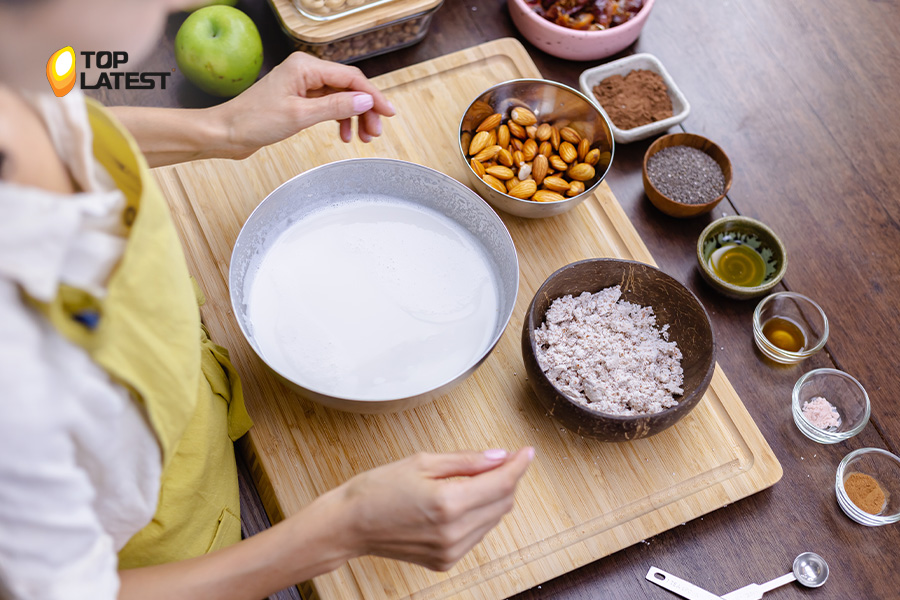
Camel milk in the UAE has travelled from the Bedouin tent to the supermarket chiller. It is now produced at scale by two home-grown dairies, stocked by every major grocery chain, and used in everything from karak chai to premium chocolate. If you have wondered what the nutrition research actually says, whether the higher price is justified, and how to use it well at home, this guide covers all three: what is in a glass, where and at what price to buy it, and four recipes written for the UAE kitchen.
Why Camel Milk Holds a Special Place in the UAE
For generations, camel milk was the everyday drink of the Emirati interior, and that heritage is still visible: it is poured for guests at majlis gatherings, served alongside dates at weddings, and offered at heritage festivals as a taste of the past.
What has changed is the scale behind it. Al Ain Farms established the country’s first modern camel dairy in 2001, and Dubai followed with Emirates Industry for Camel Milk and Products, better known as Camelicious, which brought its first products to market in the mid 2000s from a purpose-built farm at Umm Nahad. Both operate as full dairies with veterinary oversight, pasteurisation, cold-chain distribution, and export approvals, so the carton in the chiller meets the same food safety standards you expect from any UAE dairy brand.
Camel Milk Nutrition: What the Research Shows
Camel milk has a reputation as a functional food. Peer-reviewed research now gives you a clearer picture of what that reputation rests on.
Macronutrients at a Glance
A global meta-analysis published in Comprehensive Reviews in Food Science and Food Safety, which pooled 7,298 camel milk samples from 23 countries, reported average values of roughly 3.2 percent protein, 3.5 percent fat, and 4.3 percent lactose. In practical terms, a 250 ml glass delivers around 8 grams of protein and roughly 55 to 65 calories, depending on the brand’s fat level.
The fat carries a higher share of unsaturated fatty acids and forms smaller globules, which is one reason the milk tastes lighter and sits easily after a meal.
Vitamin C, Iron, and Protective Proteins
The same meta-analysis recorded vitamin C at about 5.4 mg per 100 g and iron at 0.45 mg per 100 g, both unusually high for a dairy milk. Vitamin C is also what gives camel milk its faintly tangy finish.
Camel milk carries protective proteins, including lactoferrin, lysozyme, and immunoglobulins, which researchers link to its natural resistance to spoilage. Reviews in journals such as Food Research International also note that camel milk naturally lacks beta-lactoglobulin, the whey protein most often associated with cow’s milk allergy in children, which is why UAE clinicians increasingly describe it as potentially less allergenic. Anyone with a diagnosed milk allergy should still introduce it only with medical guidance.
The Evidence on Blood Sugar
The most studied health question around camel milk is its effect on blood sugar. A 2022 systematic review and meta-analysis in Nutrients, co-authored by researchers at the University of Sharjah and United Arab Emirates University, pooled 14 randomised controlled trials covering 663 participants with diabetes. Regular camel milk intake was associated with a meaningful reduction in HbA1c, averaging 1.24 percentage points, and a lower daily insulin requirement, with intake beyond six months showing the stronger effect. The authors describe camel milk as a possible adjunct to standard treatment rather than a replacement and call for larger trials, so it is an addition to discuss with a doctor, not a substitute for prescribed care.
What to Keep in Mind
Camel milk does contain lactose, at a level broadly in line with other dairy. Many lactose-sensitive residents report tolerating it well, which researchers attribute to how its proteins and fats digest rather than to an absence of lactose. If you are sensitive, start with a small glass. Choose pasteurised, commercially packed milk as well: both UAE brands pasteurise every batch, which makes the supermarket chiller the simplest and safest route.
Taste, Texture, and How It Behaves in the Kitchen
Fresh camel milk is slightly thinner than full-cream cow’s milk, with a clean, lightly sweet, faintly salty taste and a tangy finish. Chilled, it is refreshing rather than rich. Flavoured versions such as chocolate, strawberry, saffron, and date soften the tang, which is why they are the usual entry point for children. In cooking, it froths less readily and forms a looser curd, which makes it ideal for drinks, smoothies, puddings, and sauces. It holds up well to gentle heat, so chai, hot chocolate, and rice pudding all work; simmer rather than boil to keep the texture smooth.
Where to Buy Camel Milk in the UAE
Here is how the market is organised, starting with the brand you will see most often.
Camelicious: The Dubai Government Dairy
Camelicious is the most widely stocked camel milk brand in the UAE. Owned by the Government of Dubai and based at Umm Nahad on the Dubai to Al Ain road, it runs what it describes as the largest and most advanced camel milk facility in the world, with a herd numbering in the thousands, an EU-approved processing plant, and more than 60 product lines. The range covers fresh and flavoured milk, long-life UHT milk, milk powder, laban, ghee, ice cream, and ready-to-drink coffee. Sister brand Al Nassma makes the camel milk chocolate sold at Dubai Duty Free, The Majlis café in Dubai Mall serves camel milk cappuccinos, pastries, and ice cream, and Camelicious runs its own online shop with UAE-wide delivery.
Camelait by Al Ain Farms: Abu Dhabi’s Pioneer
Camelait is the camel milk brand of Al Ain Farms Group, which established the UAE’s first modern camel dairy in 2001 and today milks around 1,800 camels. In October 2026 the group unveiled a new identity for Camelait at Global Food Week in Abu Dhabi and announced a research partnership with Khalifa University, a clear signal of further investment. The range includes fresh full-cream milk in 250 ml and 500 ml bottles, flavoured milk, laban, milk powder, and ice cream. Distribution is strongest in Abu Dhabi and Al Ain, including Abu Dhabi Coop and ADNOC Oasis stores.
Supermarkets and Online Grocery
Both brands sit in the chilled dairy section of Carrefour, Lulu, Spinneys, Choithrams, Union Coop, and Abu Dhabi Coop, and on each retailer’s delivery app. Look near the laban and fresh milk rather than the long-life aisle unless you are buying UHT, and check the health food shelves for powder sachets. If you like to source locally, our guide to organic produce and farmers markets in Dubai and Abu Dhabi follows the same instinct: UAE-made camel milk is about as local as dairy gets.
What Camel Milk Costs
Expect to pay more than you would for cow’s milk. On current supermarket shelves, a 500 ml bottle of fresh camel milk is typically priced at around AED 9 to AED 12, a one-litre pack runs roughly AED 16 to AED 26 depending on brand and format, and 250 ml flavoured bottles start at about AED 5.50. Prices move with promotions, so treat these figures as a guide rather than a quote. The premium reflects the economics of camel farming: a camel takes about six years to reach milking maturity and yields far less per day than a dairy cow.
Camel Milk Recipes to Try at Home
These four recipes are ordered from the most popular to the more adventurous, and each uses ingredients available at any UAE supermarket.
Camel Milk Karak Chai
- Ingredients for 2 cups: 1 cup water, 2 teaspoons loose black tea, 4 crushed cardamom pods, a small piece of cinnamon, 1.5 cups camel milk, sugar to taste, and a pinch of saffron if you like.
- Method: Bring the water, tea, cardamom, and cinnamon to a boil and simmer for 2 minutes. Add the camel milk and sugar, lower the heat, and simmer gently for 5 to 7 minutes, stirring, until the colour deepens. Strain and serve hot.
If you enjoy traditional drinks, our guide to Emirati beverages you can recreate at home pairs naturally with this one.
Date and Camel Milk Smoothie
- Ingredients for 1 serving: 1 cup chilled camel milk, 4 pitted Khalas or Medjool dates, half a frozen banana, a pinch of cardamom, and a few ice cubes.
- Method: Blend until smooth. Add a spoonful of oats or a tablespoon of tahini for a more filling breakfast.
Homemade Camel Milk Laban
- Ingredients: 1 litre camel milk, 3 tablespoons live natural yoghurt, and a pinch of salt.
- Method: Warm the milk to about 40 degrees Celsius, warm to the touch but not hot. Whisk in the yoghurt, cover, and leave in a warm spot for 12 to 18 hours. It will thicken loosely rather than set firmly. Chill, whisk with the salt and a splash of cold water to drinking consistency, and serve over ice with dried mint.
Camel Milk Saffron Rice Pudding
- Ingredients for 4: 100 g short-grain rice, 750 ml camel milk, 60 g sugar, a pinch of saffron steeped in 2 tablespoons of warm milk, half a teaspoon of ground cardamom, a few drops of rose water, and crushed pistachios to finish.
- Method: Rinse the rice, combine it with the camel milk in a heavy pan, and simmer on low for 30 to 35 minutes, stirring often. Add the sugar, saffron, and cardamom and cook for 5 more minutes until creamy. Finish with rose water and serve warm or chilled with pistachios.
This dessert earns its place at the end of a majlis-style dinner party in your Dubai apartment, where a light, fragrant finish suits an evening of sharing plates.
Storing and Serving Camel Milk at Home
Keep fresh camel milk on a middle shelf of the fridge rather than the door, use it by the pack date, and finish it within a few days of opening. Shake the bottle before pouring, because the cream separates more readily than in homogenised cow’s milk. Store powder sealed in a cool cupboard and reconstitute it in cold water.
Conclusion
Camel milk in the UAE sits at a rare intersection of heritage and modern food science. A drink that once defined desert life is now produced under strict dairy standards, backed by research that matures year on year and a retail footprint that reaches every emirate. For residents, it is a locally produced, nutrient-dense option that is easy to find and well suited to the drinks and desserts the UAE loves. Start with a chilled glass or a pot of karak, and keep exploring UAE food and lifestyle guides on toplatest.ae.
Sources
- Alhaj et al., Camel milk composition by breed, season, publication year, and country: a global systematic review, meta-analysis, and meta-regression, Comprehensive Reviews in Food Science and Food Safety, 2022
- AlKurd et al., Effect of Camel Milk on Glucose Homeostasis in Patients with Diabetes: A Systematic Review and Meta-Analysis of Randomized Controlled Trials, Nutrients, 2022
- Ho, Zou, and Bansal, Camel milk: a review of its nutritional value, heat stability, and potential food products, Food Research International, 2022
- Emirates Industry for Camel Milk and Products (Camelicious), official farm, facility, and product range information
- Al Ain Farms Group, Camelait brand relaunch and Khalifa University partnership announcement, Emirates News Agency (WAM), October 2026
Frequently Asked Questions
Camel milk is a nutrient-dense dairy option. Pooled research covering thousands of samples records roughly 3.2 percent protein, notably high vitamin C and iron, and protective proteins such as lactoferrin and immunoglobulins. It naturally lacks beta-lactoglobulin, a common cow’s milk allergen. Clinical trials also associate regular intake with improved HbA1c in people with diabetes, as an adjunct to treatment. For most healthy adults, it is a wholesome everyday milk with a distinctive taste.
Camel milk is stocked in the chilled dairy section of Carrefour, Lulu, Spinneys, Choithrams, Union Coop, and Abu Dhabi Coop, and on their delivery apps. The two UAE brands are Camelicious, produced in Dubai, and Camelait from Al Ain Farms, which is strongest in Abu Dhabi and Al Ain. Camelicious also sells online with nationwide delivery, and The Majlis café in Dubai Mall serves camel milk coffee, pastries, and ice cream.
Fresh camel milk typically costs around AED 9 to AED 12 for a 500 ml bottle, roughly AED 16 to AED 26 per litre depending on brand and format, and about AED 5.50 upward for a 250 ml flavoured bottle. Powder sachets cost more per reconstituted litre but store for months. Prices vary with promotions and retailers. The premium reflects camel farming economics: camels mature slowly and give far less milk per day than dairy cows.
Camel milk contains lactose at a level broadly similar to other dairy, so it is not lactose-free. That said, many lactose-sensitive residents in the UAE report tolerating it comfortably, which researchers attribute to the way its proteins and fats are digested rather than to lower lactose. If you are sensitive, start with a small glass, note how you feel, and speak to a doctor or dietitian before making it a daily habit.
Fresh camel milk tastes clean and lightly sweet with a faint saltiness and a tangy finish, and it is slightly thinner than full-cream cow’s milk. It works best in drinks and desserts: karak chai, date smoothies, laban, saffron rice pudding, hot chocolate, and lattes. Simmer rather than boil to keep the texture smooth, and expect less froth than usual. Flavoured versions are the easiest introduction for children and first-time drinkers.