Summer in the UAE changes where you train, not whether you train. Between June and September, the walk along Abu Dhabi Corniche and the evening run through Dubai Marina give way to something quieter, and for many residents that shift becomes the reason a good routine pauses until October. It does not have to. The UAE has built one of the most complete indoor fitness ecosystems anywhere, from 24 hour gyms in Business Bay to climate controlled community pools on Al Reem Island and indoor padel courts across Sharjah and Ajman. This guide shows you how to use what already sits inside your building, your community, and your city to hold your progress steady through the hottest months of the year.
Why Summer Is a Strong Season for Indoor Training in the UAE
Your weekly movement target does not move with the thermometer. The World Health Organization guidelines on physical activity and sedentary behaviour set the benchmark for adults at 150 to 300 minutes of moderate intensity aerobic activity each week, along with muscle strengthening work on two or more days. Summer simply moves that same volume under a roof. There are real advantages to the season. Air conditioned spaces give you identical conditions every session, so progress becomes easier to measure. Gyms and studios are noticeably calmer in July and August while many residents travel, which means shorter waits for equipment and easier class bookings. Indoor training also removes the variables that shape outdoor performance in this climate, including humidity, wind, and dust, leaving you free to concentrate on technique, load, and consistency.
Understanding Your Summer Training Window
Heat in the UAE follows a predictable daily pattern, and knowing it makes planning simple. The National Center of Meteorology records peak summer highs above 45 degrees Celsius inland, with coastal humidity in Dubai, Sharjah, and Ras Al Khaimah often climbing above 80 percent overnight and into the early morning. That combination means the cooler hours you rely on in February behave very differently in August. The national midday break enforced by the Ministry of Human Resources and Emiratisation halts outdoor work in direct sunlight between 12:30 pm and 3:00 pm from 15 June to 15 September, and while the policy applies to workplaces rather than personal exercise, those hours are a reliable marker of when the day peaks. For most residents, indoor training becomes the default from mid morning through early evening. If you want a clearer sense of when outdoor sessions return, this month by month guide to exercising outdoors in the UAE maps the shoulder seasons in detail.
Indoor Workout Ideas That Work Best Through UAE Summer
The options below start with what UAE residents use most and move outward from there, so you can pick the setting that fits your building, your budget, and your schedule.
Strength Training in an Air Conditioned Gym
Resistance training is the single most transferable summer choice, because a gym floor is climate controlled and the work does not depend on distance or weather. Building your week around compound movements such as squats, hinges, presses, rows, and carries covers every major muscle group in three or four sessions. Most residential towers across Dubai, Abu Dhabi, and Sharjah include a shared gym, and municipal and chain facilities fill the gaps affordably. Summer is also a practical moment to start, and this practical guide to strength training for women in the UAE covers first steps in useful detail.
Bodyweight and Minimal Equipment Workouts at Home
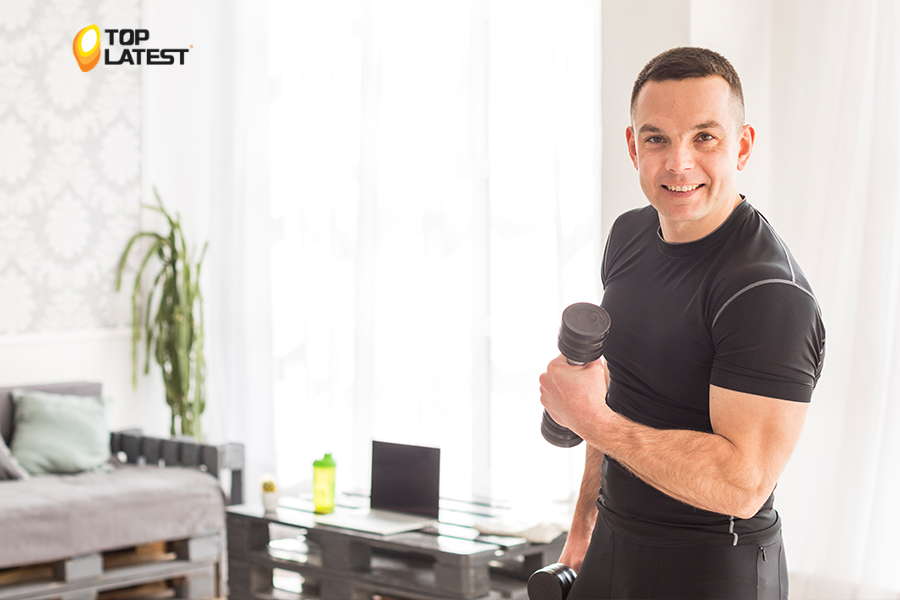
Home training removes the commute, which matters more than it sounds when stepping outside at 2 pm means a hot car and a hotter car park. A resistance band set, an adjustable dumbbell pair, and a mat cover a surprising amount of ground. Circuits built from push ups, split squats, glute bridges, plank variations, and band rows deliver a complete session in 25 to 35 minutes. Because the equipment is small, this approach suits studios and one bedroom apartments where floor space is the real constraint.
Group Fitness Classes and Boutique Studios
Booked classes solve the motivation question by putting a time in your calendar that someone else is holding. Indoor cycling, HIIT, boxing, reformer Pilates, and functional training studios operate across Dubai, Abu Dhabi, and the Northern Emirates, and most sell class packs rather than annual contracts, which suits a summer only commitment. Many operators run reduced rate summer passes and off peak slots while attendance dips. Group settings also give you coaching on form, which is where a lot of steady progress quietly comes from.
Indoor Padel, Badminton, and Court Sports
Racquet sports have become one of the fastest growing ways UAE residents stay active, and covered courts keep them available all summer. Indoor padel venues now operate across Dubai, Abu Dhabi, Sharjah, and Ajman, alongside badminton halls, basketball courts, and squash facilities in community sports centres. A 60 minute padel or badminton session delivers meaningful cardiovascular work while feeling social rather than structured, which helps if traditional cardio holds little appeal. Court bookings in the evening fill quickly, so reserving a few days ahead is worth the small effort.
Swimming in Temperature Controlled Pools
Swimming is joint friendly and full body, though it comes with a UAE specific detail worth knowing. Outdoor pools warm considerably by July, which is why chilled or temperature controlled pools have become a standard feature in newer developments and dedicated aquatic centres. Indoor lap pools at hotel gyms, community centres, and swim academies stay usable throughout the season. If your building pool sits uncovered, an early morning swim before the water absorbs the day’s heat is usually the most comfortable slot.
Yoga, Pilates, and Mobility Sessions
Lower intensity sessions earn their place in a summer week rather than filling space in it. Mobility work, mat Pilates, and slower yoga styles support the joints that strength training loads, and they pair well with the sleep and stress management that long summers tend to test. Studios across the UAE run morning and late evening classes, and short guided sessions at home work equally well. Two 20 minute mobility slots a week are usually enough to notice a difference in how the heavier sessions feel.
Mall Walking, Indoor Tracks, and Step Building
Daily step count is the quiet variable that drops fastest in summer, and UAE malls solve it neatly. Dubai Mall, Yas Mall, Mall of the Emirates, and City Centre locations open early and are used by walking groups long before retail hours begin. Some community centres and sports complexes also offer indoor tracks. Adding a 30 minute walking loop before or after work, or splitting it into two shorter blocks, keeps your baseline activity intact without needing a class or a booking.
Indoor Activity Centres for Families
Keeping children active through a long school holiday is its own project, and indoor venues make it manageable. Climbing walls, ice rinks, trampoline parks, indoor karting, and adventure play centres operate year round across the Emirates, and many run structured summer camps with swimming and sport built in. These outings count as genuine training for adults too, particularly climbing and skating. Booking weekday morning slots usually means smaller crowds and lower entry rates than weekend afternoons.
Building a Weekly Indoor Routine That Fits UAE Life
A workable summer week often looks like two strength sessions, two cardio sessions, one mobility slot, and a daily walking baseline. That structure meets the weekly aerobic and strength benchmarks without demanding more than four hours in total. Timing matters as much as content in this season. Sessions before 8 am or after 8 pm sit outside the hottest part of the day, which keeps the journey to and from the gym comfortable and makes the habit easier to repeat. Long working hours are the other consideration, and shorter sessions attended consistently outperform ambitious plans that collapse by week three. Many UAE employers now support this directly, a shift explored in this look at how UAE professionals are building sustainable wellbeing at work.
Setting Up a Workout Corner in a UAE Apartment
You need less room than you think. A clear area roughly two metres by one and a half metres is enough for a full bodyweight and dumbbell session. Choose a spot away from the direct path of the air conditioning vent, since training in a cold draught tends to stiffen the shoulders and neck. A dense mat protects the flooring and keeps noise down for neighbours below, which matters in towers with shared walls. Vertical storage keeps bands, a kettlebell, and a foam roller out of the living space between sessions. These small apartment layout ideas for studios and one bedroom flats are useful if you are carving the space out of a compact floor plan.
Hydration, Cooling, and Recovery Through the Summer Months
Indoor training reduces heat exposure, though summer still shapes how your body responds. Ambient humidity means you often arrive at a session already carrying a fluid deficit from the walk to the car or the wait for a taxi. Drinking steadily across the day rather than only around workouts is the simpler habit, and electrolytes are worth adding when sessions run long or sweat rates are high. Sleep quality also tends to shift in summer, and since recovery happens overnight, keeping the bedroom cool and screens down before bed supports training more than any supplement will. If a session feels heavier than usual, scaling the load rather than skipping the day preserves the habit.
What to Keep in Mind for a Smooth Summer Routine
A few practical points make the season run more easily. Gym peak hours shift in summer, with early mornings and late evenings busier than the middle of the day, so mid afternoon sessions often mean an empty floor. Class schedules thin out in July and August as instructors take leave, and checking the timetable weekly avoids a wasted trip. Building access rules vary too, since some residential gyms close for maintenance during the quieter months. Parking in covered structures rather than open lots keeps the pre workout and post workout journey comfortable. None of this is complicated, but planning around it removes the friction that usually breaks a routine.
Carrying Your Summer Momentum Into the Cooler Season
The residents who look strongest in November are usually the ones who kept moving in August. Holding a base of strength, cardiovascular fitness, and daily steps through the summer means October arrives as an upgrade rather than a restart, and citywide moments such as the Dubai Fitness Challenge, organised annually by Dubai Sports Council, become something you join at full capacity. Indoor training is not a compromise during the UAE summer. It is a well supported, widely available, and highly effective way to train. Explore more fitness and lifestyle guides on toplatest.ae, and speak with a qualified fitness professional or your doctor when adapting a programme to your own health needs.
Sources
- World Health Organization, Guidelines on Physical Activity and Sedentary Behaviour
- Ministry of Human Resources and Emiratisation, Occupational Heat Stress Prevention Policy under Ministerial Resolution No. 44 of 2022
- National Center of Meteorology, United Arab Emirates Climate Reports
- Dubai Sports Council, Dubai Fitness Challenge
- Ministry of Health and Prevention, United Arab Emirates National Health Survey
Frequently Asked Questions
Strength training in an air conditioned gym is the most effective indoor option, because it builds muscle and works in any weather. Home bodyweight circuits, booked studio classes such as indoor cycling and Pilates, indoor padel or badminton, and swimming in temperature controlled pools all work well. Mall walking keeps your daily step count steady. Most UAE residents combine two or three of these across the week for balanced cardiovascular and strength training results.
Outdoor exercise in July and August is most comfortable before sunrise or late at night, when temperatures ease. Daytime highs pass 45 degrees Celsius inland and coastal humidity stays elevated, so indoor sessions suit the middle of the day far better. The national midday break, which stops outdoor work between 12:30 pm and 3:00 pm, marks the peak heat window clearly. Many residents train indoors through summer and return outdoors from October.
A space roughly two metres by one and a half metres is enough for a full session. Resistance bands, one adjustable dumbbell pair, and a dense mat cover strength and conditioning without permanent equipment. Circuits of push ups, split squats, glute bridges, planks, and band rows take 25 to 35 minutes. Position your mat away from direct air conditioning airflow, and use vertical storage so the equipment disappears between sessions in a compact layout.
World Health Organization guidance for adults sets 150 to 300 minutes of moderate intensity aerobic activity each week, or 75 to 150 minutes of vigorous activity, plus muscle strengthening work on two or more days. Indoors, that translates comfortably into two gym or home strength sessions, two cardio sessions, and regular walking. Any activity counts toward the total, so shorter blocks spread across the day are effective when your schedule is full.
Indoor and temperature controlled pools stay comfortable throughout UAE summer, which is why chilled pools are now standard in newer developments, hotel gyms, community centres, and swim academies. Uncovered outdoor pools warm considerably by July, so they suit early morning swims before the water absorbs the day’s heat. Checking whether your building pool is chilled or uncovered before committing to a swimming routine helps you plan your weekly summer training schedule with confidence.