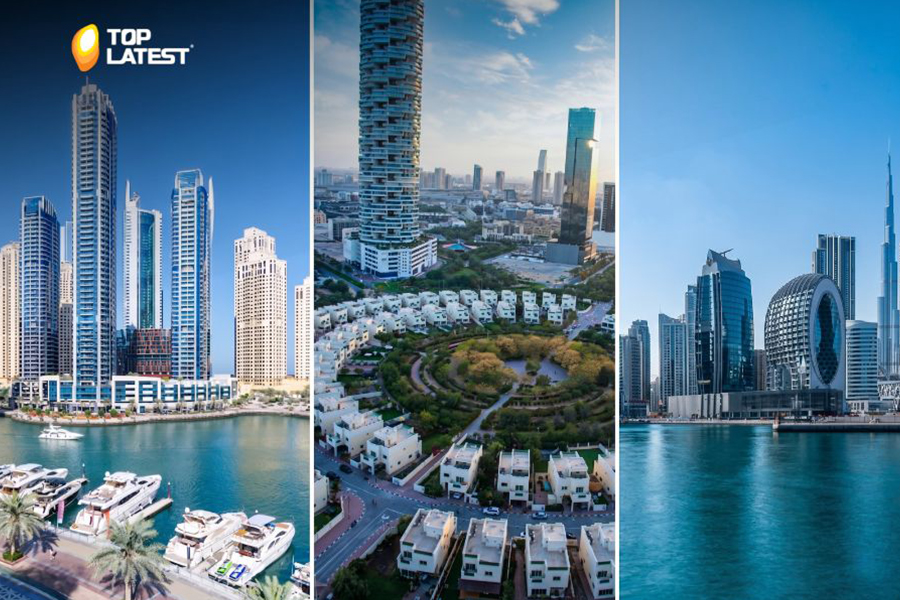
For investors evaluating income-generating apartments in Dubai, three communities consistently surface in shortlists: Dubai Marina, Jumeirah Village Circle (JVC), and Business Bay. Each represents a distinct chapter of Dubai’s residential story, and each produces a different rental yield profile depending on unit type, service charges, and tenant demand. This guide breaks down what you can realistically expect from these three communities in 2026, the factors shaping returns, and how each fits into different investor priorities.
Understanding Rental Yield in Dubai
Gross rental yield is calculated by dividing annual rental income by property purchase price. Dubai remains one of the world’s more attractive markets for yield-focused investors, with citywide apartment gross yields ranging between 6 percent and 8 percent in most established residential districts, according to Bayut’s Dubai Sales and Rental Market Report for H1 2025. Net yields sit lower once service charges, maintenance, agency fees, and short vacancy periods are deducted. Ejari registrations tracked by the Dubai Land Department show that rental demand across apartment stock has stayed strong through 2025 and into 2026, keeping occupancy elevated in most well-connected communities. Investors evaluating any Dubai community should always model both gross and net figures before committing capital.
Community-level averages, while useful as a starting benchmark, tell only part of the story. Within any given district, yield outcomes swing based on tower age, floor level, view premium, developer service standards, and how efficiently a unit is priced at purchase. A well-negotiated entry price often does more to lift yield than any subsequent leasing effort, which is why serious investors track community-level data alongside tower-level and unit-level comparables. Dubai’s mature online listing ecosystem and DLD transaction transparency make this level of due diligence practical for both first-time and experienced buyers.
Dubai Marina: A Mature Waterfront Market
Dubai Marina has anchored the city’s waterfront lifestyle segment for nearly two decades. It offers walkable promenades, tram and metro access, direct proximity to JBR beach, and a mix of studio, one-bedroom, and larger family units. The community’s international recognition drives consistent tenant interest from professionals, remote workers, and long-term expat families alike.
Yield Range and Rental Demand
Gross rental yields in Dubai Marina typically sit in the 6 to 7 percent range for standard apartments, with studios and one-bedroom units generally producing stronger yields than larger three and four-bedroom apartments. Property Finder’s rental transaction data for 2025 showed sustained tenant demand from professionals working in Dubai Media City, Dubai Internet City, and JLT, all within a short commute. Short-term holiday-let performance is also historically strong here given the tourist profile of the JBR and Marina Walk corridors, which supports flexible income strategies for investors comfortable with active management.
What Shapes Returns Here
Purchase prices are higher than in newer communities, which compresses yield percentages even when absolute rental income is strong. Service charges in older Marina towers tend to be higher than the citywide average, reflecting building age, chiller costs, and amenity upkeep. Newer waterfront releases in adjacent submarkets such as Marina Gate and Emaar Beachfront have shifted some premium tenant demand, though core Marina apartments continue to enjoy consistent absorption. Marina Walk views, unit orientation, and tower reputation each carry a measurable rental premium, which is why identical floor plans in neighbouring towers can achieve different achievable rents. Investors focused on Dubai Marina should weigh the community’s stable liquidity, ease of resale, and international brand recognition against a naturally lower yield ceiling. To explore current listings in this community, browse the Dubai Marina property collection on toplatest.ae.
Jumeirah Village Circle: The High-Yield Community
Jumeirah Village Circle, better known as JVC, has become the most cited community for yield-focused investors over the past several years. Its central location off Al Khail Road, expanding retail footprint, and family-oriented villa clusters have supported both rental demand and price growth. The community has matured meaningfully since its early handover phases, with schools, clinics, and community retail now well embedded.
Yield Range and Rental Demand
JVC apartments consistently produce gross rental yields in the 8 to 9 percent range, and select smaller units have crossed 10 percent in recent Bayut and Property Finder market snapshots. This is materially higher than the citywide apartment average and reflects two dynamics: entry prices remain lower than in premium waterfront districts, and rental demand from young professionals, couples, and small families has stayed strong. Ejari data indicates that renewal rates in JVC are healthy, which reduces vacancy exposure and stabilizes net income for investors holding long-term.
What Shapes Returns Here
New supply is a defining feature of JVC. The community continues to receive substantial handover volumes, which can create temporary pressure on rents in specific micro-clusters. Service charges vary widely across buildings, and older projects tend to have leaner charges than premium new towers with extensive amenities. Traffic on internal roads and construction activity in adjacent districts are practical considerations for both tenant experience and long-term valuation. For investors prioritizing yield percentage over prestige positioning, JVC remains one of the strongest income-focused apartment options in Dubai. A deeper look at the community’s investment profile is available in the JVC area guide on toplatest.ae.
Business Bay: The Central Urban Hub
Business Bay sits directly across the Dubai Water Canal from Downtown Dubai and functions as the city’s central mixed-use business district. Residential towers here appeal to professionals working in DIFC, Downtown, and the Sheikh Zayed Road corridor. The community blends office towers, hospitality assets, and residential stock in a way that supports evening and weekend activity, which strengthens the tenant proposition.
Yield Range and Rental Demand
Gross rental yields in Business Bay typically fall between 6.5 percent and 7.5 percent, with newer towers on the canal producing stronger absolute rental figures. Studio and one-bedroom units dominate the stock and match the profile of tenants who prioritize commute time to central business districts. Ejari-registered rental contracts show consistent renewal patterns, with limited seasonal vacancy in well-managed buildings. The area’s canal-side promenade and pedestrian bridges to Downtown continue to elevate lifestyle appeal, which supports both leasing pace and rental value trajectory.
What Shapes Returns Here
Business Bay’s yield outcomes are heavily building-specific. Canal-facing towers, waterfront promenade access, and quality of finish can shift achievable rental rates by 15 to 25 percent between comparable-sized units in adjacent buildings. Service charges also vary meaningfully. Investors evaluating this community should look closely at building age, developer track record, and per-square-foot service charges rather than treating Business Bay as a single homogeneous market. The community suits investors who want a central Dubai postcode with steady professional tenant demand and yields that sit between Marina’s stability and JVC’s higher return profile.
Ongoing infrastructure and retail activation across Business Bay, including canal walkway improvements and new food and beverage clusters, continue to support the community’s long-term rental profile. Tenants often cite the ten-minute reach to DIFC, Downtown, and Sheikh Zayed Road as the primary driver of their leasing decision, which anchors demand even in periods of new supply. For investors, this translates into shorter void periods between tenancies compared with less centrally located districts.
How These Three Communities Fit Different Investor Priorities
Each community appeals to a different investor mindset. Dubai Marina suits investors who prioritize long-term capital preservation, international resale liquidity, and a lifestyle-driven tenant base. JVC suits yield-first investors comfortable with an evolving supply landscape and a community that continues to mature year on year. Business Bay suits investors who want central-city exposure and a professional tenant profile with balanced yield and capital growth potential.
Unit type also matters. Studios and one-bedroom apartments consistently outperform larger units on yield percentage across all three communities, while two-bedroom and family-sized units offer stronger long-term tenant retention. Investors with a longer holding horizon often blend unit types within a portfolio to balance monthly cash flow with tenant stability.
Holding horizon shapes the choice as much as yield percentage. A five-year holder focused on maximizing cash flow will read the data differently than a fifteen-year holder aiming for a mix of income and capital appreciation. Similarly, whether the investor plans to lease long-term to residents or operate a licensed short-term rental changes both the effective yield calculation and the operational profile of the asset. Each of these three communities supports both models, though tenant mix and building rules vary.
Practical Considerations for Investors in 2026
Service charges, DLD registration fees, mortgage costs where applicable, and annual maintenance provisioning all reduce net yield from the gross figure. Investors should also review the rental increase framework governed by the Real Estate Regulatory Agency, which determines how much a landlord can raise rent at renewal based on RERA’s rental index. Building-level factors, tower age, tenant profile, and short-term let permissions can all shift the actual net return by one to two percentage points from the community average. Portfolio approaches often blend across communities, and reviewing current UAE property investment trends on toplatest.ae can help contextualize community-level decisions within the broader market.
Conclusion
Dubai Marina, JVC, and Business Bay each occupy a defined position in Dubai’s rental market. Marina offers stability and lifestyle appeal, JVC offers the strongest yield percentages, and Business Bay offers central-city professional demand with balanced returns. The right choice depends on whether you are optimizing for income today, capital growth tomorrow, or a blend of both. To explore current apartment listings and yield-focused opportunities across these three communities, browse the property collections on toplatest.ae and connect with a licensed real estate professional for guidance aligned to your investment goals.
Sources
- Bayut Dubai Sales and Rental Market Report, H1 2025
- Property Finder Dubai Rental Market Data, 2025
- Dubai Land Department Transaction and Ejari Records
- Real Estate Regulatory Agency Rental Index and Increase Calculator
- Knight Frank Dubai Residential Market Review, 2025
Frequently Asked Questions
A gross rental yield of 6 percent to 8 percent is generally considered healthy for Dubai apartments in 2026, with select communities producing higher figures. Bayut and Property Finder rental data show that yield outcomes vary significantly by community, unit type, and building age. Studios and one-bedroom apartments typically produce stronger gross yields than larger family units. Investors should calculate net yield after service charges, maintenance, and vacancy provisioning to assess true returns accurately.
Jumeirah Village Circle typically offers the highest gross rental yield among the three, generally sitting in the 8 to 9 percent range and occasionally higher for smaller units. Dubai Marina and Business Bay usually produce yields between 6 percent and 7.5 percent. The higher yield in JVC reflects lower entry prices combined with sustained tenant demand from young professionals and small families across the community’s expanding apartment stock and maturing retail ecosystem.
Yes, service charges vary meaningfully by community and by building. Dubai Marina tends to have higher service charges in older towers due to age and amenity levels. Business Bay charges vary sharply between waterfront and inland towers. JVC generally offers leaner service charges, particularly in older buildings, though newer amenity-rich projects can approach citywide averages. Investors should always review the current service charge schedule for each specific building carefully before finalizing any purchase decision.
Yes, the RERA rental increase calculator governs how landlords can raise rents at renewal across all Dubai communities, including Dubai Marina, JVC, and Business Bay. The calculator uses the RERA rental index and current market rents to determine allowable increase percentages. This regulatory framework provides tenants with predictability and shapes investor expectations for year-over-year income growth. Reviewing the RERA calculator before finalizing any purchase helps investors model realistic rental trajectories over time.
First-time investors often lean toward JVC for its lower entry price and stronger gross yields, or Business Bay for its central location and balanced return profile. Dubai Marina suits investors with larger budgets who prioritize capital preservation and international resale liquidity. The right choice depends on investment budget, holding horizon, and whether the priority is monthly income or long-term appreciation. Consulting a licensed real estate advisor helps align the choice with individual financial goals and risk appetite.