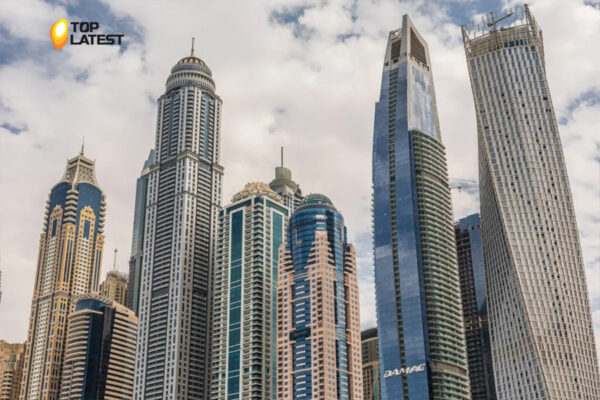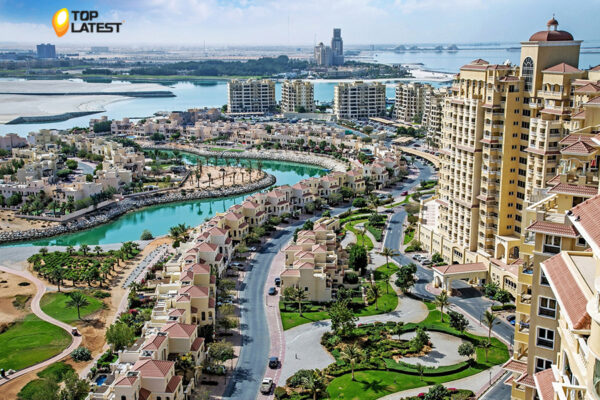

Dubai’s real estate market is not just growing. It is rewriting its own record books, year after year. In 2025, the city registered over 270,000 property transactions worth a combined AED 917 billion, marking the fifth consecutive year of record-breaking performance. And if the early numbers from 2026 are anything to go by, the momentum is only accelerating. Q1 2026 alone saw property sales cross AED 176.7 billion across roughly 48,000 transactions, with January 2026 becoming the single highest-grossing sales month in Dubai’s real estate history.
So what is fueling this surge of international capital into Dubai’s property market? The answer lies in a powerful convergence of tax advantages, residency incentives, regulatory strength, and rental yields that very few global cities can match.
A Tax Structure That Maximizes Returns
One of the most compelling reasons foreign investors choose Dubai over traditional real estate markets is the city’s tax-free framework. There is no income tax on rental earnings. There is no capital gains tax on property sales. And there is no inheritance tax on real estate assets. For investors coming from markets like the UK, France, Singapore, or even parts of the United States, where taxes can erode 20% to 40% of rental income or sale profits, Dubai’s structure is a game changer.
While there is a 5% housing fee calculated on annual rental value (collected through utility bills) and a one-time 4% DLD transfer fee at the point of sale, these costs are modest compared to the annual property tax burdens in most Western cities. The net effect is significantly higher cash flow and long-term wealth retention for investors who park capital in Dubai.
Golden Visa and Residency Pathways
Dubai does not just welcome your investment. It rewards it with residency. The Golden Visa programme, one of the most attractive residency-by-investment pathways in the world, offers a 10-year renewable residence visa for property investments of AED 2 million or more. This threshold can be met through a single property or by combining multiple properties registered under the same owner.
For investors with smaller budgets, a 2-year renewable investor visa is available for property purchases starting at AED 750,000 (approximately USD 204,000). Golden Visa holders can also sponsor their spouse, children, and parents, making it an ideal pathway for families seeking long-term stability in the UAE. There is also a retirement residency visa for individuals aged 55 and above who own property valued at AED 1 million or more.
This direct link between property ownership and residency sets Dubai apart from most global markets where buying a home does not automatically open the door to living in the country.
Rental Yields That Outperform Global Averages
While traditional investment cities like London, Hong Kong, and New York struggle to deliver net rental yields of 2% to 3%, Dubai consistently outperforms with gross yields ranging from 6% to 9%, depending on the location and property type.
High-demand communities such as Jumeirah Village Circle, Business Bay, and Dubai Marina have become hotspots for yield-focused investors. JVC alone recorded over 18,000 transactions in 2025, making it the most liquid community in the city and one of the safest entry points for foreign buyers looking for consistent rental income.
The mid-market segment, particularly properties valued between AED 1 million and AED 3 million, is driving the highest transaction volumes. This range aligns with the growing demand from young professionals, NRI (Non-Resident Indian) families, and Golden Visa applicants entering the market.
100% Foreign Ownership in Freehold Zones
Since 2002, Dubai has allowed foreigners to purchase property with full freehold ownership rights in designated areas. These include some of the city’s most sought-after neighborhoods: Dubai Marina, Downtown Dubai, Palm Jumeirah, Dubai Hills Estate, Business Bay, and Arabian Ranches, among others.
Foreign buyers face no nationality-based quotas, no caps on the number of properties they can own, and no requirement to hold a UAE residency visa before purchasing. This openness to international capital is a significant competitive advantage, particularly when compared to markets in Asia and parts of Europe where foreign ownership is either restricted or taxed at a premium.
A Regulatory Framework That Protects Buyers
Dubai’s real estate market is regulated by two key authorities: the Dubai Land Department (DLD) and the Real Estate Regulatory Agency (RERA). Together, they oversee property registration, title deed issuance, developer compliance, and dispute resolution.
For off-plan buyers, the regulatory environment has become even more robust in 2026. All payments go into RERA-regulated escrow accounts, ensuring that developer access to buyer funds is tied strictly to verified construction milestones. Developers face clear contractual penalties for delivery delays, and buyers have access to the Rental Dispute Centre and RERA arbitration in case of disagreements. This level of institutional protection has significantly reduced the risks that made earlier cycles more volatile.
Structural Demand, Not Speculative Hype
What makes the 2026 market fundamentally different from previous cycles is the nature of the demand. The growth is being driven by end-users and long-term investors rather than short-term speculators. The city’s population continues to expand through corporate relocations, digital nomad inflows, and high-net-worth migration. The UAE’s real GDP growth is projected at 5.0% for 2026, the fastest rate among GCC countries and well above the global average.
Dubai’s 2040 Urban Master Plan projects the city’s population to reach nearly 6 million, which means housing demand is only going to intensify over the next decade and a half. Off-plan sales accounted for over 60% of 2025 transaction volume, reflecting genuine pipeline depth from major developers like Emaar, Damac, Sobha, and Nakheel, not speculative froth.
sources
Dubai Land Department (DLD)
Real Estate Regulatory Agency (RERA)
International Monetary Fund (IMF)
Dubai 2040 Urban Master Plan
Federal Authority for Identity, Citizenship, Customs and Port Security (ICP)