
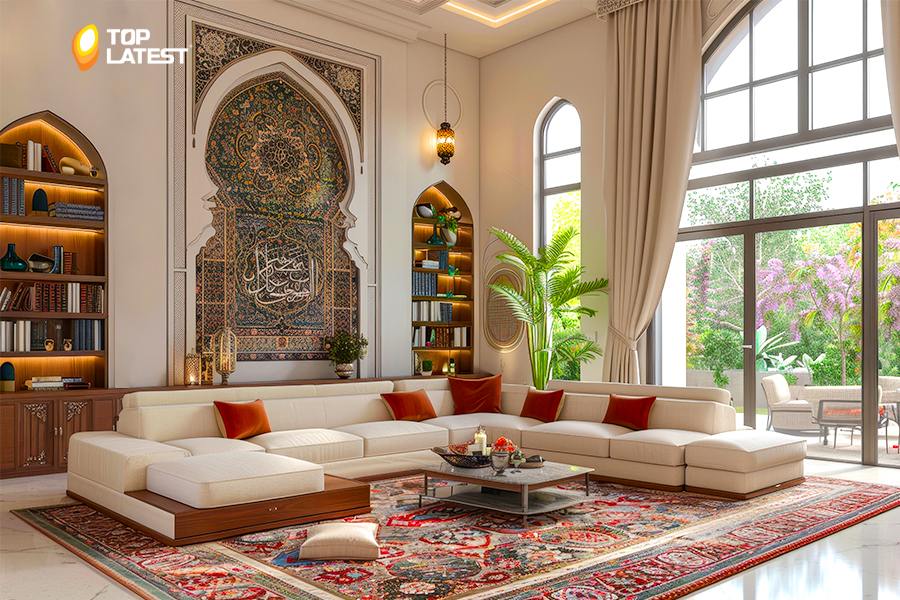
The majlis is the one room in a UAE home that arrives with a job description already attached. It is where you receive guests before they see the rest of the house, where extended family settles in for hours during Eid, and where a conversation is expected to outlast the coffee. That gives it a brief no ordinary living room has to meet. You are shaping a space that needs to feel rooted in Emirati hospitality while sitting comfortably inside a new villa in Al Furjan or a corner apartment on Al Reem Island. Styling it well starts with understanding what the room does, then deciding what it looks like.
What the Majlis Does Before It Looks Like Anything
The majlis is a functional social space with a form that developed around a purpose. UNESCO inscribed the majlis on its Representative List of the Intangible Cultural Heritage of Humanity in 2015, describing it as a sitting place where people gather to receive guests, exchange news and settle matters, typically furnished with carpets across the floor and cushions set against the walls, with coffee prepared close at hand.
Three design principles sit inside that description, and they still hold in a contemporary home. Seating runs along the perimeter so every guest faces every other guest and no seat outranks another. The centre of the room stays open so hosts can move and serve without stepping over anyone. Soft layers cover the floor and the walls, which keeps a room full of voices from turning echoey. Hold on to those three and your majlis will read as authentic no matter how modern the materials get.
Seating Comes First, Because Everything Else Follows It
Three seating formats dominate UAE homes, and they are worth ranking by how often they actually get built.
Perimeter banquette seating is the most requested arrangement in villa majlis fit-outs. A continuous upholstered bench runs along two or three walls, usually with a plinth base that reads as architecture rather than furniture. It seats more people per square metre than any sofa configuration and gives you a clean, unbroken line that suits contemporary interiors.
Floor-level seating, the traditional farsh, uses firm mattresses laid directly on the rug with masnad bolsters against the wall. It is the most culturally faithful option and by far the most flexible, since a room can absorb twenty guests when the bolsters get pushed back. Many families now use a hybrid: a low platform at 25 to 30 centimetres that keeps the floor-seated posture while making it easier for older guests to sit and rise.
Modular sofas arranged in an open U work well when the majlis doubles as a family room. Keep the seat depth generous at 60 to 65 centimetres and the seat height low at 40 to 45 centimetres, because a deep, low seat is what makes the long-sitting posture comfortable. Choose performance linen, tight-weave cotton or a wool blend over anything with a delicate pile, since this room takes heavy use. If you are sourcing pieces yourself, this guide to where to buy affordable furniture in the UAE covers the retailers and workshops worth visiting before you commission anything custom.
Rugs and the Way the Floor Is Layered
The rug is not an accessory in a majlis. It is the element that defines the room’s footprint, and getting the size right matters more than getting the pattern right. The rug should run underneath the entire seating line, with at least 20 centimetres of rug visible in front of the seat edge. A rug that floats in the middle of the floor with furniture stranded around it will make an otherwise well-planned room feel unresolved.
Traditional Emirati homes leaned on Sadu weaving, with its red, black and white geometric bands, alongside knotted Persian carpets in wealthier households. The contemporary route keeps the reference and lowers the volume: a tonal flatweave in sand or camel, a hand-knotted wool rug in muted indigo, or a plain field with a single woven border. If you want pattern, put it on the floor and keep the walls calm. Doing both at once is where majlis interiors usually lose their composure.
Lighting Built for Long Evenings
Majlis lighting has one demand that ordinary living rooms do not make: it has to stay flattering and comfortable across four or five hours of continuous use. That rules out a single bright ceiling fixture.
Build the room in three layers. Ambient light comes from cove lighting in the gypsum ceiling or recessed downlights kept off the seating line so nobody sits under a spotlight. Decorative light comes from a central pendant, and this is where a pierced brass or laser-cut lantern earns its place, because it throws patterned shadow across the ceiling once the room dims. Task light comes from floor lamps or wall sconces near the coffee area.
Specify 2700K to 3000K throughout and put everything on dimmers. Warm light flatters the sand and brass palette most majlis interiors use, while cooler temperatures make the same materials look grey. For pattern that reads as considered rather than themed, this breakdown of arabesque and geometric Islamic decor in contemporary homes is a useful reference before you commit to a screen or a ceiling detail.
Textiles, Cushions and the Wall Line
Cushions do the cultural work in a majlis, so treat them as a planned set rather than a shopping impulse. A standard approach uses large bolsters at 60 by 30 centimetres against the backrest, square cushions at 50 by 50 centimetres in front of them, and a smaller accent size in a contrasting weave. Keep three fabrics across the whole set and repeat them in rhythm rather than using ten different covers.
Curtains matter more than people expect. Full-height, floor-skimming panels in a heavy linen or textured cotton soften acoustics and frame the room properly. Layer a sheer behind them so the space works in daylight without the glare that UAE sun brings through a west-facing window.
The Coffee Corner Is a Design Element, Not an Afterthought
Arabic coffee service is central to how a majlis functions, so the room should be planned around it. That means a dedicated surface at serving height, a power point positioned for a thermos or warmer, and somewhere to keep the dallah, the finjan cups and a date dish within reach.
A built-in niche with a stone or brass shelf handles this elegantly in a villa. In an apartment, a slim console against the shortest wall does the same job. Displaying the dallah is a legitimate styling choice, not a cliche, because it signals the room’s purpose the moment someone walks in.
A Palette That Carries Both Eras
The most reliable majlis palettes stay tonal and warm. Sand, bone, camel and clay make up the base. Depth comes from a single saturated accent used sparingly: deep olive, oxblood, indigo or bronze-brown. Metal work stays in brass, antique bronze or blackened steel rather than polished chrome. Wood runs warm in walnut, oak or a stained ash.
What tends to weaken a majlis is combining high-gloss white surfaces with heavy gold detailing and expecting the result to read as luxurious. Restraint carries more authority here. One or two crafted elements against a quiet backdrop will look considerably more expensive than a room where every surface competes.
Materials Where the Two Languages Meet
The most successful contemporary majlis interiors take one traditional craft element and render it in a modern profile. A mashrabiya screen executed in flat, clean-edged gypsum or powder-coated aluminium reads as architecture rather than pastiche. Brass inlay set into an oak console echoes historic joinery without copying it. Limewash or textured plaster on a feature wall gives you the depth of traditional finishes with none of the fuss.
Stone works particularly well in UAE conditions. Travertine, honed limestone and warm-toned marble all sit naturally beside timber and brass, and they handle heat and heavy use better than most alternatives.
Planning the Layout in Villas and Apartments
In a villa, the majlis usually sits near the entrance with its own access, keeping guests separate from family living areas. Many UAE households maintain separate male and female majlis spaces, and where that applies, plan two entry points and matching finish levels rather than treating one as secondary.
The demand for that kind of space is growing. Property Finder’s residential market analysis found that four-bedroom-and-larger homes made up 62 percent of villa transactions in 2025, up from 38 percent three years earlier, pointing to family-led buying with long-term settlement in mind. Larger family homes mean more properties with room for a genuine dedicated majlis rather than a repurposed lounge.
Apartments need a different tactic. Define the majlis zone with the rug and the seating orientation instead of walls. A perimeter bench along two walls of a corner living area creates the arrangement without shrinking the room. These small apartment decor ideas for studios and one-bedroom flats include layout tactics that translate directly to a compact majlis.
Styling for Ramadan and Eid Hosting
Hosting season is when the room proves itself. Keep a second set of cushion covers in a richer weave to swap in, add a low serving table that can hold a full spread, and store four to six floor cushions for overflow seating. From October through April, an outdoor majlis on a terrace or garden extends capacity considerably, and this practical guide to balcony and rooftop decor covers shading, seating and lighting that hold up in UAE conditions.
What to Keep in Mind Before You Start
A few practical points shape how smoothly the project runs. Measure ceiling height before choosing a pendant, since many UAE villas have generous drops that a small fixture will look lost in. Structural changes, built-in joinery and new electrical points typically need approval from your local authority, and Dubai Municipality publishes permit requirements for villa modifications worth reviewing early. If you rent, prioritise freestanding benches, layered rugs and portable lighting so the whole scheme moves with you.
Bringing the Room Together
A well-styled majlis is a room that works before it impresses. Get the seating line, the rug footprint and the lighting layers right, and the traditional references you add afterwards will feel earned rather than decorative. The contemporary part is not about replacing heritage with minimalism. It is about giving those inherited forms cleaner lines, better materials and lighting that suits the way people actually gather today. Explore more home decor and UAE living guides on toplatest.ae as you plan your own space.
Frequently Asked Questions
A majlis is a dedicated reception room used to welcome and host guests, and it holds a defined place in Emirati social life. Seating runs along the walls so everyone faces one another, the centre stays open for serving, and Arabic coffee is prepared close by. UNESCO recognises the majlis as intangible cultural heritage of humanity. In modern UAE homes it usually sits near the main entrance with its own separate access for visiting guests.
Keep the traditional structure and modernise the execution. Retain perimeter seating, an open centre and layered floor textiles, then deliver them in cleaner profiles: a continuous upholstered bench, a tonal flatweave rug, and warm dimmable lighting at 2700K. Add one crafted reference such as a mashrabiya screen or brass inlay, and keep surrounding surfaces quiet. Restraint carries the room, while combining heavy pattern on walls and floor tends to overwhelm it.
Long sitting sessions call for a low, deep seat. Aim for a seat height of 40 to 45 centimetres and a seat depth of 60 to 65 centimetres, paired with firm bolsters against the backrest for lumbar support. For floor-level seating, a raised platform at 25 to 30 centimetres keeps the traditional posture while making it easier for older guests. Choose performance linen, tight-weave cotton or wool blends over delicate pile fabrics.
Warm, tonal palettes perform most reliably. Build the base from sand, bone, camel and clay, then introduce depth through one saturated accent used sparingly, such as deep olive, oxblood, indigo or bronze-brown. Keep metalwork in brass, antique bronze or blackened steel, and choose walnut, oak or stained ash for timber. This range flatters warm lighting, suits strong UAE daylight, and lets crafted details such as brass or carved screens register clearly against a calm and consistent backdrop.
Yes, and it works well when you define the zone rather than build walls. Use a large rug to establish the footprint and run a bench or modular seating along two adjoining walls to create the perimeter arrangement. A slim console handles coffee service where a built-in niche is not possible. Layered lighting and full-height curtains complete the effect, giving even a compact apartment a genuine and comfortable hosting space for guests.