The desert has always shaped how homes in the UAE look, feel, and function. From the warm ochre of the Liwa dunes to the cool sand tones of Al Marmoom, the natural landscape offers a design language that is both grounded and modern. Residents across the Emirates are moving away from stark, cool-toned interiors and leaning into palettes that reflect the environment outside their windows. Whether you are furnishing a villa in Al Barari, styling an apartment in Downtown Dubai, or redesigning a townhouse on Yas Island, a desert-inspired palette can bring quiet sophistication, cultural resonance, and lasting visual appeal to your home. This guide walks through the colors, materials, and spatial applications that help your home sit comfortably within the UAE landscape, along with practical considerations that keep the look fresh year after year.
Why Desert-Inspired Palettes Resonate in UAE Homes
Desert tones align with the UAE’s natural light, which is bright, warm, and often amber-hued during golden hour. Cool grey and crisp white interiors can feel sterile under such intense sunlight, while warm neutrals absorb and soften the glare, creating a more comfortable visual atmosphere throughout the day.
There is also a cultural layer. Traditional Emirati homes drew directly from the surroundings, using palm fronds (areesh), gypsum, coral stone, and natural pigments. Contemporary designers across Dubai, Abu Dhabi, and Sharjah are revisiting this heritage through a modern lens, pairing earthy tones with clean architectural lines, minimalist furniture, and handcrafted detailing. This fusion is often called Khaleeji modern or new Arabian design, and it has become a defining aesthetic across new residential launches and interior renovations in the Emirates.
Desert-inspired palettes also pair well with the UAE’s growing interest in biophilic design, which emphasises natural materials, indoor greenery, and visual calm. The result is a home that feels rooted in place rather than imported from a European or North American template.
Core Colors Shaping the Desert Palette
Warm Neutrals and Sand Tones
Sandy beige, dune ivory, bone, and camel form the foundation of any desert palette. These shades work beautifully on large wall expanses, ceilings, and architectural millwork. They reflect light without creating harsh glare and offer a quiet canvas for furniture and art. Warm whites with a yellow or pink undertone, rather than cool blue-based whites, help maintain the softness central to the aesthetic.
Terracotta, Clay, and Ochre
Rich clay tones add depth and warmth. Terracotta, burnt sienna, muted rust, and ochre work well as accent walls, upholstered seating, cushions, ceramics, and rugs. They evoke the colors of Hatta’s mountains and the historic clay structures found in heritage districts such as Al Fahidi and Al Shindagha. These shades anchor a space and prevent neutral palettes from feeling flat.
Oasis Greens and Muted Blues
Soft sage, olive, eucalyptus, and dusty teal reference the greenery of UAE oases such as Al Ain and the quiet blues of the Arabian Gulf. These tones work beautifully as secondary accents through planters, upholstery, tilework, and bathroom finishes. They introduce freshness without disturbing the warmth of the core palette.
Bronze, Copper, and Warm Metallics
Metallic accents in brushed brass, antique bronze, and copper tie a desert palette together. They echo the glow of a late afternoon sun and work well in lighting fixtures, cabinet hardware, mirror frames, and tableware. Polished chrome and cool silver tend to break the mood and are usually avoided in this palette.
Materials and Textures That Bring the Palette to Life
Color alone does not create a desert-inspired home. Texture is equally important. Lime-washed walls, Venetian plaster, and microcement finishes add tactile depth and reflect light in a soft, uneven way that mimics natural desert surfaces. Travertine, limestone, and sandstone, often sourced regionally, bring authenticity to flooring, countertops, and feature walls.
Soft furnishings in linen, raw cotton, boucle, and wool reinforce the organic feel. Rattan, cane, and bleached oak furniture pair naturally with the palette, while hand-knotted rugs in neutral and clay tones add warmth underfoot. Ceramic vases, carved wooden bowls, and handwoven palm baskets, many of which can be sourced through local artisans and markets such as the Irthi Contemporary Crafts Council in Sharjah, provide finishing touches that connect the home to regional craftsmanship.
Layering is central to this aesthetic. A single sandy wall colour becomes richer when it meets a travertine side table, a boucle armchair, and a woven jute rug. The eye reads these natural textures as a continuous conversation with the landscape rather than a set of unrelated finishes. Matte and lightly grained surfaces also hide dust more gracefully than high-gloss finishes, which is a practical benefit in the UAE where fine desert particles frequently settle indoors.
Applying the Palette Across Different Spaces
Majlis and Living Areas
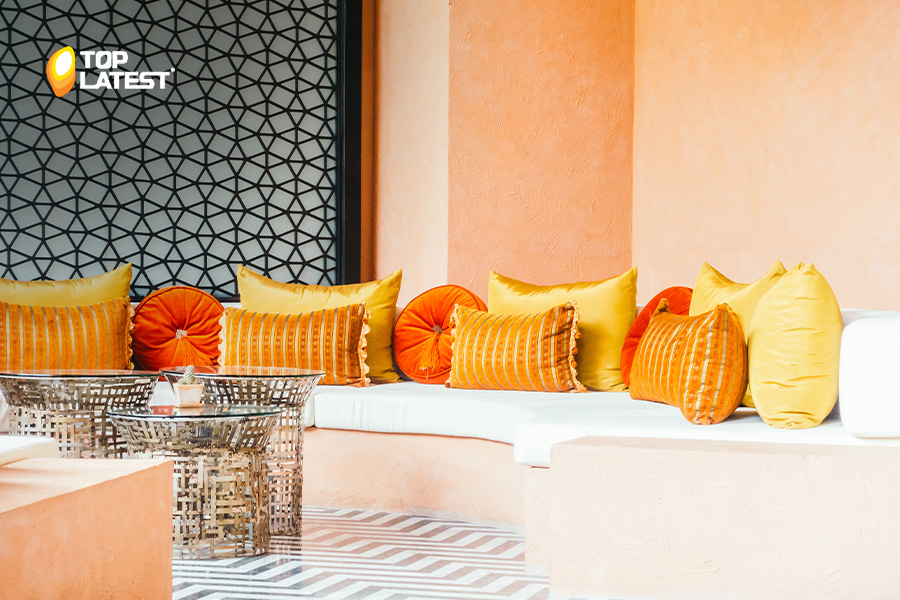
The majlis remains a central space in many UAE homes, and a desert palette suits it beautifully. Floor-level seating or low modular sofas in sand or clay tones, layered with ochre and olive cushions, create a welcoming space for gatherings. A statement light fixture in bronze or rattan adds character without overwhelming the room.
Bedrooms
Bedrooms benefit from the restful quality of desert tones. A soft dune or warm beige wall, paired with linen bedding in ivory and clay, creates a calm, retreat-like atmosphere. Layered textures through a boucle headboard, a wool throw, and a hand-knotted rug add quiet luxury without visual clutter.
Kitchens and Dining Spaces
Kitchens in natural wood, warm cream cabinetry, and travertine or limestone countertops feel both timeless and in step with current UAE design trends. Brass hardware and pendant lights above an island reinforce the palette, while open shelving in bleached oak offers space for ceramics, glassware, and curated serveware.
Outdoor Terraces and Pool Areas
Outdoor spaces are where desert palettes feel most natural. Sand-toned tiles, limestone paving, teak furniture, and olive or sage planters create a seamless connection with the landscape. Earthen pottery, lanterns in antique brass, and shaded seating areas inspired by traditional barjeel wind-tower architecture enhance both comfort and aesthetic cohesion in Emirati villas.
Practical Considerations for the UAE Climate
The UAE’s climate shapes how a palette performs over time. High UV exposure can cause certain pigments, particularly deep reds and purples, to fade faster than warm neutrals and earth tones, which naturally hold up well in strong sunlight. Humidity along coastal cities like Dubai, Abu Dhabi, and Ras Al Khaimah also calls for paint finishes that resist moisture and mildew. Washable matte and eggshell finishes from regional manufacturers such as Jotun, which publishes an annual Middle East colour trend report highlighting warm, earth-inspired palettes, tend to perform well in local conditions.
Light-reflective warm whites and sand tones can also help reduce indoor heat gain, which supports more efficient cooling across the summer months. For outdoor applications, UV-stable mineral paints and sealed natural stone offer the best longevity. Choosing locally stocked materials also reduces lead times and ensures finishes are suited to UAE conditions.
Blending Heritage with Contemporary Design
The strongest desert-inspired interiors avoid literal imitation and instead translate heritage elements into contemporary form. A traditional mashrabiya screen can appear as a laser-cut partition in warm oak. A gypsum carving motif can be reinterpreted as a subtle plaster relief above a sofa. Arched doorways, sand-coloured archways, and curved furniture echo historical Emirati architecture while fitting comfortably within modern apartments and villas across communities like Dubai Hills Estate, Saadiyat Island, and Al Zahia.
Lighting plays an important role in this blend. Warm 2700K to 3000K bulbs honour the glow of a desert evening, while layered sources such as floor lamps, wall sconces, and dimmable overhead fittings mimic the natural shift from bright afternoon light to softer dusk tones. Avoiding cool daylight bulbs preserves the warmth of the palette and keeps textured plaster walls, timber grains, and ceramic surfaces looking rich rather than washed out.
Enhancing Property Value Through Thoughtful Palette Choices
Interiors that feel timeless and locally grounded tend to appeal to a wide range of buyers and tenants. Desert-inspired palettes avoid trend-driven looks that date quickly, which can support long-term property value in prime UAE communities. For investors preparing a unit for the rental market, warm neutral palettes photograph well, present a sense of calm luxury, and resonate with both expat and resident tenants seeking homes that feel distinctly of the region. For deeper context on current design and lifestyle shifts shaping UAE residences, you can explore more through the toplatest.ae lifestyle blog section and browse interior-ready homes across curated UAE property listings that complement this aesthetic.
A Home That Reflects Its Surroundings
A home styled in a desert-inspired palette does more than look good. It reflects a considered relationship with the landscape, climate, and culture of the UAE, offering a sense of belonging that is difficult to replicate with imported trends. Whether you are refreshing a single room or planning a full renovation, this approach can transform your home into a space that feels both personal and distinctly Emirati. To take the next step, review community-specific inspiration across the toplatest.ae area guides or connect with a licensed interior designer who understands the UAE market.
Top Sources
- Jotun Middle East Colour Trends Report
- Dubai Design District (d3), TECOM Group
- Irthi Contemporary Crafts Council, Sharjah
- Dubai Land Department (DLD)
- UAE National Center of Meteorology
Frequently Asked Questions
A desert-inspired palette draws on the natural tones of the UAE landscape, including sand, dune ivory, terracotta, ochre, muted sage, and warm metallics such as bronze and copper. It emphasises warmth, texture, and visual calm rather than stark contrast. The palette is often paired with natural materials like limestone, travertine, linen, rattan, and bleached oak, creating an interior aesthetic that reflects both the Emirati environment and the quiet cultural heritage shaping modern UAE homes today.
Nearly every room benefits, though majlis spaces, living rooms, bedrooms, and outdoor terraces respond particularly well. Majlis areas gain warmth and a welcoming feel through clay and sand tones, while bedrooms become restful retreats with soft linens and dune hues. Outdoor terraces and pool areas connect naturally with limestone paving, teak furniture, and olive planters. Kitchens with cream cabinetry and travertine counters also fit seamlessly within this evolving UAE design direction.
High UV exposure and coastal humidity shape material selection in the UAE. Warm neutral pigments resist fading more effectively than deep reds or purples, while washable matte and eggshell finishes handle humidity well in cities like Dubai, Abu Dhabi, and Ras Al Khaimah. Light-reflective warm whites and sand tones can also support cooler indoor temperatures. For outdoor spaces, UV-stable mineral paints and properly sealed natural stone offer durability and preserve the palette’s warmth beautifully over time.
Yes. Apartments across Downtown Dubai, Al Reem Island, and Dubai Marina can embrace the palette through accent walls, soft furnishings, lighting, and curated accessories without major renovation. Villas offer more scope for architectural detailing such as plaster finishes, arched openings, and natural stone flooring. Regardless of property size, the palette’s warmth and texture create a sense of calm luxury that suits both compact urban homes and larger family residences across the Emirates.
Interiors styled in warm, timeless palettes tend to photograph well and attract a broad audience of expats and resident tenants seeking homes that feel distinctly regional. Desert-inspired design avoids fast-moving trends that date quickly, supporting long-term appeal in prime UAE communities. For investors preparing a unit for lease or resale, this aesthetic can enhance perceived quality, improve listing presentation, and align with growing demand for culturally resonant interiors across the UAE market.