Villa living in the UAE has moved far beyond spacious layouts and private gardens. Today, the villas gaining the most attention across Dubai, Abu Dhabi, Sharjah, and Ras Al Khaimah are those that combine architectural quality with intelligent systems quietly working in the background. Smart home integrations have become a defining feature of modern Emirati residences, shaping how families manage comfort, security, energy, and entertainment. For residents, investors, and newcomers evaluating a villa purchase or upgrade, understanding what these integrations offer, and how they fit the UAE climate, lifestyle, and regulatory landscape, is now part of the decision process. This guide walks through the integrations that are reshaping villa living across the Emirates and the practical value they bring to daily life.
The Smart Villa Landscape Across the UAE
Smart home adoption in the UAE has grown in step with the country’s broader digital agenda. Initiatives such as Dubai Smart City, the Abu Dhabi Smart Services roadmap, and the TDRA’s push toward connected living have created an environment where villas are increasingly built or retrofitted with integrated technology from the outset. Developers in communities like Arabian Ranches, Al Furjan, Yas Acres, Saadiyat Island, and Al Zahia routinely offer pre-wired smart infrastructure, home automation panels, and app-based control systems. For a closer look at the communities leading this shift, you can explore our guide to premium villa communities in Dubai on toplatest.ae.
For buyers and tenants, this means a villa is often judged on how well its systems respond to the realities of UAE living: long cooling seasons, high sunlight exposure, strict security expectations, and the desire for seamless app-based control. The result is a market where smart integrations are no longer a premium add-on but a baseline expectation in mid-market and luxury villa segments. Residents exploring new communities now evaluate automation quality with the same seriousness as finishing materials and floor plans.
Climate Control and Cooling Automation
Few integrations matter more in a UAE villa than climate control. With cooling accounting for a significant share of residential electricity consumption, intelligent thermostats and zoned air conditioning systems have become central to modern villa design. Smart thermostats from brands commonly installed in the UAE, including ecobee, Google Nest, and Honeywell, allow residents to set schedules, define room-level temperature targets, and adjust cooling remotely before returning home.
Zoning systems take this further by routing cool air only to occupied rooms, which supports both comfort and lower monthly bills. Many newer villas pair this with occupancy sensors, humidity monitoring, and ceiling fan automation to maintain comfortable interiors without over-cooling. Integration with weather data allows systems to pre-cool a villa during peak heat or ease back during the cooler winter months.
Residents also benefit from predictive maintenance alerts, which flag filter changes or performance drops before they become costly. For families managing multi-storey villas, this level of control transforms what was once a static system into a responsive one. The outcome is a quieter home environment, lower utility pressure, and a villa that adapts to how the household actually lives.
Intelligent Security and Access Systems
Security integration is one of the most widely adopted smart features in UAE villas, reflecting both personal preference and community expectations. Modern setups combine video doorbells, smart locks, perimeter cameras, motion sensors, and app-based monitoring into a single ecosystem. Platforms like Ring, Google Nest, Aqara, and Hikvision are commonly installed in Dubai and Abu Dhabi villas, often with cloud recording and multi-user access for family members and household staff.
Biometric and keypad entry systems reduce reliance on physical keys, while geofencing can arm or disarm the system automatically as residents arrive or leave. Many villas now integrate security feeds with mobile notifications, allowing homeowners to verify deliveries, monitor visiting staff, or check on the property while travelling abroad.
For communities governed by master developers, smart security often complements existing gated access and patrol services, offering an added layer of personal control. Residents evaluating villas in communities such as Jumeirah Golf Estates, Al Reef, or Mudon frequently compare how security systems integrate with the villa’s wider automation hub. The practical value is clear: faster response, better visibility, and a sense of day to day confidence that elevates the villa experience.
Lighting and Ambience Automation
Lighting is often the most noticeable smart integration a villa resident interacts with daily. Automated lighting platforms from Philips Hue, Lutron, and Aqara allow homeowners to create scenes, schedule routines, and adjust brightness or colour temperature by room or zone. In large UAE villas, this flexibility supports a wide range of uses from quiet morning routines to evening entertaining.
Circadian lighting, which shifts colour temperature through the day, is gaining popularity among families focused on wellness and sleep quality. Outdoor lighting integration, including landscape, pool, and garden lights, allows for scheduled routines that respond to local sunset times, which can shift noticeably through the year.
Dimmers, smart switches, and motion-activated hallway lighting add convenience without visual clutter. For villas designed around open plan living and double height ceilings, well planned lighting automation significantly influences how the interior feels. Residents often describe lighting as the integration that most changes their daily experience, since it shapes mood, visibility, and the character of each room in a way that passive fixtures simply cannot match.
Energy Management and DEWA Integration
Energy awareness has become a central theme in UAE villa design, supported by regulator-led programmes and growing resident interest in efficiency. Through DEWA’s Smart Living initiatives, residents in Dubai can monitor consumption in near real time via the DEWA app, access historical usage patterns, and participate in programmes such as Shams Dubai, which supports rooftop solar installation on eligible villas. According to DEWA, these smart grid efforts form part of the broader Dubai Clean Energy Strategy 2050, which aims to position the Emirate as a global leader in clean energy adoption.
Smart energy monitors at the circuit level, products from brands like Sense and Shelly, give villa owners granular visibility into which appliances consume the most power. Pairing this data with smart plugs, intelligent water heaters, and automated shading reduces unnecessary load during peak hours.
For villas with solar integration, battery storage and inverter monitoring extend the benefits further. Residents often use dashboards to track performance over time, make informed decisions about appliance upgrades, and align daily routines with lower consumption patterns. The combined effect is a villa that supports both household budgets and the UAE’s wider sustainability goals.
Voice Assistants, Hubs, and the Matter Standard
At the centre of most smart villas sits a hub or voice assistant that ties individual devices together. Amazon Alexa, Google Assistant, and Apple HomeKit remain the most widely used platforms in UAE households, with Samsung SmartThings and Home Assistant gaining ground among residents seeking deeper customisation. The rise of the Matter standard has made it considerably easier for devices from different brands to communicate within a single ecosystem.
Hubs manage automation routines, voice commands, and multi-device coordination. A single phrase can lower the shades, dim the lights, and set the thermostat for a movie night. For bilingual households, Arabic language support in Alexa and Google Assistant has expanded, making voice control more inclusive for family members of different language preferences.
Villa owners planning long term often prioritise hubs that support Matter and Thread, since these open standards reduce dependence on any single brand. This forward compatible approach protects the investment made in automation infrastructure and allows the villa’s technology stack to evolve as new devices enter the UAE market over the coming years.
Water, Leak Detection, and Utility Monitoring
Water management is an understated but valuable smart integration in UAE villas, where irrigation needs, swimming pools, and water features are common. Smart irrigation controllers from Rachio and Hunter adjust watering schedules based on local weather data, which supports both plant health and reduced water usage. Leak detection sensors placed under sinks, near water heaters, and around pool equipment alert residents to issues before they escalate into costly repairs.
For villas with pools, smart pool controllers manage filtration cycles, heating, and chemical balance, often with mobile dashboards for easy oversight. Residents can also connect their water usage to the DEWA smart meter data available through the app, giving a complete view of indoor and outdoor consumption. The outcome is a villa that uses water with more intention, protects its interiors from avoidable damage, and keeps outdoor spaces consistently well maintained.
Entertainment and Multi Room Audio Visual Systems
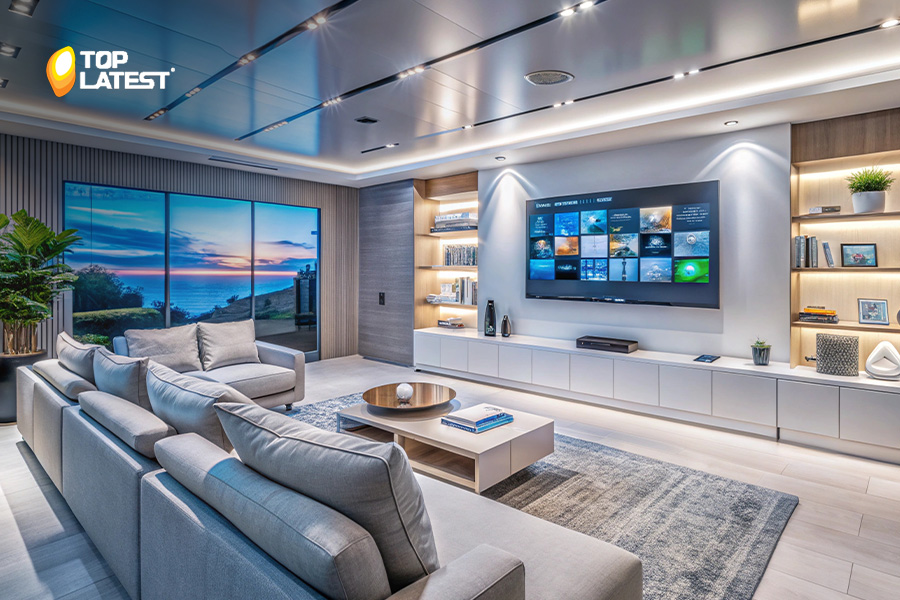
Modern UAE villas increasingly feature integrated entertainment setups that extend from the main living area to bedrooms, outdoor majlis zones, and home cinemas. Multi room audio platforms from Sonos, Bose, and Denon HEOS allow residents to stream music across different areas with independent volume and source control. Home cinema systems paired with motorised screens, acoustic treatment, and app controlled projectors deliver a premium viewing experience suited to larger villa footprints.
Streaming integration with regional and international platforms, universal remotes, and voice command compatibility make everyday use straightforward for all family members. For households that entertain frequently, scene based automation can prepare the entire ground floor for a gathering with a single command. This level of integration turns entertainment infrastructure into a flexible part of villa life rather than a fixed and underused installation.
Planning a Smart Villa Setup for Long Term Value
For residents considering a new villa purchase or an upgrade to an existing property, smart integration planning benefits from a clear sequence. Climate control, security, and lighting typically form the first phase, since they deliver the most noticeable daily benefit. Energy monitoring, water management, and entertainment integrations often follow in a second phase, informed by actual usage patterns. Browsing current villa listings across the UAE can help clarify which configurations best match household needs and long term plans.
Working with Dubai Municipality approved contractors, confirming warranties, and reviewing data privacy policies for cloud connected devices are practical steps that support long term value. Villas with structured cabling, dedicated network closets, and reliable mesh Wi Fi systems tend to accommodate future upgrades more smoothly. For buyers evaluating listings, asking developers about pre-wiring, hub compatibility, and future proofing is a straightforward way to gauge how well a property aligns with modern smart living standards across the UAE.
Final Thoughts
Smart home integrations have moved from novelty to expectation across modern UAE villas. From climate control and security to energy management and multi room entertainment, these systems are reshaping how residents experience daily life in Dubai, Abu Dhabi, Sharjah, and beyond. For buyers, renters, and investors, understanding the integrations that matter most provides a clearer picture of long term value and lifestyle fit. To continue exploring UAE property insights and sustainable living trends, see our latest UAE lifestyle and property articles on toplatest.ae and connect with a licensed property consultant when ready to evaluate specific villas in detail.
Top 5 Sources
- Dubai Electricity and Water Authority (DEWA)
- Dubai Supreme Council of Energy, Dubai Clean Energy Strategy 2050
- Digital Dubai (Smart Dubai)
- Telecommunications and Digital Government Regulatory Authority (TDRA)
- Dubai Municipality
Frequently Asked Questions
In UAE villas, the integrations that deliver the most daily value are climate control, security, and lighting automation. These address the realities of long cooling seasons, community security expectations, and large open plan interiors common across Dubai and Abu Dhabi. Energy monitoring and water management follow closely, especially for villas with pools or landscaped gardens. Together, these systems create a responsive home environment that supports comfort, efficiency, and a modern lifestyle across the Emirates.
Yes, many smart home systems in Dubai work alongside DEWA services. Residents can monitor electricity and water consumption through the DEWA app, participate in Shams Dubai for rooftop solar on eligible villas, and align household automation with real time usage data. Smart thermostats, energy monitors, and solar inverters can all complement DEWA’s smart meter infrastructure, giving villa owners a clearer view of consumption patterns and supporting more informed decisions about long term efficiency.
Many new villa communities across the UAE include smart home features as part of the base offering. Developments in areas such as Arabian Ranches, Yas Acres, Saadiyat Island, and Al Zahia typically provide pre-wired infrastructure, automation panels, and app-based control for lighting, climate, and security. Buyers evaluating new launches often review the specific hub, device brands, and future compatibility supported by the developer, since this shapes how easily the villa can evolve over time.
Both Amazon Alexa and Google Assistant support Arabic in the UAE, making them well suited to bilingual households. Alexa offers Arabic voice interaction for routines, device control, and general queries, while Google Assistant supports Arabic across many smart home commands. Apple HomeKit relies on Siri, which also supports Arabic. The right choice often depends on preferred device ecosystems, existing smartphones, and the brands of smart appliances already installed in the villa.
Residents planning an upgrade typically start by auditing current wiring, Wi Fi coverage, and electrical capacity. Climate control, security, and lighting are common first additions since they deliver immediate benefits. Energy monitoring, water management, and entertainment systems can follow once usage patterns are understood. Working with Dubai Municipality approved contractors, confirming warranties, and selecting hubs that support the Matter standard helps ensure the villa remains compatible with future smart devices as the market evolves.