Flooring shapes how a home performs across the UAE’s distinct seasons, from the intense dry heat of summer to the cooler, more humid winter months along the coast. In Dubai, Abu Dhabi, Sharjah, and Ras Al Khaimah, the right surface does more than complete an interior scheme. It regulates comfort underfoot, resists fine desert dust, holds up to frequent cleaning cycles, and protects long-term property value. For buyers, long-term renters, and investors upgrading units for yield, flooring deserves the same scrutiny as kitchens, layouts, and community location.
This guide covers the flooring materials that perform reliably in UAE residential conditions, the local factors each one is suited to, and the practical decision points residents weigh when selecting floors for a villa, townhouse, or apartment.
Why UAE Climate Shapes Every Flooring Decision
Three environmental factors dominate flooring performance across the Emirates. Summer temperatures sit regularly above 40 degrees Celsius for extended months, with coastal humidity in Dubai and Abu Dhabi often exceeding 70 percent in late summer, according to climate data published by the UAE National Centre of Meteorology. Fine airborne sand enters homes through doors, balconies, and ventilation systems, settling into any surface that holds texture. And interiors stay cool year round because of near-constant air conditioning, which creates a sharp indoor to outdoor temperature contrast at entry points.
These conditions reward materials that stay dimensionally stable under temperature variation, remain non-porous enough to resist moisture during the humid season, and clean easily from sand and dust. They also favour finishes that reflect light well and support the open, bright interior schemes that define most modern UAE homes.
Porcelain Tiles: The Default Choice Across UAE Homes
Porcelain remains the most widely installed flooring material in UAE residential projects, from mid-market apartments in Jumeirah Village Circle to high-end villas in Emirates Hills and Al Barsha South. Its popularity reflects a precise match with local conditions. Porcelain is fired at very high temperatures, which produces a dense, low-porosity tile that tolerates humidity, resists staining, and stays cool underfoot, a meaningful comfort factor during peak summer.
Large-format porcelain in sizes such as 600 by 1200 millimetres and 800 by 800 millimetres is now standard across new handovers from major developers. Larger tiles reduce grout lines, which simplifies cleaning in a dust-heavy environment and gives interiors a seamless, contemporary finish. Marble-effect, concrete-effect, and travertine-effect porcelain variants let residents achieve a premium aesthetic without the maintenance load of natural stone.
Porcelain also aligns with Dubai Municipality’s Al Sa’fat green building regulations, which encourage durable, low-emission interior materials in new residential construction. For investors, porcelain offers a long replacement cycle, often 20 years or more with reasonable care, which protects renovation budgets and tenant satisfaction over multiple leasing cycles.
Ceramic Tiles for Budget-Conscious Interiors
Ceramic tiles sit a step below porcelain in density and typically cost less per square metre installed. They remain a strong choice for secondary bedrooms, service areas, utility rooms, and apartment refurbishments where budget sensitivity matters. Modern ceramic finishes handle UAE conditions well in low-traffic zones, though they are more porous than porcelain and more prone to chip under heavy furniture or dropped kitchenware.
Residents refurbishing older units in Deira, Bur Dubai, or central Sharjah often choose ceramic for its balance of cost and performance, particularly when the goal is a clean, rentable finish rather than a long-hold investment.
Natural Stone: Marble and Travertine for Premium Interiors
Natural stone remains a signature of high-end UAE villas, particularly in Palm Jumeirah, Downtown Dubai penthouses, Saadiyat Island, and Al Reem Island. Marble delivers a distinctive visual presence that porcelain substitutes approximate but rarely replicate at close range. Travertine, with its warmer tone and gently textured surface, suits the Mediterranean and contemporary Arabic design schemes common in villa communities across the Emirates.
Natural stone requires more attention than porcelain. Marble is porous and reacts to acidic spills, which calls for sealing every one to two years and prompt cleaning. Humidity along the coast can accelerate the dulling of untreated surfaces. Residents who choose marble typically commit to a maintenance routine or arrange periodic professional polishing, both of which are widely available services across Dubai and Abu Dhabi.
For villa buyers prioritising long-term aesthetic value and willing to invest in upkeep, natural stone remains a defining choice. For investors optimising for low-maintenance yield, porcelain often delivers a stronger balance between appearance and running cost.
Luxury Vinyl Tiles and Planks for Flexible Interiors
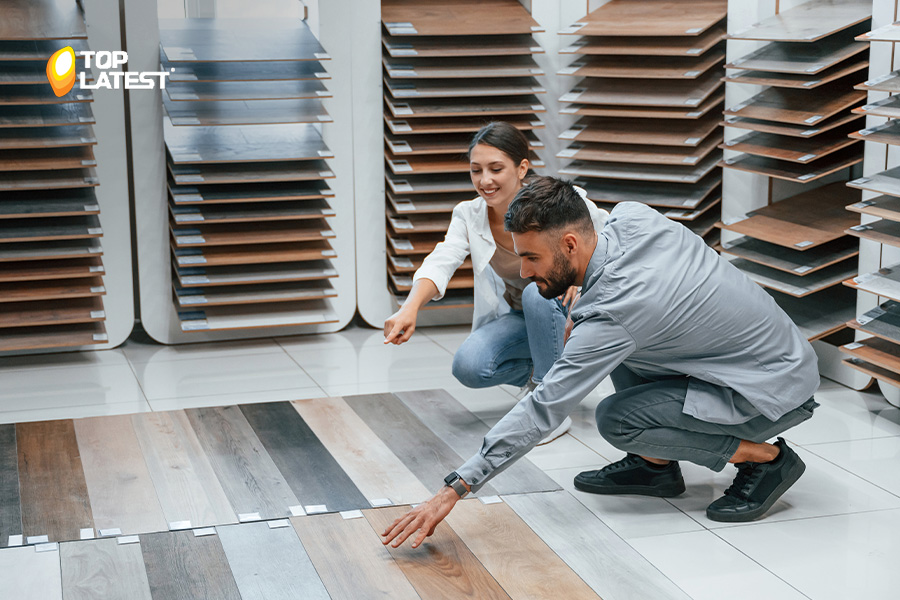
Luxury vinyl tile, often referred to as LVT, has gained significant adoption in UAE interiors over the past five years. The material is waterproof, soft underfoot, dimensionally stable in air-conditioned environments, and available in realistic wood and stone visuals. It installs quickly over existing tile in many cases, which makes it a practical option for rental refurbishments and apartment upgrades where a full tile replacement is not viable.
LVT performs particularly well in family villas with young children or pets, where impact resistance and sound dampening matter. It also suits home offices and media rooms, where acoustic comfort influences daily use. Residents evaluating flooring for a quick refresh or a rental turnaround often shortlist LVT alongside porcelain.
Engineered Wood for Warmth and Character
Engineered wood brings warmth that neither tile nor vinyl can fully replicate. It is constructed in layers, which gives it greater dimensional stability than solid hardwood under UAE humidity shifts. In well-conditioned apartments and villas with controlled interior climates, engineered wood performs reliably for a decade or more.
The material suits bedrooms, living rooms, and dressing areas where the goal is a softer visual tone. It is less suitable for kitchens, bathrooms, and ground-floor villa entries that connect directly to outdoor sand exposure. Residents considering engineered wood typically combine it with porcelain or stone in wet and high-traffic zones to balance aesthetics with practicality.
Laminate Flooring for Rental Refreshes
Laminate offers wood and stone visuals at a lower price point than engineered wood or LVT. It installs quickly and suits short-term apartment refreshes, particularly in investor-held units preparing for new tenants. Modern laminate ranges include water-resistant variants that handle minor spills, though they do not match the full waterproof performance of LVT or tile.
Laminate works best as a tactical choice for interior refreshes with a defined short to medium hold period, rather than a long-term villa investment.
Carpet in Selected Spaces
Full carpet installations are uncommon in UAE homes because of dust and allergen considerations, but area rugs and selective bedroom carpet remain popular for warmth and acoustic softening. Residents in family villas often use carpet in secondary bedrooms, children’s play areas, and home cinemas, where comfort and sound control carry higher weight than easy cleaning. Washable rugs over tile or stone give families a flexible middle ground, delivering softness underfoot while preserving the easy maintenance that UAE conditions reward.
Villa and Apartment Considerations
Flooring selection shifts with property type. Villas in communities like Arabian Ranches, Al Furjan, Mirdif, and Khalifa City typically benefit from large-format porcelain across ground floors and connecting areas, with engineered wood or LVT in upper-floor bedrooms. The ground floor sees the heaviest dust and foot traffic, which favours low-maintenance materials. Readers planning a villa interior refresh will find more detail in the broader villa upgrade and renovation coverage on toplatest.ae.
Apartments, particularly in high-rises across Downtown Dubai, Dubai Marina, Business Bay, and Al Reem Island, often come with developer-installed porcelain or marble. Replacement typically happens only during major refurbishments. For tenants and owners planning cosmetic updates, LVT overlay or area rugs offer meaningful change without structural work. Those weighing a new apartment search can explore current listings and area-specific guides across the toplatest.ae apartments section.
Maintenance, Cost, and Long-Term Value
Flooring economics in the UAE favour materials with long replacement cycles and simple cleaning routines. Porcelain and natural stone sit at the top for lifespan, with LVT and engineered wood occupying the mid-range. Laminate carries the shortest practical lifespan under UAE conditions.
Daily maintenance across all materials benefits from frequent dry sweeping or vacuuming to remove fine sand, followed by damp mopping with pH-neutral cleaners. Harsh chemicals shorten the life of natural stone and dull the finish on engineered wood. Residents preparing a resale-ready unit often combine durable base materials with styling details drawn from current UAE interior design and home styling guides on toplatest.ae.
Making the Decision
The flooring choice that suits a UAE home depends on three practical questions. How long is the planned hold period? How much maintenance effort fits the household’s routine? And what visual tone supports the long-term value of the property? Porcelain answers the broadest range of these questions, which is why it dominates the market. Natural stone, LVT, engineered wood, laminate, and carpet each have defined roles that make them the right answer in specific contexts.
For residents preparing a new home, refreshing an investment unit, or planning a villa upgrade, exploring more detailed area and renovation guides on toplatest.ae offers a useful next step. Those seeking tailored input can also connect with a licensed interior contractor or flooring specialist operating under Dubai Municipality or the relevant Emirate authority registration.
Top Sources
- UAE National Centre of Meteorology
- Dubai Municipality (Al Sa’fat Dubai Green Building Evaluation System)
- Ministry of Industry and Advanced Technology (MOIAT)
- Dubai Land Department (DLD)
- Abu Dhabi Department of Municipalities and Transport
Frequently Asked Questions
Porcelain tiles are the most widely used flooring across UAE residential properties. The material resists heat, humidity, and fine desert dust while staying cool underfoot during summer. Large-format porcelain in marble, concrete, or travertine finishes is standard in new villas and apartments across Dubai, Abu Dhabi, and Sharjah. Its long lifespan, straightforward maintenance, and alignment with Dubai Municipality green building standards make it a reliable base choice for both end-users and investors.
Marble performs well in UAE villas when residents commit to periodic sealing and prompt cleaning. The material is porous and reacts to acidic spills, so coastal humidity in Dubai and Abu Dhabi can dull untreated surfaces faster than in drier interiors. Sealing every one to two years, combined with pH-neutral cleaning, extends the finish significantly. Professional polishing services across the UAE handle restoration where needed, which keeps marble viable for premium villa and penthouse interiors.
Luxury vinyl tile performs reliably in UAE apartments because it is waterproof, dimensionally stable under constant air conditioning, and soft underfoot. It installs quickly, often over existing tile, which suits rental refurbishments and cosmetic upgrades in high-rise units across Dubai Marina, Business Bay, and Al Reem Island. LVT also delivers realistic wood and stone visuals at a lower cost than engineered wood or natural stone, making it a practical choice for mid-term holds in investor-owned units.
Ground-floor villa areas see the heaviest sand exposure and foot traffic, which favours large-format porcelain or natural stone. These materials tolerate frequent cleaning, resist scratching from fine dust, and connect visually with outdoor terraces common in Arabian Ranches, Al Furjan, and Khalifa City villas. Engineered wood and LVT are better suited to upper-floor bedrooms and private living spaces, where moisture exposure is lower and acoustic comfort carries more weight than daily durability.
Engineered wood suits well-conditioned UAE interiors, particularly bedrooms, living rooms, and dressing areas in apartments and upper-floor villa spaces. Its layered construction gives greater dimensional stability than solid hardwood under humidity shifts common in coastal cities. It performs reliably for a decade or more when kept away from direct sand exposure and wet areas. Most residents pair engineered wood with porcelain or stone in kitchens, bathrooms, and entry zones to balance warmth with everyday practicality.