Walk into any food court in Dubai or Abu Dhabi and you will see three Arab kitchens sharing the same shelf. One builds entire meals around spiced rice, slow cooked meat, and dried lime. Another leans on olive oil, fresh herbs, and small sharing plates. The third runs on fava beans, flatbread, and street food muscle memory. They look related on the surface, yet each tells a different story about geography, climate, and the migration patterns that have shaped the UAE’s dining scene.
This guide breaks down Khaleeji, Levantine, and Egyptian cooking in plain language for anyone eating out across the Emirates. You will learn what makes each one distinct, where to taste the real thing across the UAE, how to identify the flavour signature the moment a menu lands on your table, and how to order with confidence on your next dinner out with family, colleagues, or visiting guests.
Why these three traditions define Arab dining in the UAE
Arab cuisine is not one cuisine. It is a network of regional kitchens shaped by what the land grows, what the sea offers, and which trade routes passed through. Three of these regional schools dominate menus across the UAE today, and understanding the flavour logic behind each one turns any menu into an easy read.
Khaleeji cooking is the food of the Arabian Gulf, with Emirati cuisine at its heart. It carries the warmth of Indian Ocean spice routes and the practicality of a desert pantry. Levantine cooking traces back to the eastern Mediterranean and is built around olive oil, wheat, and fresh produce. Egyptian cooking sits on the Nile, anchored in ancient grain agriculture and one of the densest street food cultures in the region.
Each tradition has its own flavour signature. Recognise the signature and the menu suddenly makes sense.
Khaleeji cuisine: the spiced, rice led Gulf kitchen
Khaleeji food is the culinary heritage that residents in the UAE encounter first through Emirati hospitality. Long basmati rice, slow cooked lamb or chicken, dried black lime called loomi, saffron, cardamom, cinnamon, and clarified butter define the palate. Influences from India, East Africa, and Persia are baked into the recipes thanks to centuries of dhow trade across the Arabian Sea, giving the cuisine a depth that reflects the UAE’s long history as a trading crossroads.
The signature format: one big platter
A Khaleeji meal often centres on one large communal platter designed for family style eating. Majboos in the UAE, along with kabsa, machboos, ghuzi, and madfoon, are the household names. The Emirati dish thareed, a slow stew of meat and vegetables ladled over thin regag bread, is a Ramadan staple. Harees, a slow cooked wheat and meat porridge, is another Ramadan tradition served in Emirati homes across the country.
How to spot it on a menu
Look for dried lime, saffron rice, slow cooked lamb, and dishes named majboos, machboos, kabsa, ghuzi, or madfoon. Sweets like luqaimat, balaleet, and khabeesa close the meal. Arabic coffee, or gahwa, served with dates is the signature welcome ritual across the Emirates and is recognised by UNESCO on the Representative List of the Intangible Cultural Heritage of Humanity as a central symbol of Gulf hospitality.
Levantine cuisine: the herbaceous Mediterranean kitchen
Levantine food is the Arab cuisine most new expats meet first in the UAE thanks to its wide restaurant presence in Dubai, Abu Dhabi, and Sharjah. It is the world of hummus, tabbouleh, fattoush, manakish, shawarma, and grilled kebabs served with garlic sauce. The flavour profile is bright, lemony, and herb forward. Parsley, mint, sumac, za’atar, and olive oil do most of the heavy lifting.
The signature format: mezze
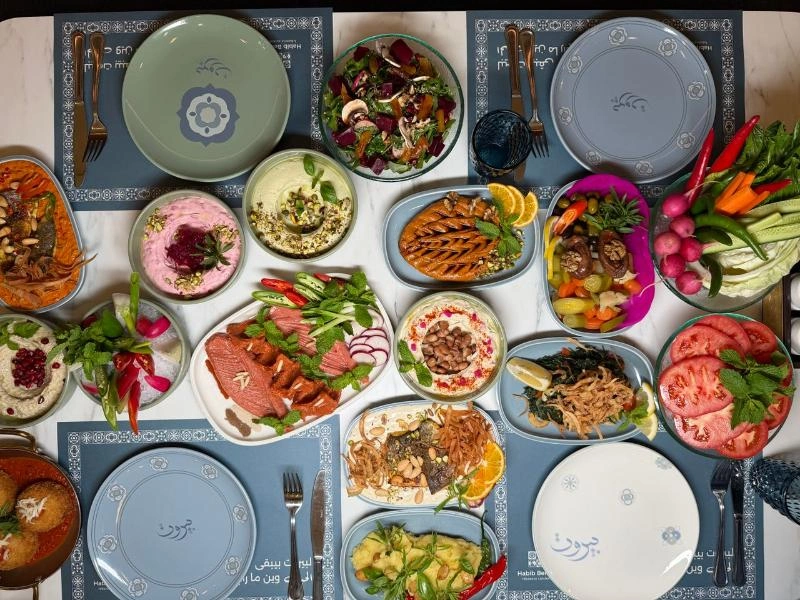
A proper Levantine meal arrives as mezze, a spread of small cold and hot plates designed for sharing. Cold mezze includes hummus, moutabal, labneh, muhammara, and tabbouleh. Hot mezze brings kibbeh, sambousek, grilled halloumi, and arayes. Mains usually arrive last, often mixed grills or oven baked dishes, which makes the format ideal for group dining across the UAE’s popular dining districts.
How to spot it on a menu
If you see za’atar, sumac, pomegranate molasses, tahini, and bulgur listed within the same menu, you are in Levantine territory. Bread is almost always thin Arabic flatbread, and salads carry more herbs than lettuce. Mansaf, the ceremonial lamb and fermented yoghurt rice dish now widely available at Levantine restaurants across the UAE, was inscribed on UNESCO’s Representative List of the Intangible Cultural Heritage of Humanity in recognition of its cultural significance.
Egyptian cuisine: the bean and bread heartland
Egyptian food is older than most kitchens on this list and arguably the most carbohydrate driven. The Nile Valley has grown wheat, fava beans, and lentils for thousands of years, and the modern Egyptian table still leans on these staples. According to the Food and Agriculture Organization of the United Nations, Egypt is one of the largest wheat consuming nations per capita in the world, which explains why bread, called aish, is treated as the centre of every meal and remains a defining feature of Egyptian restaurants across the Emirates.
The signature format: hearty, layered, and value driven
Egyptian cooking is generous and starch heavy. Ful medames, a slow simmered fava bean stew topped with olive oil, cumin, and lemon, is the national breakfast. Ta’ameya, the Egyptian green falafel made from fava beans rather than chickpeas, is sold from morning carts. Koshari, the famous mix of rice, lentils, pasta, chickpeas, fried onions, and spicy tomato sauce, is the country’s unofficial national lunch and now a familiar comfort food in Egyptian eateries across the UAE.
How to spot it on a menu
Menus that feature ful, ta’ameya, koshari, molokhia, hawawshi, feteer meshaltet, and mahshi belong to this tradition. Spice levels are gentler than Khaleeji food, with cumin, coriander, garlic, and chilli doing most of the work. Sweets like basbousa, om ali, and konafa close the meal, often paired with a strong cup of Egyptian style coffee or a chilled hibiscus drink.
Quick reference for the three flavour signatures
If you only remember three contrasts, remember these. Khaleeji cooking is spice led and built around one large rice platter. Levantine cooking is herb led and built for sharing small plates. Egyptian cooking is grain and legume led and built for daily sustenance at an honest price point.
Ghee and vegetable oil dominate Khaleeji and Egyptian kitchens, while olive oil is the dominant fat in Levantine cooking. Dried lime and saffron deepen Khaleeji plates, lemon and pomegranate molasses brighten Levantine ones, and cumin and tomato anchor Egyptian ones. Once these three signatures land, every Arab menu in the UAE becomes easier to navigate.
Where to taste each tradition across the UAE
The UAE is one of the few places in the world where you can sample all three traditions in a single afternoon. Khaleeji food is best explored in heritage districts and older neighbourhoods, where family run kitchens still serve majboos, harees, and luqaimat the way they have been cooked at home for generations. Waterfront communities such as Al Raha Beach in Abu Dhabi pair traditional Emirati menus with modern marina dining for a fuller picture of how Gulf cuisine is evolving.
Levantine restaurants cluster in Downtown Dubai, JLT, and along the Abu Dhabi Corniche. Mezze houses at Souk Al Bahar are a strong starting point for first time visitors who want a classic shared plates experience with Burj Khalifa views.
Egyptian food in the UAE is most authentic in residential pockets with strong Egyptian communities, where ful and ta’ameya are served from sunrise. Dining out is also worth budgeting for when planning where to live.
How to order with confidence
A simple rule of thumb helps first timers. At a Khaleeji restaurant, pick one rice platter per two people and add a soup or salad on the side. At a Levantine restaurant, order two cold mezze, two hot mezze, one grill, and bread for the table. At an Egyptian restaurant, start with ful and ta’ameya, then move on to koshari or a stuffed vegetable main.
Drinks tell their own story. Khaleeji meals almost always finish with gahwa and dates. Levantine meals often end with mint tea or Arabic coffee. Egyptian meals are often paired with karkadeh, a chilled hibiscus drink, or sahlab in winter, giving each tradition a distinct closing note.
Bringing it together
Telling Khaleeji, Levantine, and Egyptian cuisines apart is less about memorising dish names and more about reading the logic of each kitchen. Once you know that Khaleeji cooking is spice led and platter driven, Levantine cooking is herb led and shareable, and Egyptian cooking is grain led and street wise, every Arab menu across the Emirates becomes easier to navigate. Use this guide on your next dinner out, and explore TopLatest for neighbourhood and lifestyle insights that help you settle into the UAE’s rich food culture with confidence.
Sources
- UNESCO Representative List of the Intangible Cultural Heritage of Humanity, inscriptions on Arabic coffee and Mansaf
- Food and Agriculture Organization of the United Nations, data on wheat consumption in Egypt
- Dubai Department of Economy and Tourism, culinary and restaurant scene publications
- Emirates Culinary Guild, reference material on Emirati and Khaleeji cuisine
- Slow Food Foundation Ark of Taste, catalogue entries on traditional Levantine, Gulf, and Egyptian dishes
Frequently Asked Questions
Khaleeji cuisine centres on spiced basmati rice, slow cooked meat, dried lime, and saffron, usually served on one large communal platter shared family style. It tastes warm, aromatic, and deeply spiced. Levantine cuisine is built around olive oil, fresh herbs, lemon, and small mezze plates designed for sharing. It tastes bright and herbaceous. In short, Khaleeji food across the UAE is spice led and platter driven, while Levantine food is herb led and mezze driven.
Egyptian food is classified as both North African and Middle Eastern, which is why it appears on Arab restaurant menus across the UAE. It shares ingredients like fava beans, wheat, and lentils with the wider Mediterranean, while also showing Nubian and sub Saharan influences from the south. Dishes like ful medames, ta’ameya, and koshari are uniquely Egyptian and rarely served in the same form anywhere else, giving Egyptian restaurants in the Emirates a distinct culinary identity.
Levantine cuisine is widely considered the healthiest option for daily eating because it follows a Mediterranean style pattern. It relies on olive oil, legumes, whole grains like bulgur, fresh vegetables, herbs, and lean grilled proteins. Portions are naturally controlled through the mezze format. Egyptian food is also plant heavy and affordable across the UAE. Khaleeji food is flavourful and satisfying, though richer in ghee and slow cooked meat, so it often suits occasional indulgence alongside a lighter everyday diet.
Authentic Khaleeji food in the UAE is most reliably found at heritage focused Emirati restaurants, neighbourhood kitchens in older districts, and dedicated cultural venues that serve majboos, harees, thareed, and luqaimat. Many waterfront communities and traditional souks also house family run establishments worth seeking out. For a fuller experience, look for places that serve gahwa with dates on arrival, as this is a strong indicator that the kitchen follows traditional Gulf hospitality and cooking standards.
Yes, all three offer strong vegetarian options across the UAE, though to different degrees. Levantine cuisine is the most vegetarian friendly, with hummus, moutabal, tabbouleh, fattoush, falafel, and stuffed grape leaves as core dishes. Egyptian cuisine is also highly accessible thanks to ful medames, ta’ameya, koshari, and molokhia. Khaleeji cuisine traditionally centres meat, though vegetable stews, rice dishes, and lentil soups are common, and modern Gulf restaurants increasingly offer dedicated vegetarian menus alongside classic meat platters.