
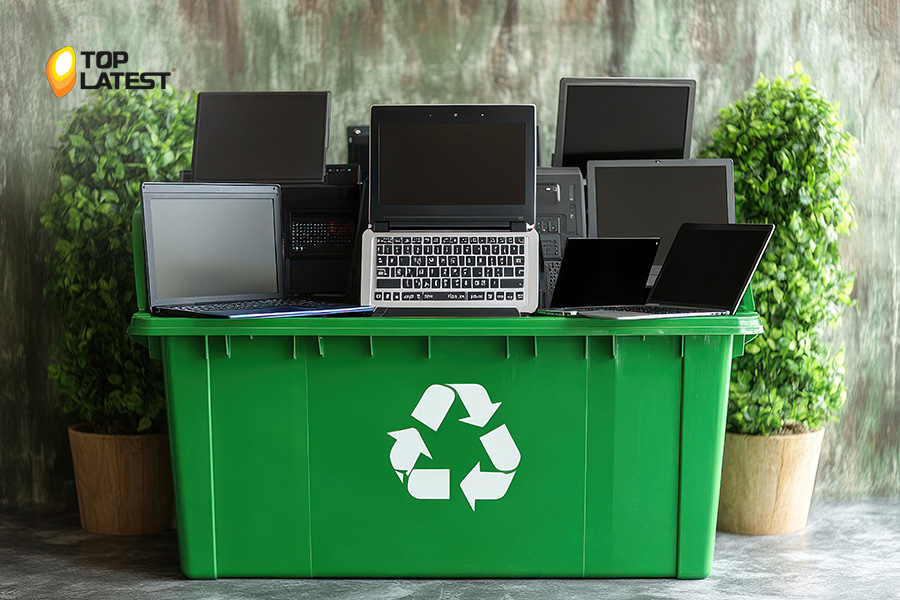
Almost every UAE home has one: a drawer of retired phones, tangled chargers, a laptop that no longer holds a charge, and perhaps a router left behind by a previous tenant. Clearing that drawer responsibly is easier than most residents expect. E-waste recycling in the UAE now runs through a growing network of municipal services, licensed recyclers, and retailer programmes, and Dubai residents can even book a free home pickup for old electronics.
This guide explains what counts as e-waste, the rules that shape disposal, where to recycle old devices in each emirate, and how to prepare them so your data stays private. Whether you are upgrading a home office, moving apartments, or simply decluttering, you will know exactly where each item should go.
What Counts as E-Waste in a UAE Household
E-waste, also called waste electrical and electronic equipment (WEEE), covers anything with a plug, a battery, or a circuit board that has reached the end of its useful life. In a typical UAE home, that usually means:
- Smartphones, tablets, smartwatches, and wireless earbuds
- Laptops, desktop computers, monitors, keyboards, and printers
- Chargers, cables, power banks, and loose batteries
- Televisions, set-top boxes, routers, and gaming consoles
- Small appliances such as kettles, hair dryers, irons, and air fryers
- Large appliances including fridges, washing machines, and split AC units
The first four categories are the items residents dispose of most often, and they are also the easiest to recycle through drop-off points. Large appliances follow a slightly different route, covered later in this guide.
Why Responsible Disposal Creates Real Value
Electronics are dense with value. A single smartphone contains gold, silver, copper, cobalt, and rare earth elements, and specialised recyclers recover these materials so they can return to manufacturing. The same devices also contain substances such as lead, mercury, and brominated flame retardants, which are designed for controlled processing rather than a general waste bin.
The scale is significant. According to The Global E-waste Monitor 2024 published by ITU and UNITAR, the world generated a record 62 billion kg of e-waste in 2022, an average of 7.8 kg per person, while only 22.3 percent was formally documented as collected and recycled. The same monitor places UAE generation per person well above that global average, which reflects the country’s rapid technology adoption and frequent device upgrades.
That high adoption is also an opportunity. Residents who upgrade often are well placed to keep a steady stream of valuable materials in circulation, and the UAE’s recycling infrastructure is now built to capture it.
The UAE Framework Behind E-Waste Recycling
E-waste disposal in the UAE sits within Federal Law No. 12 of 2018 on Integrated Waste Management, which came into force in 2019. Its Executive Regulation, issued through Cabinet Resolution No. 39 of 2021, sets out the responsibilities of waste producers and suppliers, including the principle that companies placing products on the market share responsibility for them after use.
The Ministry of Climate Change and Environment (MOCCAE) has built on this foundation with an Extended Producer Responsibility (EPR) framework covering three streams: electrical and electronic equipment, batteries, and packaging. In July 2025, MOCCAE and Tadweer Group signed an agreement to pilot the UAE’s first Extended Producer Responsibility scheme in Abu Dhabi and Dubai, as part of the UAE Integrated Waste Management Agenda 2023 to 2026. The model being tested has producers contribute to the cost of collecting and recycling their products, with consumers who return devices through designated centres benefiting from the system.
For residents, the practical takeaway is simple. The UAE is moving steadily toward a system where returning an old device is expected, convenient, and in some cases rewarded. Final fee structures and the timeline for a nationwide rollout are still being confirmed, so MOCCAE announcements are the best place to watch for updates.
Where to Recycle E-Waste in the UAE, Emirate by Emirate
The options below start with the emirates and services that handle the highest household volumes.
Dubai
Dubai has the most developed network for household e-waste. In 2026, Dubai Municipality signed a Memorandum of Cooperation with Enviroserve that gives residents free disposal of end-of-life electrical and electronic equipment, including direct pickup from homes through the municipality’s household furniture and appliance disposal service. The agreement also supports secure data wiping, with data-wiping and destruction certificates issued for devices.
Enviroserve operates The Recycling Hub in Dubai Industrial City, which opened in 2019 and is described by its owners as the largest facility of its kind in the Middle East and Africa. Beyond the municipal service, Dubai residents can typically:
- Book a collection directly with Enviroserve or another licensed recycler
- Use e-waste bins placed in selected malls, schools, and residential communities
- Drop items at Dubai Municipality recyclable materials collection centres that list electronics among accepted streams
- Use community stations, such as the e-waste drop-off point that has operated at The Sustainable City
Abu Dhabi
Abu Dhabi’s waste system is led by Tadweer Group, whose collection company Tajmee’e now serves 29 districts across northern Abu Dhabi and continues to expand toward emirate-wide coverage. Tadweer also co-owns Enviroserve with DUBAL Holding following their 2024 acquisition, which links Abu Dhabi’s collection network directly to the country’s largest e-waste processing hub.
Abu Dhabi has set a target of diverting 80 percent of municipal solid waste away from landfill by 2031, and electronics recovery is part of that plan. Residents can use recyclable material collection centres across the emirate, community collection drives, and bulky waste collection for larger appliances. Tadweer’s official channels list current drop-off locations.
Sharjah
Sharjah’s waste management is run by Bee’ah, which operates a long-established network of community recycling points and handles electronic waste within its integrated waste management complex. For bulky items such as old fridges, washing machines, or televisions, Sharjah residents can book Bee’ah’s You Call We Haul collection through its app or call centre.
Ajman, Ras Al Khaimah, Umm Al Quwain, and Fujairah
In the northern and eastern emirates, the local municipality or waste agency is the first point of contact. Ras Al Khaimah’s Waste Management Agency, for example, has offered e-waste drop-off at its waste recovery facility and battery collection at supermarkets. Across these emirates, licensed private recyclers also collect e-waste on request, and retailer take-back programmes work the same way they do in Dubai or Abu Dhabi. Because local services keep expanding, a quick call to your municipality confirms the most convenient option near you.
How to Prepare Your Devices Before Drop-Off
Data security is the step most residents think about first, and a few minutes of preparation covers it fully.
- Back up what matters. Move photos, documents, and contacts to cloud storage or an external drive.
- Sign out of every account. Log out of your Apple ID or Google account, messaging apps, banking apps, and UAE PASS, then remove the device from your list of trusted devices.
- Remove SIM and memory cards. Delete any eSIM profiles you are not transferring to a new phone.
- Perform a factory reset. On modern phones and laptops with encrypted storage, a full reset makes your data practically unrecoverable.
- Request a certificate for larger batches. If you are clearing several laptops or a full home office setup, ask the recycler for a data destruction certificate.
To strengthen your household’s digital habits more broadly, our guide to cybersecurity for UAE families covers device protection, home networks, and safe settings for children.
Giving Old Devices a Second Life First
Recycling is the final step, not the first. Devices that still work often have plenty of life left:
- Trade-in programmes: Brand stores and major electronics retailers across the UAE accept older phones, tablets, and laptops against a new purchase, then refurbish or recycle what they collect.
- Resale: Phones and laptops that are only a few years old usually hold resale value on established UAE marketplaces.
- Donation: Working laptops and tablets are valued by schools, community groups, and registered charities. Some e-waste collectors also route working items to charity after sorting.
- Repair: A new battery or screen often extends a device’s life by years at a fraction of the replacement cost.
A useful rule of thumb: if a device powers on and is less than five years old, explore resale, trade-in, or donation first. If it does not, certified recycling is the right route.
What to Keep in Mind for Specific Items
Batteries. Lithium-ion batteries in phones, power banks, and e-scooters are best kept out of general waste, particularly in the UAE summer heat. Tape the terminals of loose batteries and drop them at dedicated battery bins, which are common in supermarkets and malls.
Large appliances. Fridges and split AC units contain refrigerant gases that call for specialised recovery. Book a municipal bulky waste collection or a licensed recycler rather than leaving units beside building bins. Many appliance retailers also collect the old unit when delivering a new one, so it is worth asking at the time of purchase.
Moving home. Relocations are when most household e-waste surfaces. Tenants leaving an apartment often find old routers, set-top boxes, and chargers in cupboards. Equipment supplied by du or e& is often returned to the provider when a contract ends, so check your contract terms before recycling it. If you are settling into a new home, our first year guide for expats moving to the UAE covers the wider checklist for setting up life in a new community.
Building an Easy E-Waste Habit at Home
The households that recycle most consistently keep it simple. A small labelled box in a cupboard collects dead batteries, cables, and retired gadgets. When it fills up, one trip to a drop-off point or a single booked pickup clears it. Twice a year, perhaps before summer travel and again before the winter season, is a realistic rhythm for most families.
E-waste fits naturally into a wider sustainable routine, alongside cutting single-use plastics and saving energy at home. Our guide to sustainable living in the UAE shares more practical habits that make a measurable difference.
Conclusion
Responsible e-waste disposal in the UAE is now genuinely convenient. Dubai residents can book a free home pickup through Dubai Municipality, Abu Dhabi’s network keeps expanding under Tadweer Group, Bee’ah runs dedicated collection in Sharjah, and every emirate has licensed recyclers and retailer programmes within reach. Wipe your data, give working devices a second life, and send everything else to a certified recycler.
As the federal Extended Producer Responsibility framework develops, returning electronics will only become easier and more rewarding. For more practical guides to living well in the UAE, explore the lifestyle and technology sections on toplatest.ae.
Top 5 Sources
- International Telecommunication Union (ITU) and United Nations Institute for Training and Research (UNITAR), The Global E-waste Monitor 2024
- UAE Ministry of Climate Change and Environment, Federal Law No. 12 of 2018 on Integrated Waste Management, Cabinet Resolution No. 39 of 2021, and the Extended Producer Responsibility framework
- Tadweer Group, Extended Producer Responsibility pilot announcement and Tajmee’e collection expansion
- Dubai Municipality, Memorandum of Cooperation with Enviroserve on electronic waste management
- Bee’ah, Sharjah waste management and You Call We Haul collection service
Frequently Asked Questions
Dubai residents can recycle e-waste for free through Dubai Municipality’s partnership with Enviroserve, which includes home pickup via the municipality’s household furniture and appliance disposal service. You can also book a collection directly with a licensed recycler, use e-waste bins in selected malls and communities, or visit municipal recyclable materials collection centres. Enviroserve processes collected items at its Recycling Hub in Dubai Industrial City, recovering metals and plastics for reuse in new products.
For households, e-waste recycling is free in most cases. Dubai Municipality offers free disposal and home pickup for end-of-life electronics through its agreement with Enviroserve, and most mall bins, community drop-off points, and municipal recycling centres across the emirates charge nothing. Fees may apply for bulk corporate disposal, certified data destruction for large batches, or specialised collection of very large items. Confirm current charges with your municipality or chosen recycler before booking.
Start by backing up your photos, contacts, and documents. Sign out of your Apple ID or Google account, messaging apps, banking apps, and UAE PASS, and remove the phone from your list of trusted devices. Take out the SIM and memory cards, delete any eSIM profiles, then perform a full factory reset. For multiple devices or work laptops, ask your recycler for a data destruction certificate confirming that the data was securely erased.
E-waste disposal in the UAE is governed by Federal Law No. 12 of 2018 on Integrated Waste Management and its Executive Regulation, Cabinet Resolution No. 39 of 2021. Together they set out the responsibilities of waste producers and suppliers. The Ministry of Climate Change and Environment is also developing an Extended Producer Responsibility framework for electronics, batteries, and packaging, with a pilot launched in Abu Dhabi and Dubai in 2025 alongside Tadweer Group.
Yes. Working laptops, tablets, and phones can be donated to schools, community groups, and registered charities across the UAE, and some e-waste collectors route working devices to charity after sorting. Trade-in programmes at brand stores and electronics retailers are another way to extend a device’s life. Before donating, back up your data, sign out of all accounts, and perform a factory reset so the next user receives a clean, secure device.