The majlis holds a position in Emirati home life that few other spaces can rival. It is where families gather, guests are welcomed, business conversations unfold, and traditions are quietly passed on. In modern UAE homes, the majlis has evolved into a space that honours cultural heritage while embracing contemporary comfort, refined materials, and thoughtful design. Whether you are furnishing a villa in Al Barsha, an apartment on Al Reem Island, or a family home in Sharjah, the majlis remains the room that sets the tone for the entire property.
This guide walks you through the principles, choices, and considerations that shape a modern UAE majlis. It focuses on what works, what elevates the space, and how to bring together tradition and modernity in a way that feels genuinely your own.
The Cultural Foundation of the Majlis
The word majlis comes from the Arabic root meaning a place of sitting, and it refers to both a physical space and a social practice. Its cultural weight is significant. The UAE, alongside neighbouring countries, saw the majlis tradition inscribed by UNESCO on the Representative List of the Intangible Cultural Heritage of Humanity in 2015, recognising it as a cornerstone of community life across the region.
In modern UAE homes, the majlis continues to serve as the primary reception space, often distinct from the family living area. Many villas include two majlis rooms, one for men and one for women, reflecting long-standing customs of hospitality. In apartments and smaller villas, a single flexible majlis is common, designed to adapt to different occasions throughout the year.
What has shifted is how the space expresses those values. A generation ago, the majlis relied almost entirely on floor cushions, ornate arabesque patterns, and heavy fabrics. Today’s homeowners are blending that heritage with cleaner architectural lines, contemporary artwork, and materials that speak to a more international sensibility, while keeping the room’s central purpose intact. The result is a space that feels rooted in place yet fully current, comfortable for a visiting elder and equally suited to a younger cousin’s afternoon coffee.
Layout and Spatial Planning
Layout is the first decision that shapes the entire experience of the room. A traditional majlis follows a perimeter seating arrangement, with sofas and cushions placed along the walls to create an open central floor. This approach maximises seating capacity, encourages conversation across the room, and gives the space a sense of openness that suits gatherings of any size.
Modern UAE majlis designs often keep this perimeter principle but soften it. You might see:
- Long modular sofas along two or three walls, replacing bench-style seating.
- Corner arrangements that create intimate conversation zones for smaller gatherings.
- A central low table or a pair of coffee tables for serving Arabic coffee, dates, and sweets.
- Clear sightlines to the entrance so guests are greeted the moment they arrive.
Ceiling height matters more than most people expect. High ceilings, often eleven to fourteen feet in newer villa developments, allow for statement chandeliers, decorative plaster work, and layered lighting that defines the room’s character.
Colour Palettes That Work in the UAE
The most popular colour choices in modern UAE majlis design lean toward warm neutrals with rich accent tones. These palettes are widely adopted because they photograph beautifully, age well, and complement the region’s natural light.
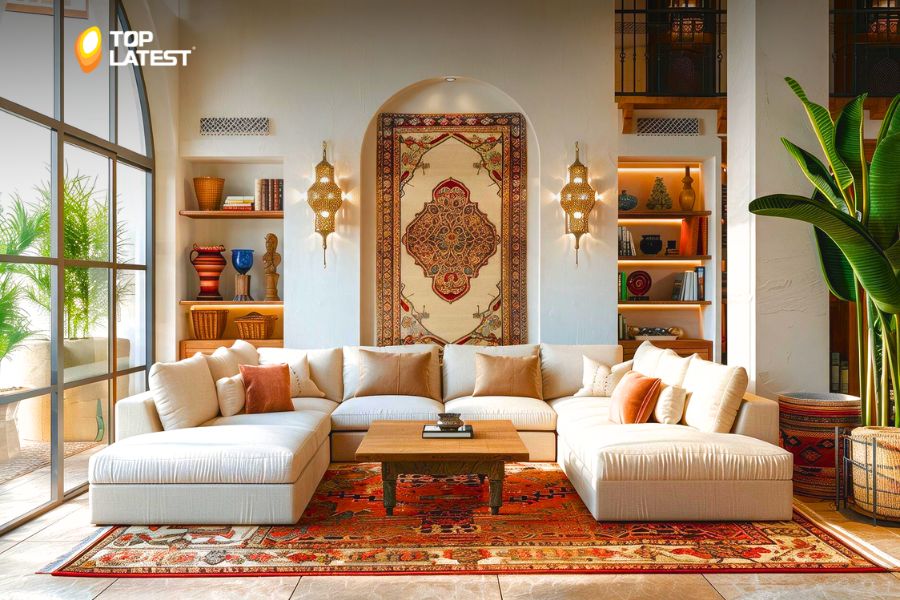
Warm neutrals with gold accents remain the leading choice. Ivory, sand, taupe, and soft beige provide a calm backdrop, while brushed gold, brass, and champagne finishes on hardware, mirrors, and lighting introduce warmth without overwhelming the room.
Deep jewel tones are the second most common direction. Emerald green, sapphire blue, and burgundy velvet upholstery paired with cream walls create a sense of quiet luxury that suits both classical and contemporary architectural styles.
Monochrome with texture is gaining traction among younger homeowners. Layered whites, greys, and off-blacks rely on material contrast, boucle, silk, marble, and matte metals, to create depth without strong colour.
Whichever direction you choose, keep the base tones consistent across walls, ceiling, and large furniture pieces, and use accents through cushions, artwork, and accessories.
Furniture Selection
Sofas and majlis benches are the anchor of the room. In modern homes, upholstered modular sofas have largely replaced traditional low floor seating, though many families still keep a set of floor cushions for informal gatherings during Ramadan or family occasions.
Key furniture considerations include:
- Seating depth and comfort: deep, generously cushioned seating supports long gatherings and reflects the unhurried pace of Emirati hospitality.
- Frame quality: solid hardwood frames with high-density foam last far longer than budget alternatives, particularly given the frequency of use.
- Coffee and side tables: low tables in marble, brass, or carved wood provide surfaces for serving without dominating the room.
- Consoles and display units: a single console table or a built-in niche for displaying incense burners, decorative pieces, or family heirlooms adds a personal layer.
For families exploring larger residences, our overview of family villa layouts in the UAE covers how the majlis integrates with the wider home plan.
Lighting Design
Lighting is where a modern UAE majlis often distinguishes itself. The goal is layered light: a central statement piece, ambient sources for evening gatherings, and accent lighting that highlights architectural details.
Chandeliers remain the centrepiece of most majlis rooms. Crystal chandeliers in classical designs suit traditional interiors, while sculptural pendants in brass or blackened metal complement contemporary spaces. Scale matters. A chandelier should generally sit at roughly one-third the width of the room to feel proportionate.
Wall sconces placed at eye level between windows or above console tables add warmth and reduce the harshness of overhead light.
Concealed cove lighting along ceiling perimeters or gypsum work creates a soft glow that flatters both the room and its guests. Warm colour temperatures, around 2700K to 3000K, produce the most inviting result.
Dimmers on every circuit allow the room to shift from bright daytime hospitality to intimate evening conversation with ease.
Textiles, Rugs, and Detailing
Textiles carry a large share of the visual personality of a majlis. Silk cushions, velvet upholstery, embroidered runners, and hand-woven rugs bring depth and cultural resonance to the space.
Rugs deserve particular attention. A large rug that anchors the seating arrangement, whether a hand-knotted Persian piece, a modern geometric design, or a subtle textured weave, defines the room’s proportions and softens acoustics. Wool and silk blends perform well in UAE homes, holding their colour under strong natural light and cleaning easily.
Curtains typically run floor to ceiling, in heavy linens, silks, or blended sheers layered with blackout linings. Full-height window treatments give the room a sense of grandeur and help manage the intensity of the midday sun.
Integrating Technology Discreetly
Modern UAE majlis rooms often include smart home features that stay out of sight. Recessed speakers, hidden climate control panels, motorised curtains, and app-controlled lighting scenes are increasingly standard in newer villa developments across Dubai and Abu Dhabi.
The principle is restraint. Technology serves hospitality quietly, and visible screens are typically kept modest or reserved for the family living area. For readers researching newer developments, our guide to smart home features in UAE villas explores how these systems are being integrated into current builds.
Regional Variations Across the Emirates
Design preferences shift subtly across the emirates. Dubai and Abu Dhabi majlis rooms often lean toward polished contemporary interpretations, with clean lines, marble finishes, and statement lighting. Newer communities such as Dubai Hills Estate, Tilal Al Ghaf, Saadiyat Island, and Yas Acres reflect this direction, with double-height ceilings and open plans that give the majlis a sense of quiet grandeur.
Sharjah homes, reflecting the emirate’s strong cultural focus, frequently favour classical detailing, carved wood, rich colour, and traditional geometric motifs worked into ceiling panels or wall recesses. Ras Al Khaimah, Ajman, Umm Al Quwain, and Fujairah homes tend to blend both directions, with a warmer, more relaxed material palette that draws on the coastal and mountain landscapes surrounding these emirates. Homeowners in these areas often prioritise natural stone, earthy neutrals, and craftsmanship that feels connected to the local environment.
According to Knight Frank’s UAE residential research, interior finish quality and formal reception spaces continue to rank among the highest-value features for prime residential buyers, particularly in the villa segment.
Bringing It Together
A well-designed majlis balances four elements: cultural respect, practical comfort, material quality, and personal expression. The most successful rooms are the ones where the family sees itself reflected in every choice, from the colour of the walls to the arrangement of the cushions.
Whether you are refurbishing an existing space or planning a new home, the majlis rewards careful thought. It is the room where your home welcomes the world.
A few practical planning steps make the process smoother. Start with the room’s purpose and the size of your typical gathering, then work outward: layout first, then major furniture, then lighting, then textiles and accessories. Order upholstered pieces early, as lead times for custom sofas in the UAE often run six to twelve weeks. Reserve budget for high-impact details such as the chandelier, the main rug, and window treatments, since these carry disproportionate visual weight. If you are working with an interior designer, share reference images from homes you admire, and be clear about how formal or relaxed you want the room to feel day to day.
To explore homes with generously proportioned majlis spaces, browse our current selection of villas across the UAE. For more on interior direction, our home decor guides cover the trends and materials shaping UAE interiors today.
Sources
- UNESCO Representative List of the Intangible Cultural Heritage of Humanity
- UAE Ministry of Culture and Youth
- Knight Frank UAE Residential Research
- Dubai Land Department
- Bayut UAE Home and Interiors Insights
Frequently Asked Questions
A comfortable modern majlis typically measures between 400 and 700 square feet, depending on the villa’s size and the frequency of gatherings. This allows perimeter seating for twelve to twenty guests, a central serving area, and clear circulation. Larger family villas often include two majlis rooms, one for men and one for women, while apartments generally accommodate a single flexible majlis designed to adapt to different occasions and guest numbers throughout the year.
Warm neutral palettes lead current preferences in modern UAE homes, with ivory, sand, taupe, and soft beige forming the base. Gold, brass, and champagne finishes provide accents. Deep jewel tones such as emerald, sapphire, and burgundy remain widely used in classical interiors, while monochrome schemes built around whites, greys, and textured neutrals are increasingly popular in contemporary homes across Dubai, Abu Dhabi, and Sharjah, particularly among younger homeowners furnishing their first family residence.
Layered lighting produces the best results. A central chandelier or sculptural pendant anchors the room, while wall sconces, concealed cove lighting, and floor lamps add warmth and depth. Warm colour temperatures between 2700K and 3000K feel most inviting for evening gatherings. Dimmers on every circuit allow the room to shift between bright daytime hospitality and softer evening ambience, which supports the wide range of occasions a majlis typically hosts throughout the year.
Floor seating remains meaningful in many UAE homes, particularly during Ramadan gatherings, family occasions, and informal evenings. Most modern majlis rooms combine upholstered sofas along the perimeter with a set of large floor cushions that can be brought out when needed. This hybrid approach preserves the cultural spirit of traditional seating while offering the comfort and flexibility that contemporary lifestyles call for, making the space suitable for both formal and relaxed gatherings.
Materials that balance beauty and durability perform best. Marble, natural stone, hardwood, brass, and high-quality upholstery fabrics such as velvet, linen, and silk blends age well under the region’s strong natural light. Hand-knotted wool rugs, embroidered cushions, and carved wooden accents add cultural depth. For homes with heavy use, treated fabrics and stain-resistant finishes help maintain the room’s polished appearance without compromising on the richness expected in a majlis setting.