The way you work from home shapes how you feel about the space you live in. Across the UAE, hybrid and remote arrangements have become a standard feature of professional life, and a well-designed home office now sits high on the list of what residents look for in an apartment or villa. Whether you rent a one-bedroom in Downtown Dubai or own a five-bedroom villa in Al Barsha, the right home office setup improves focus, comfort, and long-term wellbeing.
This guide walks you through how to plan, style, and equip a home office that fits UAE homes, taking into account climate, layout, lifestyle, and the practical realities of working from apartments and villas across the seven emirates.
Why Home Office Design Matters in UAE Homes Today
Hybrid work is now embedded across UAE industries, from finance and technology to real estate, media, and creative services. The Ministry of Human Resources and Emiratisation formalised remote and part-time work models several years ago, and many private sector employers offer at least one or two remote days a week. For residents in Dubai, Abu Dhabi, Sharjah, and Ajman, this shift has changed what a home needs to deliver.
According to Property Finder’s residential search trends, listings that highlight a dedicated study, home office, or maid’s room reconfigured as a workspace consistently see higher engagement, especially in family villa communities and larger apartment layouts. Buyers and tenants now treat a functional workspace as a feature that shapes lifestyle, not a nice-to-have.
Popular Home Office Layouts in UAE Apartments
Apartments across Dubai Marina, Business Bay, Al Reem Island, Al Nahda, and Jumeirah Village Circle rarely come with a dedicated study, so residents adapt. The layouts that show up most often, and work best, are as follows.
The Living Room Corner Setup
This is the most common layout in one and two-bedroom apartments. A slim desk placed against a wall, close to natural light but away from television glare, creates a defined work zone without dominating the living area. Pair it with a compact ergonomic chair and cable management to keep the space visually clean.
The Bedroom Nook
For studios and one-bedroom units, a nook beside the bed or near a window often becomes the office. Wall-mounted desks and floating shelves free up floor space, which matters in compact apartment layouts.
The Convertible Guest Room
In two and three-bedroom apartments, the second or third bedroom often doubles as a home office. A daybed or sofa bed keeps the guest function intact while a desk, chair, and storage make the room fully usable for daily work.
The Balcony Extension
Where a balcony is enclosed or shaded, some residents install a compact desk and use it as a light workspace during cooler months. This works best from November through March, when outdoor temperatures allow for extended use.
For families evaluating layouts before moving, our guide on choosing the right apartment layout in Dubai and Abu Dhabi covers how to read a floor plan with home office needs in mind.
Home Office Design in UAE Villas
Villas in Arabian Ranches, Al Furjan, Jumeirah Golf Estates, Yas Acres, Al Zahia, and similar communities give you far more flexibility. The most popular villa home office configurations include a dedicated study room on the ground floor, a converted maid’s or storage room, a mezzanine workspace, and a garden pavilion or annex for residents who want physical separation from the main house.
Ground-floor studies remain the most sought-after option because they support client meetings, keep work traffic away from private living areas, and often come with direct access to a guest bathroom. If your villa includes a formal majlis you rarely use, converting part of it into a home office is a practical way to unlock underused square footage.
For residents exploring larger family villas with study rooms already included, our overview of villa communities in Dubai and Abu Dhabi with dedicated study spaces is a useful starting point.
Lighting Designed for UAE Homes
Lighting is where most home offices are won or lost. UAE apartments and villas benefit from long hours of natural light, but direct sun through south and west-facing windows can create screen glare and heat gain.
A layered lighting approach works best. Position your desk perpendicular to the window rather than facing it, so natural light falls across your workspace without hitting your screen directly. Add a warm ambient ceiling fixture for general use, a cooler task lamp for detailed work, and dimmable options for video calls. Sheer curtains or solar shades soften afternoon sunlight, particularly in high-floor apartments in Dubai Marina, JBR, and Corniche-facing units in Abu Dhabi.
Ergonomics and Comfort
A comfortable chair and a correctly positioned monitor do more for your productivity than any accessory. Aim for a chair with adjustable seat height, lumbar support, and armrests. Your screen should sit at eye level, with your keyboard and mouse at a height that keeps your elbows at roughly ninety degrees.
Standing desks are increasingly popular in UAE homes, particularly among residents who spend long hours on video calls. If floor space allows, a sit-stand desk gives you flexibility without adding clutter.
Acoustics, Cooling, and Climate Considerations
UAE apartments and villas rely heavily on centralised or split-unit air conditioning, which affects both comfort and background noise. Position your desk away from direct airflow to avoid dry eyes and cold drafts during long sessions. Soft furnishings, rugs, upholstered chairs, and fabric wall panels help absorb sound, which matters in apartments with hard flooring and open layouts where noise carries.
For villas, a ground-floor study often runs warmer than upstairs bedrooms, so factor in a dedicated thermostat zone or a ceiling fan for balance.
Storage and Organisation
Clutter is the fastest way to make a home office feel unusable. Popular storage solutions across UAE homes include floating wall shelves, closed cabinets that hide cables and paperwork, under-desk drawer units, and pegboards for accessories.
In apartments, vertical storage almost always wins because floor space is limited. In villas, built-in joinery along one wall creates a clean, integrated look that adds long-term value to the property.
Style Direction: What Works in UAE Interiors
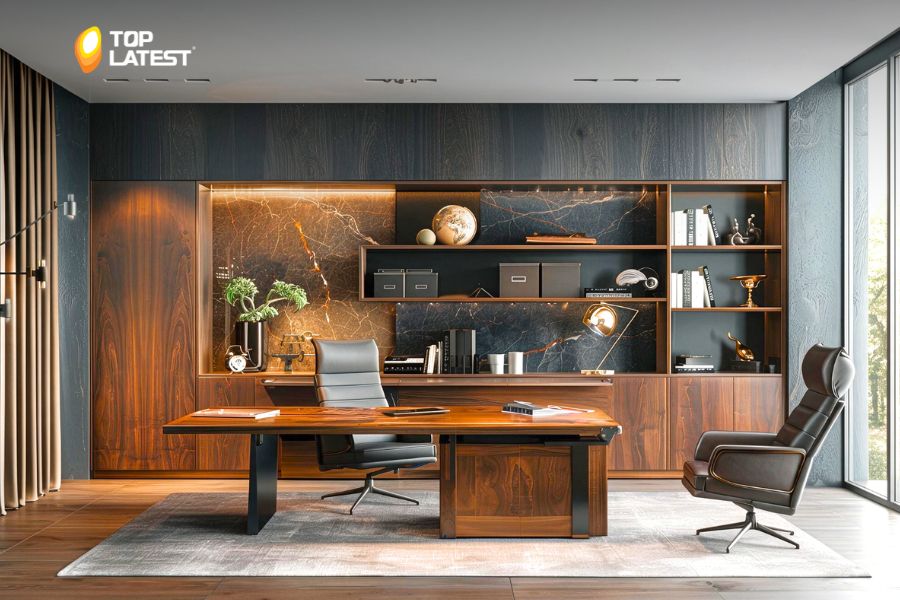
UAE home offices tend to follow three popular aesthetic directions. Modern minimalism, with clean lines, neutral palettes, and light woods, remains the most widely adopted look because it pairs well with the contemporary interiors typical of Dubai and Abu Dhabi apartments. Warm contemporary, layering brass or bronze accents, textured rugs, and richer wood tones, suits villas and larger apartments. Biophilic design, which incorporates indoor plants, natural materials, and views of greenery, has grown in popularity as residents look for calmer, more restorative workspaces.
Whichever direction you choose, keep the palette consistent with the rest of your home so the office feels integrated rather than tacked on. For more on current interior styling in the region, our feature on home decor trends across UAE apartments and villas is a useful reference.
Technology, Connectivity, and Smart Home Integration
A reliable internet connection is non-negotiable. Etisalat and du both offer high-speed fibre packages suited to remote work, and mesh Wi-Fi systems help extend coverage across larger villas where a single router struggles to reach every room.
Smart home integration is increasingly common in UAE homes, with residents using voice-controlled lighting, smart plugs, and automated blinds to manage their workspace. If you already use a smart home ecosystem in the rest of your apartment or villa, extending it to your office is straightforward and worth the investment.
Small Space Solutions for Compact Apartments
For studios and one-bedroom apartments, a few high-impact choices make a real difference. A wall-mounted fold-down desk gives you a workspace that disappears at the end of the day. A tall, narrow bookshelf provides storage without eating floor space. A mirror positioned opposite a window doubles the natural light and makes the room feel larger. A slim rolling cart holds office supplies and moves out of sight when you finish work.
Considerations for a Smooth Setup
A few practical points shape how well your home office comes together. Check your tenancy contract or community rules before making structural changes such as wall-mounted shelving in a rented apartment, since some landlords require restoration at move-out. Plan power outlets carefully, because UAE apartments often have fewer sockets than a full home office setup needs, and extension cords should be surge-protected given the region’s occasional power fluctuations. Factor in humidity, particularly in coastal areas of Abu Dhabi, Sharjah, and Dubai, where wooden furniture benefits from stable indoor climate control.
Bringing It Together
A well-designed home office adds daily value to how you live and work, and it also adds resale and rental appeal to your apartment or villa. Whether you are optimising a corner of a Dubai Marina apartment or building out a dedicated study in a Yas Acres villa, the same principles apply: prioritise light, comfort, and calm, keep the aesthetic consistent with the rest of your home, and choose furniture that adapts as your work patterns evolve.
Explore more lifestyle and interior design guides on toplatest.ae, or connect with a licensed interior designer to bring your home office vision to life.
Sources
- Property Finder Research
- Bayut Market Insights
- Ministry of Human Resources and Emiratisation
- JLL UAE Residential Market Report
- Knight Frank Dubai Residential Review
Frequently Asked Questions
A functional home office in a UAE apartment typically needs between six and ten square metres, enough for a desk, ergonomic chair, and basic storage. In compact studios and one-bedroom units, a well-planned nook of four to five square metres works comfortably. The priority is layout efficiency, natural light access, and separation from high-traffic living zones, not raw floor area, which means even smaller apartments can support a productive workspace.
Many mid-range and premium villas in communities such as Arabian Ranches, Al Furjan, Jumeirah Golf Estates, and Yas Acres include a ground-floor study or maid’s room that residents convert into a home office. Smaller townhouses and older villas may not, in which case residents typically use a spare bedroom, a mezzanine landing, or a section of the majlis. Checking the floor plan before signing a lease or purchase agreement is the most reliable approach.
Position your desk perpendicular to the window so natural light falls across your workspace rather than directly onto your screen. Add sheer curtains, solar shades, or adjustable blinds to soften afternoon sunlight, particularly in south and west-facing units. A matte screen protector reduces reflections, and a task lamp with adjustable colour temperature helps balance ambient light during long working sessions in high-floor apartments across Dubai Marina, JBR, and Abu Dhabi Corniche.
Standing desks suit residents who spend long hours on video calls, back-to-back meetings, or focused desk work, which describes many UAE hybrid and remote professionals. A sit-stand model gives you flexibility to shift posture through the day without adding clutter, and modern electric versions are quiet and compact enough for apartment use. For villa studies with more floor space, a larger standing desk pairs well with a separate reading or meeting corner.
Most UAE tenancy contracts allow minor, reversible changes such as freestanding furniture, temporary shelving, and non-permanent lighting fixtures placed in your chosen work zone. Structural changes such as wall-mounted joinery, new sockets, or built-in cabinetry usually require written landlord approval and may need to be restored at move-out. Reviewing your Ejari-registered contract and discussing plans with your landlord or property manager in advance keeps the setup smooth and protects your security deposit.