Interior design across the UAE has evolved into one of the most distinctive expressions of contemporary living in the region. Homes in Dubai, Abu Dhabi, Sharjah, and the northern emirates increasingly reflect a considered blend of Gulf heritage, global aesthetics, and a sharper focus on comfort, wellness, and long-term value. Whether you are moving into a new apartment in Downtown Dubai, styling a villa in Saadiyat Island, or refreshing a family home in Sharjah, the design choices you make now will shape both daily life and the resale appeal of your property. This guide brings together the most influential modern interior design trends shaping UAE homes today, with practical context for residents, homeowners, and design-focused buyers looking to make interiors feel current, considered, and distinctly Emirati.
Warm Minimalism as the Defining UAE Aesthetic
Warm minimalism has become the defining direction in modern UAE homes, and it continues to dominate new apartments and villas across Dubai and Abu Dhabi. The look moves away from cold, clinical white spaces and instead pairs soft neutral tones, textured plaster walls, tactile linen upholstery, and honey-toned oak with quiet, sculptural furniture. Spaces feel calm, uncluttered, and grounded, yet distinctly luxurious. The reason this direction resonates so strongly in the region is climate and lifestyle. Warm neutrals reflect the natural desert palette, soften harsh daylight, and photograph beautifully in the region’s bright interiors, which supports both daily livability and listing performance. Buyers browsing new launches consistently gravitate toward turnkey homes styled in this direction, and many developers now use warm minimalist finishes as a default handover specification. If you are considering how to refresh an existing home in Jumeirah, Al Reem Island, or Al Nahda, warm minimalism offers a low-risk foundation that pairs well with heritage accents, contemporary art, curated lighting, and integrated smart home technology without feeling overworked or trend-driven.
Biophilic Design and Indoor Greenery
Biophilic design, the practice of bringing nature indoors, has moved from a wellness talking point to a genuine design standard across UAE homes. Floor-to-ceiling planting, indoor water features, natural stone cladding, and large operable windows are increasingly common in villas across Al Barari, Dubai Hills Estate, and Al Zahia. In apartments, the direction translates into curated indoor gardens, moss walls, and generous use of terracotta, travertine, and unfinished wood. The appeal is both practical and aesthetic. Indoor greenery improves perceived air quality, softens acoustics, and creates visual relief across the long summer months when residents spend more time indoors. Sustainability-focused developers are increasingly aligning interior specifications with the country’s broader Net Zero 2050 commitments, and residents are following suit with low-water indoor plants, energy-efficient lighting, and natural finishes. For anyone planning a full villa refresh, biophilic principles can be layered onto almost any existing architectural style without a full renovation, which makes the approach both accessible and future-proof.
Neo-Arabian and Heritage-Led Interiors
A confident new direction shaping UAE homes is the reinterpretation of Arabian heritage through a contemporary lens. Rather than replicating traditional majlis interiors, designers are drawing on mashrabiya-inspired screens, hand-crafted brass detailing, arched doorways, hand-poured lime plaster, and richly woven textiles, then setting them within calm, modern layouts. The result is a home that feels rooted in place, culturally expressive, and quietly luxurious rather than ornamental. This direction is particularly strong in Abu Dhabi villas and in premium Dubai communities such as District One and Palm Jumeirah, where owners want interiors that reflect Gulf identity without leaning on cliché. Materials sourced regionally, including travertine, Emirati palm weave, camel-toned leathers, and hand-glazed ceramics, add authenticity that imported pieces rarely replicate. For homeowners looking to build long-term character into a property, heritage-led design ages exceptionally well and gives interiors a sense of story that purely global styles rarely achieve. Explore villa options across Dubai on TopLatest to see how heritage-inspired detailing translates in current listings.
Smart Home Integration as a Standard Layer
Smart home technology has moved from a premium upgrade to an expected feature in modern UAE homes. Voice-controlled lighting, automated climate zones, motorized shading, remote security, and integrated audio are now common in newly handed-over villas across Tilal Al Ghaf, Yas Island, and Sharjah Sustainable City. Interior design increasingly accommodates this technology quietly, with concealed wiring, flush-mounted panels, and minimalist keypads that preserve the architectural language of the space. Leading UAE developers are integrating home automation at the construction stage, and residents refreshing older homes are retrofitting through wireless systems that require minimal disruption. Beyond convenience, smart integration supports energy efficiency, which matters in a climate where cooling represents the majority of household energy use. When planning a design refresh, treating automation as a design layer rather than an afterthought produces the cleanest, most future-ready result, particularly in open-plan apartments where every visible surface counts.
Sculptural Lighting and Statement Ceilings
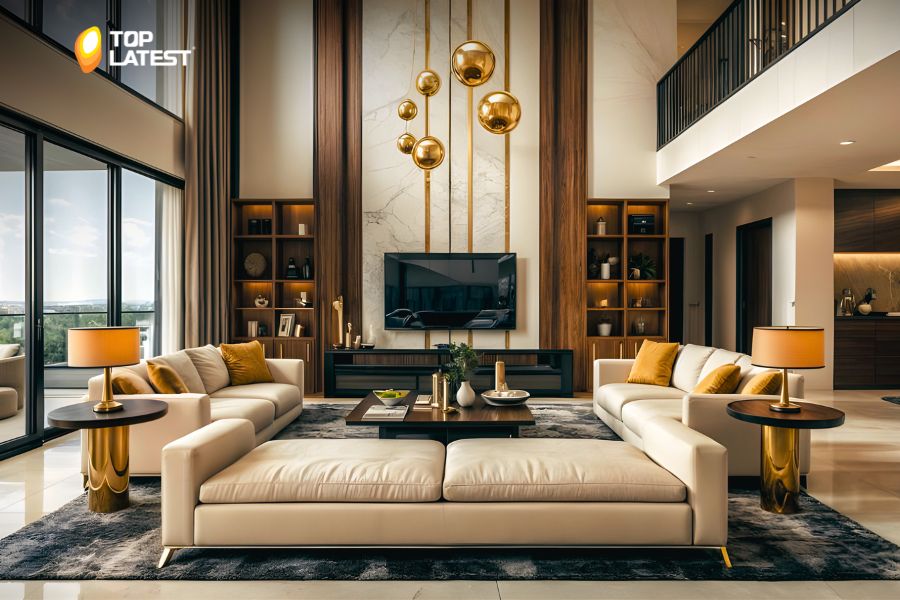
Lighting has become one of the most expressive design tools in UAE interiors. Oversized sculptural pendants, hand-blown glass chandeliers, and layered ambient lighting are replacing standard downlights, particularly in double-height villa living rooms, entryway foyers, and formal dining spaces. Ceilings themselves are receiving more attention, with coffered detailing, textured plaster, wood battens, and integrated linear lighting that adds depth without visual noise. The reason this direction has grown so quickly is functional. Lighting shapes how a home feels through the long evenings that define UAE social life, and considered lighting design supports everything from entertaining to focused work at home. For apartments in areas like Business Bay or Al Reem Island, a single sculptural fixture in the living room can transform a standard developer handover into a signature space with very little structural change or long lead time.
Curated Open-Plan Living
Open-plan living remains central to modern UAE homes, but the direction has evolved. Rather than fully open interiors, homeowners now favour curated openness, where subtle partitions, framed archways, sliding timber panels, and material shifts define zones without closing them off. Kitchens flow into dining areas, dining areas connect to lounges, and outdoor terraces feel like natural extensions of the living space when weather allows. This approach suits both family villas and premium apartments, where flexibility matters as households evolve over time. It also enhances resale appeal, since curated open layouts photograph well and support the lifestyle imagery that drives listing performance across the UAE market. Browse the latest apartments in Abu Dhabi on TopLatest to see how curated layouts appear in current inventory across Yas Island, Al Reem, and Saadiyat.
Considered Material Palettes and Craft
Material selection is where modern UAE interiors are becoming most distinctive. Travertine, unfilled limestone, brushed brass, natural oak, boucle, linen, and hand-glazed ceramics are increasingly favoured over high-gloss finishes and polished marble. The shift reflects both a preference for tactility and a growing appetite for craft-driven pieces, including bespoke joinery, artisan rugs, and locally commissioned art. In practical terms, matte and textured finishes handle the UAE’s fine desert dust more forgivingly than glossy surfaces, and natural materials age gracefully in the climate. According to JLL research on the UAE residential market, buyer preference in maturing Dubai communities is increasingly weighted toward homes with quality finishes and long-term material integrity, which supports stronger resale positioning over time. If you are evaluating properties with strong design foundations, TopLatest’s Dubai community guides can help match design ambitions to the right location and neighbourhood character.
Practical Considerations for UAE Homes
Bringing modern design trends into a UAE home works best when the region’s specific conditions shape your choices. High summer temperatures, strong natural light, and fine airborne dust all influence how materials, colours, and finishes perform over time. Lighter palettes reflect heat, textured surfaces disguise dust, and layered window treatments protect furnishings from sun damage across peak months. Sourcing locally, whether through Dubai Design District suppliers, Abu Dhabi ateliers, or Sharjah craft studios, often produces better results than importing pieces that may not suit the climate or delivery timelines. RERA-registered communities and master-planned developments frequently have design guidelines for external and semi-external elements such as balconies, shading, and facade-facing installations, so it is worth reviewing community rules before major renovations. Taken together, these considerations turn design ambitions into interiors that feel authentic to the UAE and hold their aesthetic and functional value over time.
Bringing It All Together
Modern interior design in UAE homes is less about following a single style and more about layering ideas that reflect the region, your lifestyle, and the property itself. Warm minimalism, biophilic principles, heritage-led detail, smart integration, sculptural lighting, and considered materials work together to create interiors that feel timeless and distinctly Emirati. Whether you are styling a first apartment, refreshing a family villa, or preparing a property for the market, aligning design choices with community character and long-term livability produces the strongest result. To explore homes that align with these design directions, browse the latest lifestyle and property insights on TopLatest, or connect with a licensed interior specialist for tailored guidance.
Sources
- Dubai Land Department (DLD)
- JLL MENA Research
- Knight Frank Residential Research
- Property Finder Research
- UAE Ministry of Climate Change and Environment
Frequently Asked Questions
Modern interior design in UAE homes today blends warm minimalist palettes with regional character, biophilic elements, and integrated smart technology. Homes across Dubai, Abu Dhabi, and Sharjah increasingly favour textured neutrals, natural materials such as travertine and oak, and considered lighting over glossy finishes. The direction reflects both climate suitability and a growing preference for interiors that feel calm, tactile, and rooted in Gulf identity, while remaining globally contemporary in overall composition and material sensibility.
Heritage-inspired interiors are increasingly popular in contemporary UAE villas, particularly across Abu Dhabi, Palm Jumeirah, and District One. Elements such as mashrabiya-style screens, arched openings, brass detailing, and regionally sourced textiles bring cultural depth without feeling ornamental when set within modern layouts. This direction is designed for homeowners who want interiors with genuine sense of place, and it typically ages well because the materials and craftsmanship draw from established regional traditions rather than short-lived global trends.
The UAE climate strongly shapes interior material choices, since summer heat, strong daylight, and fine desert dust all affect how finishes perform. Matte and textured surfaces such as unfilled travertine, honed limestone, and natural oak handle dust and light more forgivingly than high-gloss finishes. Lighter tones reflect heat, while layered window treatments protect furnishings from sun exposure. Choosing materials proven in regional conditions helps interiors retain their quality and appearance across seasons and long summer months in UAE homes.
Smart home technology is now considered a standard layer in modern UAE homes, particularly in newly handed-over villas and premium apartments. Automated lighting, climate zoning, motorized shading, and integrated security are commonly built in at the construction stage across communities such as Tilal Al Ghaf, Yas Island, and Sharjah Sustainable City. Retrofitting older homes with wireless systems is also straightforward, and thoughtful integration supports both convenience and energy efficiency in a climate where cooling drives most household energy use.
Interior design choices influence long-term property value in the UAE by shaping how a home shows during viewings and how well it ages between resales. Warm minimalist palettes, quality natural materials, integrated smart features, and considered lighting tend to hold appeal across buyer profiles. Communities in Dubai and Abu Dhabi with strong design standards typically maintain stronger listing performance. Aligning design direction with the property’s location and community character further supports both livability and resale positioning over time.