Living in the UAE opens a door most expats walk past for years: the Emirati table. Learning a handful of national classics is the fastest way to feel at home in the country you now live in. Emirati cuisine carries centuries of dhow trade, Bedouin resilience, and coastal abundance in every plate. Mastering a few dishes builds neighbourly rapport, deepens your understanding of Ramadan and Eid, and turns a rental kitchen in Dubai, Abu Dhabi, Sharjah, or Ras Al Khaimah into a place where Friday lunches feel grounded rather than borrowed. This guide covers 15 essential Emirati recipes you can cook from a standard UAE pantry, along with the ingredients, techniques, and hosting notes that make each one worth the effort at home.
Why Emirati Cooking Belongs in Every Expat Kitchen
The UAE population is roughly nine in ten expatriate, according to the Federal Competitiveness and Statistics Centre, which means most residents arrive with no cultural reflex for Emirati food. UNESCO has inscribed Arabic coffee, the date palm, and Al Razfa onto its Intangible Cultural Heritage list, recognising how deeply food and hospitality define national identity. The UAE Ministry of Culture and Youth actively documents and protects Emirati culinary heritage as part of the country’s living traditions. Cooking Emirati dishes at home means joining a tradition your Emirati neighbours actively celebrate and preserve.
Stocking the Emirati Pantry
Before you cook, set up a small Gulf pantry. The non-negotiables are bezar (the classic Emirati spice mix of cumin, coriander, turmeric, cinnamon, cardamom, and black pepper), loomi (dried black lime), saffron, green cardamom pods, rose water, ghee, basmati rice, and Khalas or Sukkari dates. Most Carrefour, Lulu, and Union Coop stores stock these. Cooperative supermarkets in older neighbourhoods like Bur Dubai or Deira carry the freshest loomi. If you are settling in a heritage-rich area, this guide to living in Al Raffa, Bur Dubai is a useful starting point for sourcing authentic ingredients within walking distance of home.
15 Emirati Classics Every Expat Should Learn
1. Machboos
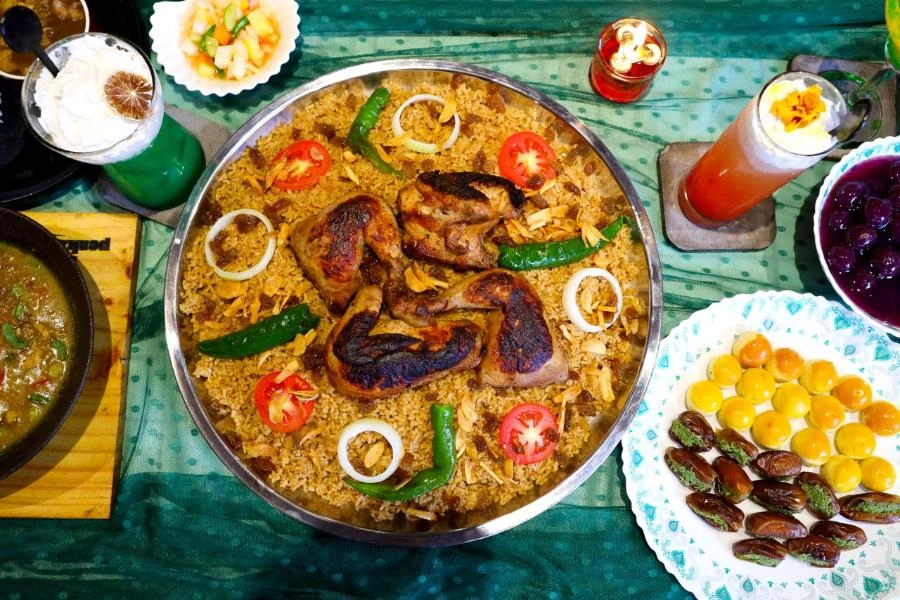
The defining Emirati one-pot and the dish most home cooks start with. Basmati rice is layered over chicken, lamb, or shrimp, then simmered with bezar, loomi, saffron, and tomato. The loomi gives machboos its signature tang. Cook the protein first, build the spiced broth, then steam the rice on top until each grain stands separate. Serve with daqoos, a fiery tomato chilli sauce, and a cucumber yoghurt salad. Machboos is the safest entry point into Emirati cooking and scales beautifully for guests.
2. Luqaimat
Crisp, golden dumplings drizzled with date syrup and easily the most beloved Emirati sweet. A yeasted batter of flour, saffron, cardamom, and yoghurt rests until bubbly, then small spoonfuls are fried to a deep amber. Drown them in dibs and sprinkle sesame seeds while warm. Luqaimat is the unofficial dessert of every Ramadan iftar across the Emirates and turns up at almost every wedding and majlis gathering.
3. Harees
A slow-cooked porridge of cracked wheat and tender meat, traditionally served during Ramadan and at weddings. The wheat is soaked overnight, then simmered with lamb or chicken for several hours until silky. Finish with melted ghee and a dusting of cinnamon. Harees demands patience but rewards it with one of the most comforting Emirati dishes you will ever taste. It is central enough to Emirati identity that related traditions are actively preserved on national heritage lists.
4. Thareed
Lamb or chicken stew ladled over layers of regag, the paper-thin Emirati bread. The bread soaks up the spiced broth and softens into something between a stuffing and a dumpling. Bezar, loomi, potatoes, and tomatoes form the base. Thareed is a winter staple in Emirati homes and carries cultural weight beyond the kitchen, often described in Emirati storytelling as the dish that anchors family meals through the cooler months.
5. Balaleet
A sweet and savoury breakfast of vermicelli noodles infused with cardamom, saffron, rose water, and sugar, then topped with a thin omelette. The contrast of perfumed noodles against plain egg is uniquely Emirati. Cook the vermicelli in butter first to develop colour, then sweeten and spice. Serve with Arabic coffee on Friday mornings. Balaleet is one of the easiest Emirati dishes to master and one of the most likely to delight first-time guests at your table.
6. Madrouba
A creamy, mashed rice and chicken dish that sits between a risotto and a porridge. The rice is overcooked deliberately so it breaks down, then mashed with butter, milk, and shredded chicken until smooth. Cardamom and turmeric give it warmth. Madrouba is the dish Emirati grandmothers make for sick children and tired adults, and it appears on many Ramadan tables as a lighter alternative to heavier rice preparations across the week.
7. Chebab
Emirati pancakes flavoured with saffron, cardamom, and date syrup, cooked on a flat griddle until lacy at the edges. The batter uses yeast rather than baking powder, which gives chebab its distinctive chew. Serve with cream cheese and date syrup, or with mehyawa, a tangy fish sauce that balances the sweetness. Chebab is a Friday breakfast favourite and one of the fastest ways to introduce children in the household to Emirati flavours.
8. Khameer
A soft, slightly sweet flatbread enriched with date molasses, fennel seeds, and sometimes saffron. Khameer is baked on a hot griddle or in a tandoor and traditionally eaten at breakfast with cream cheese, honey, or eggs. Fermentation defines authentic khameer, so allow the dough a full proof. Once mastered, it becomes the bread you reach for instead of toast, and it freezes well for busy weekday mornings across a working household.
9. Regag
The paper-thin Emirati bread that gives thareed its structure, but also delicious on its own. A loose batter is spread on a hot metal dome in wide, translucent circles, then topped with cheese, egg, and mehyawa while it cooks. Fresh regag is a beach and heritage-village staple across Ras Al Khaimah, Fujairah, and Umm Al Quwain. At home, a wide non-stick pan and a swirl of thin batter is a workable substitute for the traditional dome.
10. Ghuzi
The celebration dish of the Emirates. A whole lamb, seasoned with bezar, cinnamon, and saffron, is slow roasted until falling apart, then served over a mountain of spiced basmati studded with almonds, raisins, and pine nuts. Ghuzi is what Emirati families cook for Eid, weddings, and major gatherings. A home version using a leg of lamb rather than a whole animal is achievable in any villa oven and remains deeply impressive for guests.
11. Muhammar
Sweet red rice cooked with date syrup, saffron, cardamom, and rose water, typically served alongside fried or grilled fish. The contrast of sweet rice and salty seafood is a coastal Emirati signature that reflects centuries of pearl diving and dhow fishing culture. Muhammar teaches a useful lesson about Emirati cooking: sweet and savoury are frequent partners, not opposites, and that idea shapes many of the country’s most memorable meals.
12. Salona
A brothy Emirati stew of vegetables, tomatoes, loomi, and lamb, chicken, or fish, served over plain white rice. Salona is what an Emirati household eats on a weeknight. It is fast, forgiving, and endlessly variable depending on what is in the fridge. A good salona depends on a strong loomi-forward broth and a generous hand with fresh coriander at the finish, and it happily reheats for lunch the next day.
13. Jesheed
A traditional shark dish most associated with the eastern coast and the fishing communities of Fujairah and Khor Fakkan. The shark is boiled, shredded, then sauteed with onions, chillies, turmeric, and coriander until dry and fragrant. Jesheed is niche but culturally significant, and preparing it at home is a genuine gesture of respect toward Emirati coastal heritage. Firm white fish works well as a substitute if shark is unavailable at your local market.
14. Khabeesa
A warm semolina and date pudding scented with saffron, cardamom, and rose water, then enriched with ghee. Khabeesa is one of the simplest Emirati desserts and one of the most rewarding, cooked in a single pan in about twenty minutes. It appears at iftar tables and at winter breakfasts across the Emirates, spooned into small bowls and eaten warm with Arabic coffee for a quietly luxurious late morning treat.
15. Aseeda
A soft, pull-apart sweet dough enriched with ghee and finished with date syrup or honey, sometimes flavoured with saffron and cardamom. Aseeda is a celebratory Emirati sweet served during Eid and major family occasions. It is quick to make and easy to scale up, which makes it a strong starter dessert for expats hosting their first Emirati-themed lunch at home for neighbours or new colleagues.
Making Emirati Cooking a Habit at Home
A working Emirati kitchen needs space and airflow. Open-plan villas and townhouses across Dubai, Abu Dhabi, and Sharjah suit slow-cooked dishes like harees, ghuzi, and thareed better than compact studios. Families often underestimate how much kitchen ventilation matters when bezar and saffron become weekly staples. If you are still scouting where to settle, this guide to family living in Green Community West covers villa layouts that suit long, communal Friday lunches. For broader context on settling in, the guide to whether Dubai is a good place to live is worth reading alongside any Emirati cookbook you keep on the shelf. Building a weekly rhythm is more useful than chasing perfection with any single dish. A workable habit for most expat households is one long-cook Emirati main on Fridays, one Emirati breakfast on Saturday, and one weeknight salona or machboos, with luqaimat or khabeesa reserved for guests. Within a few months, your pantry stops feeling foreign and your kitchen starts to smell distinctly of home.
Sources
- UNESCO Intangible Cultural Heritage of Humanity Lists (Arabic coffee, date palm, and Al Razfa inscriptions)
- Ministry of Culture and Youth, United Arab Emirates
- Federal Competitiveness and Statistics Centre, United Arab Emirates
- Dubai Culture and Arts Authority
- Department of Culture and Tourism, Abu Dhabi
Frequently Asked Questions
Emirati cuisine reflects centuries of dhow trade with East Africa, India, and Persia, layered over Bedouin desert traditions and coastal fishing heritage. Its signature markers are the bezar spice blend, loomi (dried black lime), saffron, and a comfortable pairing of sweet and savoury elements in single dishes like muhammar and balaleet. Rice, slow-cooked meats, dates, and flatbreads anchor most meals. The result is bold in spice but rarely fiery, aromatic rather than heavy, and deeply hospitality-driven.
Lulu Hypermarket, Union Coop, and Carrefour carry the essentials including bezar, loomi, saffron, ghee, and date syrup at accessible prices. For specialised items like fresh regag bread, Omani halwa, and freshly ground bezar blends, head to the Deira Spice Souk, Waterfront Market in Dubai, or Mina Zayed Market in Abu Dhabi. Smaller Emirati-owned grocers in older neighbourhoods often stock the highest quality loomi. Heritage villages across Ras Al Khaimah and Sharjah are also excellent for very fresh regag.
Most are surprisingly forgiving. Machboos, luqaimat, balaleet, salona, and chebab rely on layering and timing rather than precise technique, which makes them accessible to beginners with a standard kitchen. Slow-cooked dishes like harees, thareed, and ghuzi require patience and a suitable pot but reward the effort. Start with machboos or balaleet to build pantry confidence, then graduate to bread and slow-cooked mains. Most Emirati dishes scale well for hosting and often improve on the second day.
Yes, with care. Rice-based dishes like machboos and salona adapt well by substituting protein with roasted cauliflower, chickpeas, or paneer, then fortifying the broth with loomi and saffron for depth. Balaleet, luqaimat, chebab, khabeesa, and aseeda are naturally vegetarian and often vegan with minor swaps such as plant-based ghee and egg-free batter. Slow-cooked meat dishes like harees, thareed, and ghuzi are structurally meat-forward and harder to convert without losing character.
Arabic coffee, known as qahwa, is the default companion to nearly every Emirati meal and dessert. It is lightly roasted, spiced with cardamom and sometimes saffron, and served in small handleless cups alongside fresh Khalas or Sukkari dates. For savoury mains, laban or mint yoghurt drinks balance heavier spice profiles beautifully. Karak chai, the strong milky tea popular across the UAE, pairs well with breakfast dishes like balaleet, chebab, and warm khameer bread.