
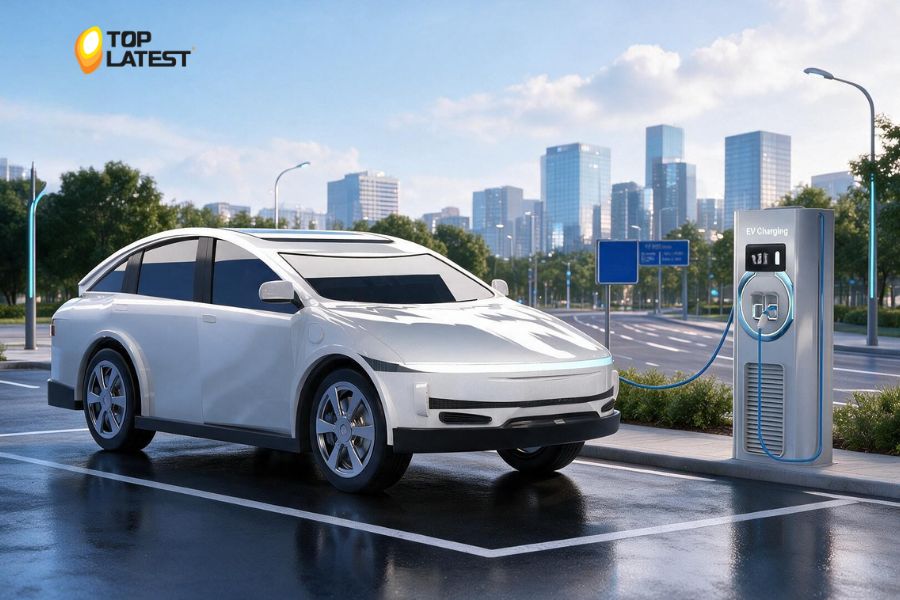
Electric mobility is quickly becoming part of everyday life across the UAE. What began as a niche interest for early adopters in Dubai and Abu Dhabi has grown into a nationwide movement supported by strong government vision, expanding charging infrastructure, and a widening line-up of models suited to the region’s climate and driving habits. Whether you commute daily along Sheikh Zayed Road, split time between the emirates, or simply want a more efficient family car, understanding how electric vehicle adoption is unfolding here helps you make a confident, well-informed decision.
This guide walks you through the current landscape, the incentives designed to make ownership attractive, the practical realities of charging and running costs, and what to keep in mind as you evaluate the switch.
The UAE’s Electric Mobility Landscape
Electric vehicle adoption in the UAE has moved from early experimentation to visible momentum. Registrations in Dubai alone surpassed 40,000 electric vehicles in the first half of 2025, according to figures published by the Roads and Transport Authority, marking one of the sharpest year-on-year jumps the emirate has recorded. Abu Dhabi has followed a similar trajectory, with a notable rise in charging activity as more residents shift to plug-in mobility.
Growth is being led by three groups. Daily commuters value the lower running costs and quieter drive, especially across busy corridors such as Sheikh Zayed Road, Al Khail Road, and the Abu Dhabi to Dubai highway. Corporate fleets are electrifying to meet sustainability targets and improve long-term operating economics, with several logistics, hospitality, and government-linked operators leading visible transitions. Investors and homeowners in newer communities view EV compatibility, from parking bay wiring to community chargers, as a modern lifestyle feature worth prioritising, and developers are responding by making it standard in fresh masterplans.
Government Vision Powering EV Growth
The national roadmap is clear and consistent. The UAE aims for 50 percent of vehicles on its roads to be electric by 2050, a target set by the Ministry of Energy and Infrastructure and aligned with the country’s Net Zero 2050 Strategy. Emirate-level plans reinforce this direction. Dubai’s Green Mobility Strategy 2030 and Abu Dhabi’s clean transport programmes both prioritise cleaner air, lower emissions from the transport sector, and world-class charging access.
For residents, the significance is practical. Long-term policy clarity signals that EV ownership will only become easier over time, with more stations, better resale value, and continued regulatory support.
Charging Infrastructure Across the UAE
Charging is often the first question new buyers ask, and the answer keeps improving. Dubai leads with the most established network, followed by Abu Dhabi and a steadily growing footprint in Sharjah, Ajman, Ras Al Khaimah, Umm Al Quwain, and Fujairah.
Dubai’s Green Charger network, operated by DEWA, has powered electric vehicles with more than 39,000 megawatt hours of electricity since its launch, supporting a cumulative EV distance of around 195 million kilometres. Registered EV owners under the initiative grew from just 14 in 2015 to more than 20,000 by early 2025, according to DEWA, reflecting how quickly household adoption is scaling.
Charging options typically fall into three categories:
- Public fast charging, available at malls, petrol stations, business districts, and major highways, useful for top-ups on the go.
- Ultra-fast DC charging, capable of delivering meaningful range in 20 to 30 minutes, expanding rapidly along inter-emirate routes.
- Home charging, the most convenient option for villa and townhouse residents, and increasingly available in newer apartment communities with dedicated EV bays.
Abu Dhabi’s network, supported by the national charging operator UAEV, is expanding to link the capital with Al Ain and the Western Region, while Sharjah and the Northern Emirates are seeing steady growth in hospitality and retail locations.
Incentives That Make EV Ownership Attractive
The incentive framework is one of the strongest reasons EV interest continues to accelerate. Highlights include:
- Free public charging for eligible non-commercial users registered under DEWA’s Green Charger initiative in Dubai, offering meaningful annual savings.
- Complimentary Salik tag issuance and toll-related concessions administered through the Roads and Transport Authority.
- Free parking in designated green mobility bays across several emirates.
- Reduced or waived registration fees on qualifying electric models.
- Green auto financing packages from leading UAE banks, often with preferential rates for eligible EV purchases.
Several developers now factor EV readiness into community masterplans, and select residential projects are offering dedicated home charger installations as part of handover packages. For families weighing lifestyle upgrades, pairing EV incentives with community features such as covered parking, shaded charging bays, and rooftop solar can meaningfully reduce total ownership costs over a five to seven year horizon. If you are exploring homes designed with sustainability in mind, our overview of sustainable living in the UAE covers what to look for.
Popular EV Models Available in the UAE
The UAE market now offers a broad, well-established selection. The most in-demand models today, based on visibility across dealerships and public roads, include:
- Tesla Model Y and Model 3, consistently among the highest-selling electric vehicles nationwide, valued for their charging network access and software-led experience.
- BYD Atto 3, Seal, and Dolphin, which have expanded rapidly in the mid-market segment thanks to strong range, competitive pricing, and growing dealer support.
- Nissan Leaf, one of the earliest mass-market EVs in the region and a familiar option among first-time buyers.
- Volvo EX30 and XC40 Recharge, popular among premium family buyers looking for compact, feature-rich electric SUVs.
- Mercedes-Benz EQE and EQS, chosen by luxury buyers for their refinement and long-range capability.
- Hyundai Ioniq 5 and Kia EV6, favoured for their striking design, ultra-fast charging support, and versatile interiors.
- Lucid Air, an increasingly visible presence, particularly in Dubai and Abu Dhabi, at the top end of the market.
Chinese electric brands have accelerated adoption meaningfully in the mid-price bracket, giving buyers modern technology at accessible entry points.
The Cost Picture: What to Expect
Total cost of ownership tends to compare favourably to petrol equivalents once charging, servicing, and incentives are factored in. Typical considerations include:
- Purchase price, ranging from accessible mid-market options around AED 100,000 to premium models well above AED 400,000.
- Charging cost, with home charging often the most economical, and public charging pricing published transparently by DEWA and other operators.
- Servicing, which is usually lower than combustion vehicles thanks to fewer moving parts and no oil changes.
- Insurance, broadly in line with equivalent petrol models, with more UAE insurers now offering EV-specific policies.
- Resale value, which is stabilising as the used EV market matures and buyer familiarity grows.
Practical Considerations for a Smooth Transition
A few thoughtful checks help set expectations before purchase. Start by mapping your typical weekly driving pattern. Most modern EVs offer real-world range comfortably above daily commuting needs across the emirates, and long-distance trips within the country are increasingly straightforward thanks to expanding fast-charging corridors.
Home charging setup is worth clarifying early. Villa owners can typically install a wall-box charger with approval from their utility provider. Apartment residents can check with building management about existing EV bays or planned upgrades, a feature increasingly common in newer developments across Dubai and Abu Dhabi. If you are relocating or planning a move, our guides to properties in Dubai and properties in Abu Dhabi can help you shortlist communities with EV-ready infrastructure.
Summer performance is another practical point. Battery thermal management on newer models has improved substantially, and charging stations installed in the UAE are designed for higher ambient temperatures.
The Road Ahead
Momentum is expected to broaden through the rest of the decade. Analysts anticipate deeper penetration in fleet segments including ride-hailing, delivery, and corporate mobility, alongside continued household growth. Public infrastructure will keep scaling, with regulatory clarity from the recent independent charge-point operator licences opening the market to more private investment.
Battery technology, meanwhile, continues to improve on range and fast-charging speeds, while the pre-owned EV market is opening the segment to a broader audience of value-focused buyers. Community-level charging in residential towers and villa districts is set to expand as more building owners retrofit shared bays.
For residents, the direction of travel is unmistakably supportive. Whether you are ready to switch now or planning a purchase over the next couple of years, the ecosystem is designed to make ownership progressively easier, cleaner, and more cost-effective.
Making Your Move Toward Electric
Adopting an electric vehicle in the UAE is a genuinely rewarding decision when matched to your lifestyle, driving habits, and home setup. With the government’s long-term commitment, a rapidly maturing charging network, and a wide selection of models across price points, the timing has rarely been better. Take the time to compare options, understand your charging routine, and align your choice with your daily patterns.
To keep exploring lifestyle, mobility, and property insights across the UAE, visit toplatest.ae, and connect with a licensed automotive specialist for advice tailored to your specific needs.
Sources
- Dubai Electricity and Water Authority (DEWA), Green Charger Initiative
- UAE Ministry of Energy and Infrastructure
- Roads and Transport Authority (RTA), Dubai
- Dubai Supreme Council of Energy, Green Mobility Strategy 2030
- The National, UAE Automotive and Electric Vehicle Coverage
Frequently Asked Questions
Electric vehicle owners in the UAE benefit from a strong package of incentives designed to make ownership more affordable. Highlights include free public charging for eligible users registered under DEWA’s Green Charger initiative in Dubai, complimentary Salik tag issuance, free parking in designated green mobility bays, reduced or waived registration fees on qualifying models, and green auto financing options from leading UAE banks. Together, these measures deliver meaningful annual savings for households.
The UAE’s charging network has expanded rapidly and continues to grow across all seven emirates. Dubai leads with DEWA’s Green Charger stations at malls, petrol stations, and public locations, while Abu Dhabi is scaling coverage through UAEV. Sharjah, Ajman, Ras Al Khaimah, Umm Al Quwain, and Fujairah are seeing steady growth in hospitality and retail locations. Ultra-fast chargers along major highways make longer intercity journeys increasingly straightforward for most modern electric vehicles today.
Modern electric vehicles are well suited to UAE conditions. Battery thermal management systems have advanced significantly, allowing vehicles to maintain range and performance in high ambient temperatures. Charging stations installed across the country are engineered to operate reliably in the summer heat. Manufacturers now design their EV line-ups with hot-climate markets clearly in mind, and daily driving patterns across the emirates align comfortably with the real-world range that current mainstream models deliver.
Total ownership costs typically compare favourably to petrol equivalents. Purchase prices range from around AED 100,000 for accessible mid-market models to well above AED 400,000 for premium options. Home charging is usually the most economical route, while public charging tariffs are published transparently by DEWA and other operators. Servicing costs are often lower thanks to fewer mechanical parts, and green auto financing options can further improve the overall affordability picture.
The UAE has set a clear long-term ambition, with the Ministry of Energy and Infrastructure targeting 50 percent of vehicles on national roads to be electric by 2050. This target is reinforced by Dubai’s Green Mobility Strategy 2030 and Abu Dhabi’s clean transport programmes. The vision is backed by continuous investment in charging infrastructure, regulatory clarity, and public and private partnerships, all aligned with the wider UAE Net Zero 2050 Strategy for sustainable growth.