Dubai rewards ambition, and it also rewards clarity. The skyline keeps stretching, the retail calendar keeps expanding, and the pace of the city gives residents constant new options to weigh. Minimalist living in Dubai is about deciding what genuinely earns your money, your space, and your attention. This guide is written for residents, expats, and long term investors who want a calmer, more intentional life while enjoying everything the emirate offers. You will find practical decisions around housing, interiors, spending, and routines, all grounded in current UAE realities.
Why Minimalism Resonates in Dubai Right Now
Dubai’s resident population crossed 3.9 million in 2025 according to the Dubai Statistics Centre, and continues to grow at one of the fastest rates in the region. A larger population brings more choice, more energy, and more daily inputs to filter. Minimalism becomes a useful framework, not a reaction to the city.
There is also a financial layer. Average residential rents in prime communities rose meaningfully through 2023 and 2024, with the Dubai Land Department reporting strong increases across several apartment segments. When housing costs move, every extra room and every unused subscription carries a real annual value. Residents are asking a sharper question. Does this space, this membership, this purchase genuinely improve my life?
That question is the starting point of intentional living. It separates considered choices from automatic ones, and in a city that offers abundance at every turn, that separation is where clarity begins.
The minimalist movement in the UAE is also well established. Local interior studios, sustainable communities, and quiet luxury retailers have leaned into smaller footprints, neutral palettes, and longer lasting goods. What was once seen as a parallel to Dubai’s identity is now a defined current, especially among millennials and Gen Z residents who value experiences and savings alongside space and status.
The Value of Considered Choices in a High Energy City
Dubai offers exceptional variety. Twelve major malls, a year round retail calendar, and flexible payment options make lifestyle upgrades easy to access. That variety is part of the city’s appeal, and it also rewards residents who choose deliberately. Dubai Municipality has invested significantly in recycling and circular economy programmes, and residents who consume with intention naturally align with these citywide sustainability goals.
Beyond sustainability, considered living has a clear cognitive benefit. Research from the Princeton Neuroscience Institute has shown that visual clarity improves focus, an effect that compounds in compact apartments. For knowledge workers and remote employees, that translates directly into calmer workdays and better output.
Minimalism in Dubai is therefore a practical upgrade. It supports focus, savings, and time, three resources that reward careful attention in any fast paced city.
There is also a social dimension worth acknowledging. Dubai’s community life is rich, from cultural festivals in Al Seef to farmer’s markets in Bay Avenue and beach clean ups along Kite Beach. Considered living creates room for these shared experiences by protecting weekend hours from unplanned errands and impulse shopping trips. The result is a fuller social calendar built around meaningful moments rather than automatic outings, which many long term residents describe as one of the most rewarding shifts they make.
Choosing a Home That Supports Intentional Living
The single most important minimalist decision in Dubai is housing. Square footage shapes rent, utilities, cleaning costs, and the volume of furniture you accumulate to fill it.
Right Sizing Square Footage
A well designed one bedroom in the right neighbourhood often outperforms a larger unit in a remote tower. Communities such as Al Karama, Jumeirah Village Circle, and Discovery Gardens offer compact layouts at sensible rents, leaving room in your budget for experiences and savings. Browse the latest apartments for rent in Dubai to see how price per square foot shifts across districts.
Community Over Skyline
Minimalists often value walkability, natural light, and quiet ahead of views and finishes. Mid rise buildings in established neighbourhoods deliver this consistently. For older, well connected districts that suit slower living, the guide to life in Al Karama, Dubai is a useful starting reference for first time renters weighing community feel against rental cost.
Designing Interiors With Restraint
Dubai apartments are often offered furnished or semi furnished, which can support minimalist living when approached deliberately. Built in wardrobes provide generous storage. Open plan living rooms give flexibility. Intentional interiors work with these features rather than against them.
Start with a one in, one out rule for furniture and decor. Choose neutral palettes that travel well between homes, since the average expat changes residences every two to three years in the UAE. Prioritise pieces that fold, stack, or store. Invest in good lighting rather than ornamental clutter, because warm light does more for ambience in a small space than any accessory.
Storage strategy matters as much as design. Hidden storage that lives under beds, inside ottomans, or behind sliding panels keeps surfaces clear. The aim is calm visual fields, not empty ones. A small apartment with three considered pieces of furniture feels larger than the same apartment with eight mediocre ones, regardless of price tag.
Material choices also shape how a home feels over time. Solid wood, linen, natural stone, and matte ceramics age gracefully in the UAE climate, particularly when paired with quality air conditioning maintenance. Fast furniture that looks striking in a showroom often fades within a lease cycle and adds to moving costs when residents relocate. Choosing fewer, better pieces is a quiet form of financial planning that also aligns with sustainability goals set out by Dubai’s broader green building direction.
Spending Patterns That Support Long Term Goals
Lifestyle upgrades in Dubai are rarely one large purchase. They accumulate through gym memberships, weekend brunches, second cars, and storage for items rarely used. Each commitment looks modest in isolation. Together they represent a meaningful share of annual income that could be directed toward savings and investment.
A simple audit helps. List every recurring expense over AED 100 per month and ask whether you would sign up for it today at full price. This periodic review keeps your spending aligned with current priorities rather than past habits, and the Central Bank of the UAE regularly encourages residents to review personal finances as part of healthy financial planning.
Redirect the savings. A consistent monthly transfer into a low cost portfolio, a property down payment fund, or a Golden Visa qualifying investment turns restraint into compounding value over time.
Building Routines That Match the City’s Rhythm
Dubai has a distinct rhythm. Long working hours, late dinners, and hot summers shape daily life. Intentional living benefits from structural anchors that keep the week grounded.
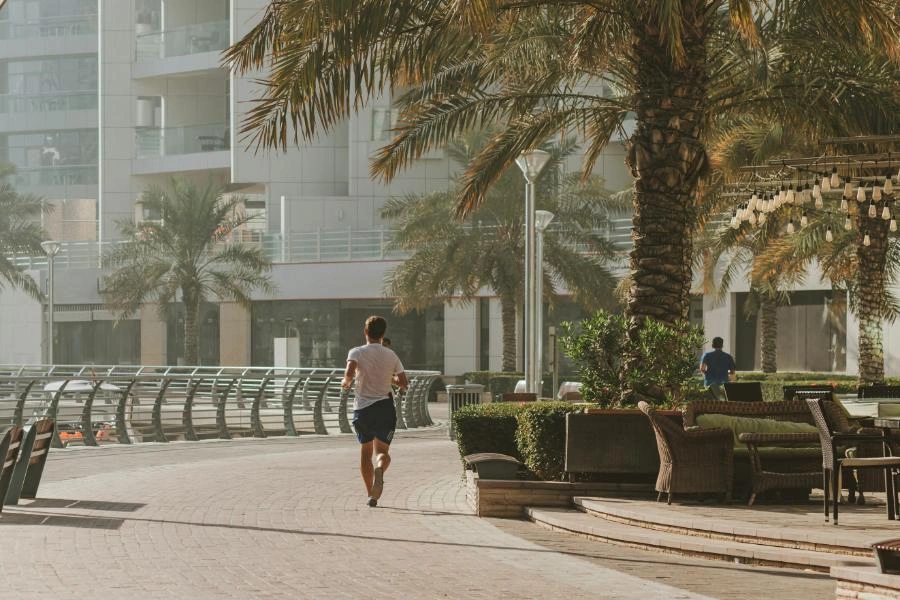
Anchor your week around three or four fixed habits. A morning walk on the beach or in a community park before the heat. One weekly cooking session that covers four meals. A weekend technology pause. These rituals cost nothing and reclaim time from delivery apps and unplanned outings.
If you are choosing where to live with these routines in mind, the overview of Green Community West shows how lower density neighbourhoods can support slower, healthier rhythms while remaining well connected to the city.
Routines also support clarity when the city offers endless options. Dubai presents a rich menu of restaurants, events, and weekend experiences, and pre committing to a handful of repeatable habits frees bandwidth for work, family, and rest.
Minimalism for Investors and Long Term Residents
Minimalism shapes property decisions, not just lifestyle ones. For investors, well located compact units consistently perform well on rental yield, according to recurring market reports from JLL and CBRE. Tenants in the minimalist demographic, including young professionals and digital nomads, prefer studios and one bedroom layouts in connected districts.
For long term residents weighing rent versus buy, the question is not how much home you can afford. It is how much home you actually use. A 1,200 square foot apartment that fits your life often works better than a 2,000 square foot apartment that exceeds it. Service charges, cooling bills, and maintenance scale with size, and intentional sizing keeps net returns healthy over a decade.
Resale liquidity also favours intentional sizing. Compact, well finished units in connected districts tend to move quickly on the secondary market. For investors holding through cycles, this liquidity matters as much as headline price growth, because clean exits turn paper gains into realised returns.
There is also a rental strategy angle. Intentionally sized units align well with the growing short and medium stay segment in Dubai, supported by regulated holiday home licensing under the Department of Economy and Tourism. A well presented one bedroom in a walkable district often achieves stronger occupancy across the year than a larger unit in a location with limited daily amenities, and the operational costs of turnover, cleaning, and furnishing stay manageable at that scale.
A Considered Way to Live in a Vibrant City
Minimalist living in Dubai is a thoughtful edit of everything the city offers. You keep the safety, the infrastructure, the international community, and the career runway. You focus your resources on what genuinely improves your life. The result is a lifestyle that fits the city you chose, on terms that reflect your priorities. If you are ready to right size your home as the first step, explore current listings and community guides on TopLatest to find a space that matches the life you want to lead.
Sources
- Dubai Statistics Centre
- Dubai Land Department
- Dubai Municipality
- Princeton Neuroscience Institute
- Central Bank of the United Arab Emirates
Frequently Asked Questions
Yes, and Dubai often makes intentional living easier than many other cities. The high value of space here means every square foot is a considered financial decision, which naturally supports smaller, more thoughtful homes. Tax free income allows savings from restrained spending to compound faster over time. The main task is defining your own measures of success clearly, then choosing the parts of the city that support those measures while enjoying the rest on your own terms.
Established mid rise communities tend to suit intentional living particularly well. Al Karama, Jumeirah Village Circle, Discovery Gardens, Town Square, and parts of Mirdif offer compact layouts, walkable amenities, and sensible rents. Sustainable communities such as The Sustainable City in Dubailand are designed explicitly around lower consumption lifestyles. The right neighbourhood depends on your commute and daily rhythm, but the common thread is access to essentials within a short walk or quick drive.
For a single resident or couple without children, a well designed studio or compact one bedroom between 450 and 750 square feet is usually sufficient. Layout matters more than raw size. Look for natural light, separate sleeping and working zones, and adequate built in storage. Families typically consider a two bedroom minimum, and a thoughtfully chosen two bedroom in a well connected community often works better than a larger unit in a remote tower with longer commutes.
Compact, well located units in mature communities consistently deliver strong rental yields and steady tenant demand. Service charges, cooling costs, and maintenance scale with size, so intentional sizing supports healthier long term returns. Investors aligned with minimalist demand, including young professionals, remote workers, and downsizing residents, tend to focus on studios and one bedrooms in transit connected districts. These assets often prove more liquid on resale than oversized alternatives in fringe communities.
Begin with three simple steps. Audit recurring expenses above AED 100 monthly and review anything you would not sign up for today at full price. Run a one in, one out rule on clothing, kitchenware, and electronics for ninety days. At your next lease renewal, evaluate whether your current home matches your actual usage. These changes are reversible, require no capital, and usually free enough resources within a quarter to make the next decisions easier and more confident.