
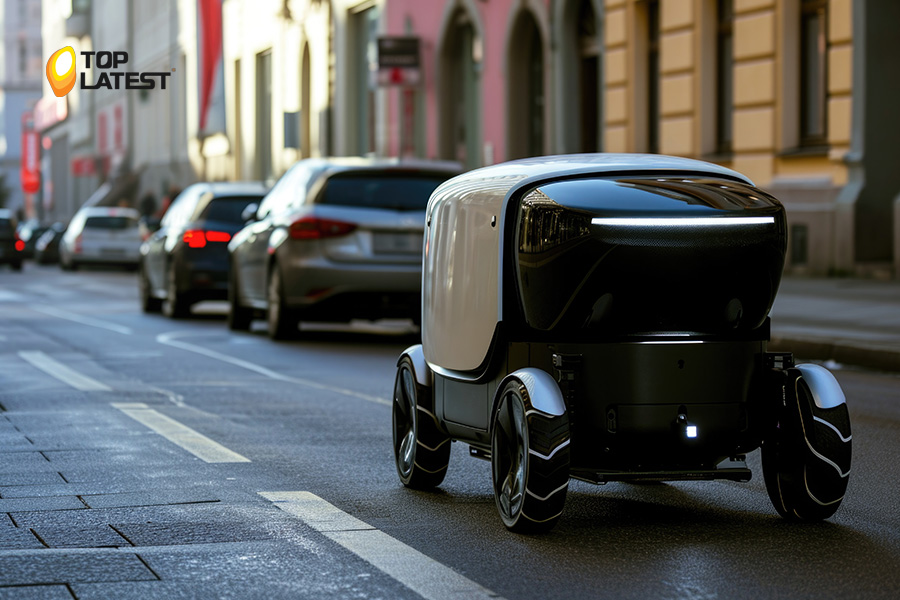
If you live in Dubai or Abu Dhabi, you may already have seen a white car with a sensor array on its roof moving through traffic with nobody behind the wheel. That is no longer a prototype on a closed track. Robotaxis in the UAE are carrying paying passengers today, and air taxis are close behind, with the first commercial vertiport already standing beside Dubai International Airport.
This guide explains what is actually running, where you can ride, how booking works, what the air taxi rollout looks like, and how autonomous mobility could influence where you choose to live, rent, or invest over the next five years. Where timelines are still moving, we say so clearly, so you can plan around facts rather than headlines.
Where Autonomous Mobility in the UAE Stands Today
The UAE has moved from pilots to paid service faster than most residents expected. Dubai set the direction in 2016 with its Smart Self-Driving Transport Strategy, and the Roads and Transport Authority’s stated target is to convert 25 per cent of all trips in the emirate into autonomous journeys by 2030. Abu Dhabi runs a parallel programme through its Integrated Transport Centre (ITC), anchored on Yas Island and the city core.
The current scale is modest, which is normal for any new mode of transport. In August 2026, RTA reported that Dubai’s robotaxi programme had passed 4 million kilometres of driving, with a fleet of 144 vehicles, 48 of them in active service, and customer satisfaction of 97 per cent, according to figures released through the Government of Dubai Media Office. Those numbers tell you two useful things. The technology has been proven on real Dubai roads, and availability will grow steadily rather than overnight.
How Robotaxis Work in Dubai
Who operates the service
RTA works with three autonomous driving partners: Baidu’s Apollo Go, WeRide, and Pony.ai. WeRide and Uber began fully driverless, fare-charging robotaxi rides in Dubai in spring 2026, following a supervised trial that started in December 2025. Apollo Go vehicles joined the Uber platform in Dubai in August 2026. Local fleet operators, including Tawasul and New Horizon Luxury Transport, take care of charging, cleaning and maintenance, so the vehicles you ride in are managed by UAE-based teams.
Where you can ride
Commercial service started in Jumeirah and Umm Suqeim, areas with wide roads, steady traffic and strong demand from residents and visitors. WeRide’s RTA permit also covers expansion into districts including Dubai Silicon Oasis, Dubai Investment Park, Nad Al Sheba, Warsan, Ras Al Khor and Al Hamriya Port. Coverage maps change as RTA approves new zones, so the quickest way to check your neighbourhood is to open the app and see whether the autonomous option appears at your pickup point.
What booking and the ride feel like
You book through the Uber app by selecting the Autonomous option where it is offered. The car arrives empty, you confirm the trip from your phone, and an in-car screen shows your route and gives you a direct line to remote support. Expect a calm driving style: gentle acceleration, full stops, and patient merging. Pickup points can sit a short walk from where a regular taxi might stop, because the vehicle only pulls over where it is permitted to do so safely.
Robotaxis Across Abu Dhabi and the Northern Emirates
Abu Dhabi was the first UAE city to offer fully driverless commercial robotaxi rides on Uber, launched by WeRide in November 2025, with service designed to cover around 70 per cent of the city’s core area over time. Yas Island remains the most established zone, and Apollo Go also operates there through local partner Autogo in coordination with ITC. For residents on Yas Island and Saadiyat, a driverless ride to a theme park, a restaurant or a friend’s apartment is already an everyday choice.
Ras Al Khaimah has started its own journey, with WeRide running robotaxi and robobus pilot operations in the emirate. That matters because it shows autonomous mobility is spreading beyond the two largest cities. Sharjah, Ajman, Umm Al Quwain and Fujairah have not announced public robotaxi services yet, so residents there can treat any timeline as open for now.
Air Taxis in the UAE: The Next Layer of Urban Travel
Dubai’s network with Joby Aviation
Dubai’s air taxi service will be operated by Joby Aviation under a six-year exclusive agreement with RTA. The aircraft is an electric vertical take-off and landing (eVTOL) model that carries a pilot and four passengers, flies at up to 320 km/h, and is designed to be far quieter than a helicopter. Early flights are piloted rather than autonomous, which is a sensible first step while passenger confidence builds.
The first vertiport, located at Dubai International Airport, has been completed and received certification from the UAE General Civil Aviation Authority in 2026, a first for a purpose-built commercial vertiport. Further sites are planned at Palm Jumeirah, Downtown Dubai, Dubai Marina, Dubai Mall, Atlantis The Royal and American University in Dubai. A trip from DXB to Palm Jumeirah is expected to take around 10 to 12 minutes by air, compared with roughly 45 minutes by road in typical traffic.
Booking will run through Uber Air inside the Uber app, so one journey could combine a car to the vertiport and a flight onward. Joby has said it expects to carry its first passengers in Dubai during 2026. As of late October 2026, the first public passenger flight has not yet been announced, so any exact launch date remains provisional until RTA confirms it.
Abu Dhabi’s programme with Archer Aviation
Abu Dhabi is preparing a separate service using Archer Aviation’s Midnight aircraft, operated with Abu Dhabi Aviation and supported by the Abu Dhabi Investment Office. ITC has indicated a launch at the end of 2026 or early in 2027. The planned network links Zayed International Airport with business districts, hotels and residential areas, with the aim of turning 60 to 90 minute drives into flights of 10 to 20 minutes.
What Autonomous Mobility Means for Daily Life
The practical value shows up in ordinary routines rather than headline moments:
- Airport and late-night trips: a robotaxi is a relaxed option when you would rather not drive after a long flight, and the first air taxi corridor is built around DXB travellers.
- First and last mile: RTA positions robotaxis as a link between public transport and your front door, which suits residents in communities a little beyond walking distance of a metro station.
- Household logistics: families living in family friendly communities in Dubai and Abu Dhabi gain another way to handle errands and appointments without juggling one car. Rules for minors riding alone have not been published, so check the app terms first.
- Cleaner journeys: both robotaxis and eVTOL aircraft are fully electric, which fits neatly with practical habits for reducing your carbon footprint in the UAE.
How Autonomous Mobility Could Shape Property Choices
Transport has always shaped Dubai’s property map, and new modes tend to reward specific locations first. Here is how to read the signals.
Vertiport proximity
Homes and hotels close to DXB, Palm Jumeirah, Downtown Dubai and Dubai Marina sit nearest to the first air taxi stations. Air taxis are expected to launch as a premium service, so any lifestyle benefit will be felt first in prime segments that already trade on convenience and status.
Robotaxi coverage zones
Communities inside today’s coverage, such as Jumeirah and Umm Suqeim, and those on RTA’s approved expansion list, such as Dubai Silicon Oasis and Dubai Investment Park, gain an extra way to move around. For tenants without a car, that can widen the list of areas that work day to day.
Long-term design priorities
If autonomous rides become routine by 2030, buyers may place a little less weight on a second parking bay and more on well-designed drop-off zones, shaded pickup points and easy lobby access. This is a long-term consideration rather than a current pricing factor.
Using mobility as a research filter
If you are studying emerging neighbourhoods in Dubai for property investment, compare each shortlisted area against RTA’s announced robotaxi zones and planned vertiport sites. It is one more indicator of future connectivity, alongside metro extensions and road upgrades.
A balanced view helps here. No published study has yet measured a price premium linked to robotaxi access in the UAE, so autonomous mobility works best as a supporting factor in a location decision rather than the deciding one.
What to Keep in Mind as Services Scale
- Phased coverage: service grows zone by zone, so your pickup or drop-off may sit outside the current area for a while.
- Fares: robotaxi prices are shown in the app before you confirm, just like other ride options. Air taxi fares have not been published, and RTA has described making them comparable to premium ride-hailing as a long-term goal rather than a launch promise.
- Backup planning: operators can pause service for maintenance or unusual conditions, so keep an alternative ready for time-critical journeys such as flights.
- Regulatory oversight: robotaxis operate under RTA and ITC permits issued area by area, and air taxis need GCAA approval for passenger operations, which gives you a clear chain of accountability.
The Road Ahead for Autonomous Mobility in the UAE
Robotaxis in the UAE have crossed the line from experiment to everyday service, with driverless rides now bookable in parts of Dubai and Abu Dhabi and pilots running in Ras Al Khaimah. Air taxis are the next chapter, with Dubai’s DXB vertiport certified and Abu Dhabi preparing its own network. Growth will be gradual, and that pace is part of what makes the rollout credible.
For residents, the opportunity is simple: more ways to move, fewer hours lost in traffic, and a new lens for judging locations. If you are weighing a move, a lease or an investment, explore more area and community guides on toplatest.ae and factor RTA’s published coverage plans into your research.
Sources
- Roads and Transport Authority (RTA), Dubai: Smart Self-Driving Transport Strategy and Robotaxi programme performance update, August 2026
- Joby Aviation: Dubai air taxi network, vertiport locations and Uber Air announcements
- WeRide Inc.: Dubai and Abu Dhabi robotaxi commercial operations disclosures
- Integrated Transport Centre (ITC), Abu Dhabi: Autonomous mobility and air taxi programme updates
- Archer Aviation: Midnight air taxi launch programme with Abu Dhabi Aviation and the Abu Dhabi Investment Office
Frequently Asked Questions
Yes. Fully driverless, fare-charging robotaxi rides have been operating in Dubai since spring 2026, starting in Jumeirah and Umm Suqeim. Riders book through the Uber app by selecting the Autonomous option, with vehicles supplied by WeRide and Baidu’s Apollo Go. RTA has approved expansion into further districts, including Dubai Silicon Oasis and Dubai Investment Park, so coverage will keep growing. The easiest way to confirm availability is to check whether the autonomous option appears at your pickup point.
In Dubai and Abu Dhabi, you book a robotaxi through the Uber app. Enter your destination and choose the Autonomous option if it appears for your route. The car arrives without a driver, you confirm the trip on your phone, and an in-car screen displays the route and connects you to remote support. The fare is shown before you confirm. On Yas Island, Apollo Go services operated through local partner Autogo also provide driverless rides for residents.
Joby Aviation, which holds a six-year exclusive agreement with Dubai’s RTA, has said it expects to carry its first passengers in Dubai during 2026. The DXB vertiport is complete and certified by the UAE General Civil Aviation Authority. As of late October 2026, the first public passenger flight had not been formally announced, so the exact date remains provisional. Follow RTA announcements for confirmed launch timing, routes and booking details through the Uber app.
Official air taxi fares for Dubai or Abu Dhabi have not been published yet. Early flights are widely expected to be priced as a premium service, reflecting new aircraft, certified vertiports and trained pilots. RTA has described a long-term ambition to bring air taxi pricing closer to premium ride-hailing as the network scales. Until fares are released through the Uber app or RTA, treat any figure circulating online as an estimate rather than a confirmed price.
Robotaxis in the UAE operate under permits issued area by area by Dubai’s RTA and Abu Dhabi’s Integrated Transport Centre, after supervised trials with safety drivers. Every vehicle is monitored remotely, and riders can reach support from an in-car screen. By August 2026, Dubai’s programme had passed 4 million kilometres with 97 per cent customer satisfaction. Air taxis follow a separate path, requiring GCAA certification before carrying passengers, with initial flights piloted by trained commercial pilots.