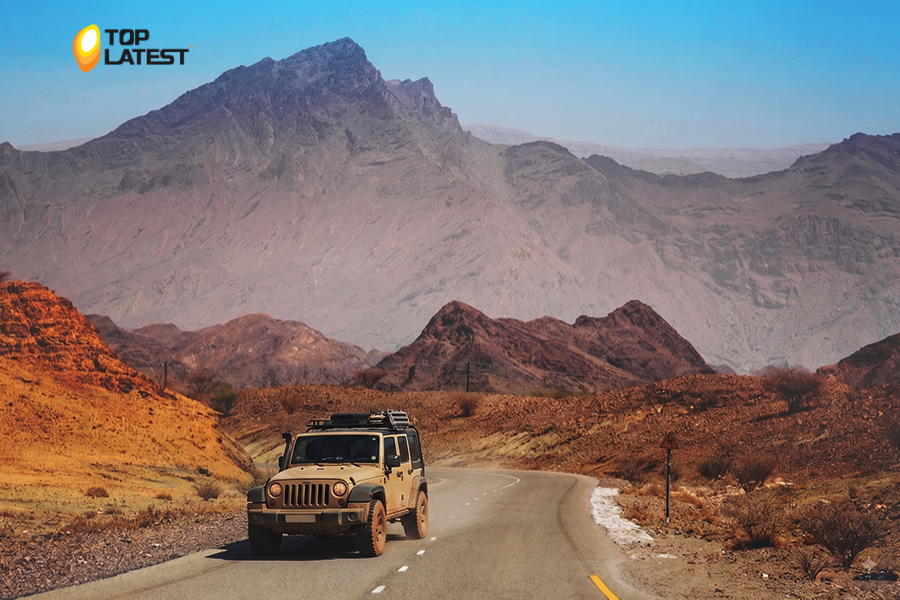
Few road trips deliver as much variety for as little effort as the drive from Dubai into Oman. Within a single morning you move from coastal highway to the folded ridges of the Hajar Mountains, and by afternoon you can be standing beside a turquoise wadi or a quiet fishing harbour. The distance to Muscat is roughly 450 kilometres, the roads on both sides are modern and clearly signposted, and the whole journey fits comfortably into a long weekend. What separates a smooth trip from a slow one is preparation. Knowing which route to take out of Dubai, which border post fits your plan, and which paperwork your vehicle needs will save you more time than any shortcut on the map.
Why This Drive Works So Well for UAE Residents
The appeal is practical. You leave when you want, carry what you want, and stop wherever the landscape asks you to. A family of four can usually cover fuel, border fees, insurance, and two nights of accommodation for less than a set of return flights, and you arrive with a car already at your disposal. The seasonal window is generous too. From October through April the driving conditions are close to ideal, with cool mornings and clear mountain visibility. For residents who normally build short breaks around flight schedules, this is one of the few destinations where the journey itself becomes part of the holiday. If you are still weighing options, our guide to weekend getaways from Dubai places the drive in context alongside short haul flight routes.
The Main Route: Dubai to Muscat Through the Hatta Border
The Hatta crossing, known as Al Wajajah on the Omani side, is the busiest and most direct option for anyone starting in Dubai, Sharjah, Ajman, Umm Al Quwain, or Ras Al Khaimah. It sits around 130 to 140 kilometres from central Dubai and puts you straight onto the main corridor toward Sohar and Muscat.
Getting Out of Dubai the Right Way
This is the step most first time drivers get wrong. The direct E44 run through Al Madam briefly passes through Omani territory before it reaches Hatta, and that stretch is not open to every traveller. The reliable approach is to take Emirates Road or Sheikh Mohammed Bin Zayed Road toward Sharjah, join the E102 Sharjah to Kalba road, then turn south onto the E44 for Hatta once you are past the Omani spur. You stay inside UAE territory the entire way and reach the Hatta checkpoint without a detour. Setting your navigation to Hatta town rather than the border post usually produces the correct routing.
What the Drive Looks Like After the Border
Once you are stamped out on the UAE side, you continue a short distance to the Omani immigration post and then join the highway heading north east. Sohar sits about 85 kilometres on, roughly an hour of easy coastal driving. From there it is another 310 kilometres to Muscat along the Batinah coast, which takes about three and a half hours at a relaxed pace. Total driving time from Dubai is five to six hours, with border processing typically adding 30 to 90 minutes depending on the day and the season.
Border Crossings Available to UAE Residents
Four crossings matter for most road trips, listed here by how heavily residents use them.
- Hatta and Al Wajajah, Dubai: the default crossing for the capital route, open to residents and visitors, and the fastest connection to Sohar, Muscat, and the interior.
- Khatmat Malaha, Kalba in eastern Sharjah: suited to drivers starting from Fujairah or the east coast who are heading toward Sohar and the northern Omani shoreline.
- Mezyad and Hafeet, Al Ain: the natural choice from Abu Dhabi, and the gateway to the Omani interior and the far south of the country.
- Al Dara and Tibat, Ras Al Khaimah: the route into Musandam and the fjord coastline around Khasab, which functions as a separate trip since it does not connect by road to mainland Oman.
Confirm operating hours before you set off. The major crossings generally run around the clock, while smaller posts keep fixed schedules that can shift during public holidays.
Documents, Fees, and Insurance to Prepare
For You and Your Passengers
Carry a passport valid for at least six months, your Emirates ID, and your UAE residence visa if you hold one. Entry conditions then depend on nationality. According to the Ministry of Foreign Affairs of the Sultanate of Oman, visitors from more than 100 countries are exempt from an entry visa for stays of up to 14 days, provided they hold a confirmed hotel reservation, health insurance, a return ticket, and sufficient funds for the stay. A second group of nationalities qualifies on the same 14 day basis if they hold residency or a valid visa for one of a defined list of countries, or hold residency in an approved profession. The Royal Oman Police, which administers all entry permissions, added a free 14 day tourist visa category in August 2026, so it is worth confirming the current position on the official e-visa portal shortly before you travel rather than relying on older guidance. If your nationality falls outside these groups, an e-visa applied for a few days ahead is the standard route. Our list of visa-free and visa-on-arrival countries for UAE passport holders is a useful companion when you are mapping documentation across a wider travel year.
For Your Vehicle
Your car needs its original registration card, the mulkiya, and motor insurance that is valid in Oman. Many comprehensive UAE policies already include Omani cover at no additional cost, and your insurer will issue the Orange Card that proves it. If your policy stops at the border, third party cover can be purchased at the crossing itself. Drivers of Dubai registered vehicles also need a tourism certificate from the Roads and Transport Authority before taking the car out of the country, issued at a Customer Happiness Centre for a modest fee. If the vehicle is financed, borrowed, or rented, add a no objection certificate from the bank, the owner, or the rental company, and confirm in advance that your rental agreement permits cross border travel, since not every agency allows it.
Fees at the Border
Leaving the UAE through a land port carries a per person exit fee of AED 35, collected by the Federal Authority for Identity, Citizenship, Customs and Port Security, with UAE citizens exempt. On the Omani side you may pay a visa fee depending on nationality, plus temporary motor insurance if you need it. Keeping a small amount of cash in both currencies is sensible, since card terminals at busy posts occasionally slow the queue.
Must See Stops Worth Building the Itinerary Around
These are ordered by how consistently they anchor a first Oman road trip.
- Muscat: the capital rewards a slow pace. The Sultan Qaboos Grand Mosque, the Royal Opera House, and the Mutrah corniche with its old souq are the anchors, and the harbour at sunset is usually the best photograph of the trip.
- Nizwa: two hours inland, the round fort tower and the Friday livestock market give the clearest sense of interior Oman. The souq is strong on silver, dates, and frankincense.
- Wadi Shab: roughly two hours south of Muscat, this is the wadi most visitors picture. A short boat ride, a walk of about 40 minutes, then a swim through a narrow opening into a hidden cave pool.
- Bimmah Sinkhole: a limestone crater filled with blue green water, sitting directly off the coastal road toward Sur and easy to fold into a driving day with children.
- Jebel Akhdar: the Green Mountain rises above 2,000 metres, stays cool through summer, and is terraced with rose gardens and pomegranate orchards. A four wheel drive is required for the ascent.
- Sur and Ras Al Jinz: Sur still builds wooden dhows by hand, and the turtle reserve at Ras Al Jinz runs guided night viewing of nesting green turtles.
- Wahiba Sands: dunes and desert camps, best approached with a guide or with properly deflated tyres and a capable vehicle.
- Misfat Al Abriyeen: a mud brick village built into the mountainside above date terraces and falaj channels, and a quiet favourite for an overnight stay.
Two Itineraries That Work
A three day version keeps things simple. Drive Dubai to Muscat on day one, arriving in the late afternoon. Spend day two in the capital across the Grand Mosque, Mutrah, and the opera house district. On day three, drive back with a stop at Bimmah Sinkhole or a coffee break in Sohar.
A five day version is where the route really opens up. Add a night in Nizwa with Jebel Akhdar on the way, then a coastal night in Sur that takes in Wadi Shab and Ras Al Jinz before you loop back through Muscat and home. Most residents settle on this shape after a first visit, because it turns the drive from a transfer into the trip itself.
What to Keep in Mind for a Smooth Drive
Timing shapes the experience more than any other factor. Crossing before 8am on a weekday keeps waits short, while Eid periods and long weekends can extend them considerably. Fuel is cheaper in Oman, but stations thin out once you leave the coastal highway, so fill up before heading inland. Speed cameras are frequent and enforcement is consistent, and Oman applies a strict approach to alcohol at the wheel. Photography is not permitted at border posts, so keep phones packed away while you are being processed. Mobile coverage is reliable along the main highways and patchy in the wadis, which makes offline maps worth downloading before you leave. If a full cross border trip feels ambitious for now, a shorter drive within the UAE, such as the run out to the 77 Valley in Dubai, makes a good warm up for the longer route.
Making the Most of the Journey
The Dubai to Oman drive rewards travellers who settle the practical layer early and then leave room for everything else. Sort your documents, your insurance, and your border timing in advance, and the rest of the trip stays flexible enough to follow a good recommendation or an unplanned detour. Whether you have a long weekend or a full week, the route delivers mountains, coastline, and heritage in a sequence few regional journeys can match. Explore more travel and lifestyle guides on toplatest.ae as you plan, and if you are still finding your feet in the country, our first year survival guide for expats in the UAE covers the wider practicalities of getting around the region with confidence.
Sources
- Ministry of Foreign Affairs, Sultanate of Oman
- Royal Oman Police
- Federal Authority for Identity, Citizenship, Customs and Port Security, United Arab Emirates
- Roads and Transport Authority, Dubai
- Ministry of Heritage and Tourism, Sultanate of Oman
Frequently Asked Questions
The drive covers roughly 450 kilometres and takes five to six hours of actual driving. Border processing at Hatta and Al Wajajah usually adds another 30 to 90 minutes, so a realistic door to door estimate is six to eight hours. Crossing early on a weekday morning keeps the border portion short, while Eid periods and long weekends see heavier volumes and longer queues at the checkpoints on both sides.
Hatta and Al Wajajah is the most convenient crossing from Dubai, sitting about 130 to 140 kilometres from the city centre and connecting directly to the Sohar and Muscat corridor. Drivers coming from Fujairah or the east coast often prefer Khatmat Malaha in Kalba, while Mezyad and Hafeet near Al Ain suits journeys that begin in Abu Dhabi or head toward the Omani interior and the far south of the country.
You need a passport valid for at least six months, your Emirates ID, your UAE residence visa if applicable, and the appropriate Omani entry permission for your nationality. For the vehicle, carry the original registration card, motor insurance valid in Oman, and a tourism certificate from the Roads and Transport Authority for Dubai registered cars. Financed, borrowed, or rented vehicles also require a no objection certificate from the bank, the owner, or the rental company.
Many comprehensive UAE motor policies extend to Oman at no extra cost, and your insurer will issue an Orange Card confirming that cover. Contact your provider before travelling to check whether the extension applies and to request the card, which can be issued digitally. If your policy stops at the border, temporary third party cover can be bought at the crossing, though the protection it offers is narrower than a full extension.
October through April offers the most comfortable conditions, with cool mornings, clear mountain visibility, and pleasant wadi temperatures. This window also suits camping and longer walking stops. Summer trips remain popular for the higher mountain areas, which stay noticeably cooler than the coast. School holidays and Eid breaks bring the busiest border traffic, so an early morning departure is worth planning if your travel dates happen to fall within one of those periods.