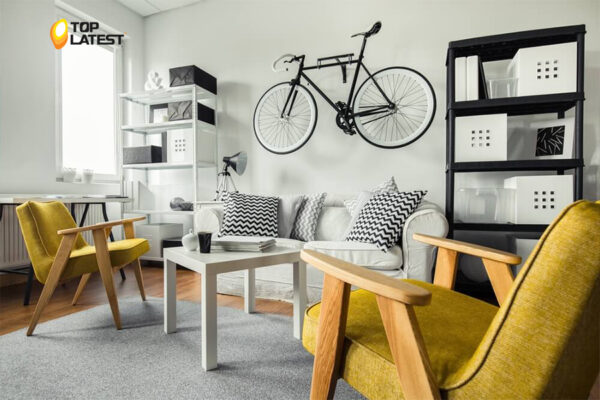

Small bedrooms are the norm across UAE apartments. Whether you live in a studio in Al Nahda, a one-bedroom in Al Majaz, or a compact unit in a newer waterfront development, the question is the same. How do you make a tight room feel open, calm, and properly liveable without a full renovation? The answer is rarely about square footage. It is about light, line of sight, scale, and visual weight. The seven tips below are how interior designers in the region actually solve this problem.
1. Treat light as the first design tool, not the last
The fastest way to make a small bedroom look larger is to maximise daylight and layer artificial light correctly. Pull curtain rods all the way past the window frame so the full glass surface is exposed during the day. Avoid heavy blackout panels with thick valances. Replace them with sheer panels for daytime use, layered behind a thicker night curtain on the same rail.
For artificial lighting, never rely on a single overhead bulb. Use three layers: a ceiling source for ambient light, a bedside reading source at eye level, and a low accent source such as a floor lamp or LED strip behind the headboard. Layered light removes harsh shadows that visually shrink a room.
Warm white temperatures between 2700K and 3000K read as more spacious in bedrooms than cool white. Cool bulbs flatten depth and make small rooms feel boxy.
2. Commit to a tight, light colour palette
Small bedrooms get smaller when colour fights for attention. Lock the palette to three colours maximum: a dominant wall and ceiling tone, a secondary furniture tone, and one accent. Off-white, warm grey, soft sand, and pale blush all expand the perceived volume of a room because they reflect more light back into the space.
Paint the ceiling the same shade as the walls, or one half-shade lighter. This removes the visible ceiling line and lifts perceived height. Avoid sharp tonal contrasts between walls and ceiling in rooms under fourteen square metres.
If you want personality, place colour at a single decisive point: a headboard upholstery, one piece of art, or the bedding. Resist the urge to add busy accent walls in patterned wallpaper. In small bedrooms, dense patterns multiply visual noise and pull the walls inward.
3. Scale down furniture and choose pieces that earn their footprint
Most small bedrooms feel small because the furniture is wrong for the room, not because the room is wrong for the furniture. Measure before you buy. A king bed in a ten square metre room will eat the floor plan, no matter how stylish the frame.
Choose a bed with a low profile and built-in storage drawers underneath. Replace bulky bedside tables with wall-mounted floating nightstands. Skip dressers entirely if your wardrobe has internal drawers. Every piece in a small bedroom should solve two problems at once: surface and storage, or seating and storage.
For compact units common in the UAE rental market, including studios and one-bedrooms in newer developments such as sharjah waterfront city, fitted built-in wardrobes almost always outperform freestanding ones. They use the full ceiling height and remove the visual gap that freestanding pieces leave above and beside them. For more compact-living context, see TopLatest’s guide to budget-friendly Sharjah apartments.
4. Build storage vertically, never horizontally
Floor space is the most valuable asset in a small bedroom. Protect it. Move storage up the walls instead of out across the floor. Floor-to-ceiling shelving, wall-hung cabinets, and over-the-door organisers all add capacity without consuming usable square footage.
A useful rule: if storage furniture stops at chest height, it is wasting the wall above it. Run shelving or cabinetry to within twenty centimetres of the ceiling. The eye reads the unbroken vertical line as height, which is exactly what a small room needs.
Behind-the-door hooks, under-bed boxes on wheels, and headboards with built-in compartments all add meaningful capacity. So does swapping a standard bedframe for a platform bed with integrated drawers. Small bedrooms reward storage that is invisible when not in use, because visible clutter is the single biggest cause of a room feeling cramped.
5. Use mirrors to multiply light, not to dress the wall
Mirrors are the most reliable trick in small-room design, but most people place them wrong. The principle: a mirror should reflect a light source or an open sight line, not a wall or a cluttered corner.
Place one large mirror directly opposite or adjacent to the main window. The mirror doubles the perceived daylight and visually extends the room by the depth of whatever it reflects. A full-length mirror on a slim closet door or wardrobe panel performs the same function while remaining functional for dressing.
Avoid mirrored ceiling panels, which read dated, and avoid clusters of small decorative mirrors, which fragment light instead of amplifying it. One large, well-placed mirror outperforms five small ones every time. Match the frame to the room palette so the mirror reads as architecture, not as added decor.
6. Edit ruthlessly, because visual weight is the real enemy
Small bedrooms fail more often from accumulated visual weight than from actual square footage. Every visible object adds cognitive load. A nightstand with five items on top reads heavier than a nightstand with one. A wall with four small artworks reads busier than a wall with one large piece.
Apply a one-in, one-out rule for soft items: pillows, throws, decorative objects, and books on display. Limit bedside surfaces to three items maximum. Keep cables hidden, charging stations inside drawers, and laundry out of sight.
Closed storage almost always outperforms open storage in small bedrooms. Open shelves invite visual clutter unless every object is genuinely curated. If you cannot commit to that level of styling discipline, choose drawers and doors. The fastest way to make a small room feel larger is to remove things, not add them.
7. Use textiles and window dressing to add height and softness
The final tip is the one most people skip. Curtains, rugs, and bedding shape how the eye reads room proportion. Hang curtain rods as close to the ceiling as possible, not just above the window frame, and let panels reach the floor. This single change can add perceived ceiling height of twenty to thirty centimetres in many standard mid-rise apartments, including the building types covered in TopLatest’s Al Nahda apartment guide.
Choose a rug that extends well beyond the sides and foot of the bed, not a small rug centred under the bed. Larger rugs visually anchor the room and pull the eye outward toward the walls.
For bedding, stick to plain or low-contrast patterns. Heavy floral or geometric prints on a small bed dominate the room. The same principle applies to upholstered headboards: choose a clean silhouette in a tonal fabric. Texture, not pattern, is what adds depth in a small space.
Frequently Asked Questions
What colour makes a small bedroom look biggest?
Soft off-white, warm beige, pale grey, and gentle blush are the most reliable choices because they reflect more light than darker shades and reduce contrast between walls, ceiling, and furniture. Painting the ceiling the same tone as the walls, or one half-shade lighter, removes the visible ceiling line and visually lifts the room. Avoid bold accent walls in small bedrooms, since they pull the walls inward and shrink the apparent footprint of the space.
Where should mirrors be placed in a small bedroom?
Place one large mirror directly opposite or beside the main window so it reflects daylight and the open sight line back into the room. A full-length mirror mounted on a slim closet door doubles as a dressing mirror without consuming wall area. Avoid clusters of small decorative mirrors, since they fragment light rather than amplifying it. One well-placed mirror almost always outperforms multiple small ones in compact bedrooms.
Is a low bed or a tall bed better for small bedrooms?
Low-profile beds usually work better in small bedrooms because they preserve negative space above the mattress, which the eye reads as extra room volume. Built-in drawers underneath add storage without expanding the bed’s footprint. Tall headboards can still work if upholstered in a tonal fabric and kept clean in silhouette. The key is keeping the line of sight from the door to the opposite wall as unobstructed as possible across the floor.
How can I add storage to a small bedroom without making it feel crowded?
Move storage vertically rather than horizontally. Use floor-to-ceiling fitted wardrobes, wall-mounted shelving, and over-the-door organisers instead of freestanding chests and dressers. Choose a platform bed with integrated drawers, and replace bulky bedside tables with floating nightstands. Closed storage outperforms open shelving in small rooms because it hides visual clutter. The rule is simple: protect floor area at all costs, since open floor is what makes a small bedroom read as larger.
Do I need to renovate to make my small bedroom look bigger?
No. Most improvements in small bedrooms come from layout, lighting, colour, and editing, not construction. Repositioning the bed, hanging curtains higher, adding a single large mirror, and removing surface clutter usually deliver the biggest visible difference. Renovations such as built-in wardrobes or removing a partition wall are useful in older units, but they should be considered only after the no-cost design changes have been applied and the room still feels constrained.
Sources
- Architectural Digest
- Houzz
- IKEA
- Sherwin-Williams
- Real Simple