Dubai apartments are becoming smarter, and the shift is happening faster than most residents expect. Whether you own a studio in Business Bay or rent a two-bedroom in Jumeirah Village Circle, the right smart devices can transform how you manage comfort, security, and energy in your home. Dubai’s climate demands responsive cooling, its multicultural lifestyle calls for flexible home routines, and its modern apartment stock supports wireless connectivity out of the box.
The UAE smart home market is on a steep growth trajectory, with projections from Grand View Research placing the country’s smart home revenue at nearly US$3 billion by 2030. That growth reflects a clear consumer preference for connected living, especially in apartment settings where wireless solutions make adoption effortless. This guide walks you through the smart home devices that deliver the most value in a Dubai apartment and how to build a setup that fits your lifestyle.
Smart Climate Control Devices
Climate control is where smart home technology makes the biggest difference in Dubai. Cooling accounts for a significant share of household electricity costs, and with summer temperatures regularly exceeding 45 degrees Celsius, air conditioning runs for the better part of the year. Smart thermostats and infrared controllers give you precise, programmable control over your AC system, whether your apartment uses a central ducted unit or individual split systems.
Devices like the Sensibo Air and tado work with most split AC units found in Dubai apartments by sending infrared signals to your existing remote-operated system. You install them in minutes without any wiring changes, and they connect to your phone through Wi-Fi. The real value comes from scheduling, geofencing, and usage tracking. Geofencing detects when you leave your apartment and adjusts the temperature accordingly, then cools the space down before you return. For residents managing DEWA bills during peak summer months, this kind of automation can reduce cooling costs by up to 25 percent, according to local smart home service providers across Dubai and Abu Dhabi.
Smart Lighting Systems
Lighting is one of the simplest and most visible entry points into smart home technology, and it works exceptionally well in apartments. Smart bulbs from Philips Hue, LIFX, and Nanoleaf replace standard fittings without any rewiring. You screw them in, connect them to your Wi-Fi network, and control them through an app or voice commands via Alexa, Google Home, or Apple HomeKit.
In Dubai apartments, smart lighting offers more than convenience. Colour temperature adjustment is genuinely useful in a city where natural light is intense for most of the day. You can set warmer tones for evening relaxation and cooler, focus-friendly light for a home office. Scheduling lights to turn on and off while you travel also adds a layer of security. For renters exploring ways to personalise their living space without permanent modifications, smart lighting is an ideal starting point. If you are looking for more renter-friendly ideas, the guide to renter-friendly decor ideas for UAE flats on toplatest.ae covers practical approaches that complement a smart setup.
Smart Security and Access Devices
Security is consistently one of the top priorities for UAE residents when it comes to smart home investment, and apartment-friendly options have expanded considerably. Smart video doorbells, indoor cameras, and smart locks are the three core devices in this category, and all three are available in wireless, renter-safe configurations.
Video doorbells from Ring and Arlo allow you to see and speak with visitors from your phone, whether you are inside the apartment or away at work. This is particularly useful in Dubai’s high-rise buildings where deliveries are frequent and access protocols vary by community. Indoor cameras from Eufy and Aqara offer local storage options, appealing to residents who prefer not to rely on cloud subscriptions.
Smart locks have gained strong traction in Dubai, especially among residents who manage short-term holiday home rentals regulated by DTCM. Locks from Yale, August, and Schlage fit standard apartment door preparations found across the city. Many replace the interior cylinder only, meaning you can revert to the original hardware when your tenancy ends. Smart locks add both convenience and a measurable boost to rental appeal.
Smart Motorised Curtains and Blinds
Dubai’s intense sunlight and heat make automated curtain and blind systems a high-value addition to any apartment. Smart motorised tracks from SwitchBot, Aqara, and IKEA’s FYRTUR range allow you to schedule curtains to close during peak sun hours and open again as temperatures drop. Battery-powered and plug-in versions are available, and most install on existing curtain rods without drilling into walls.
The practical benefit is twofold. First, controlling solar heat gain through your windows reduces the load on air conditioning, feeding directly into lower electricity bills. Second, automated curtains support daily routines by syncing with sunrise and sunset times or voice assistants. In apartments with floor-to-ceiling glazing, common across Dubai Marina, Downtown Dubai, and Business Bay, smart blinds are especially effective at managing glare and indoor temperature.
Voice Assistants and Smart Hubs
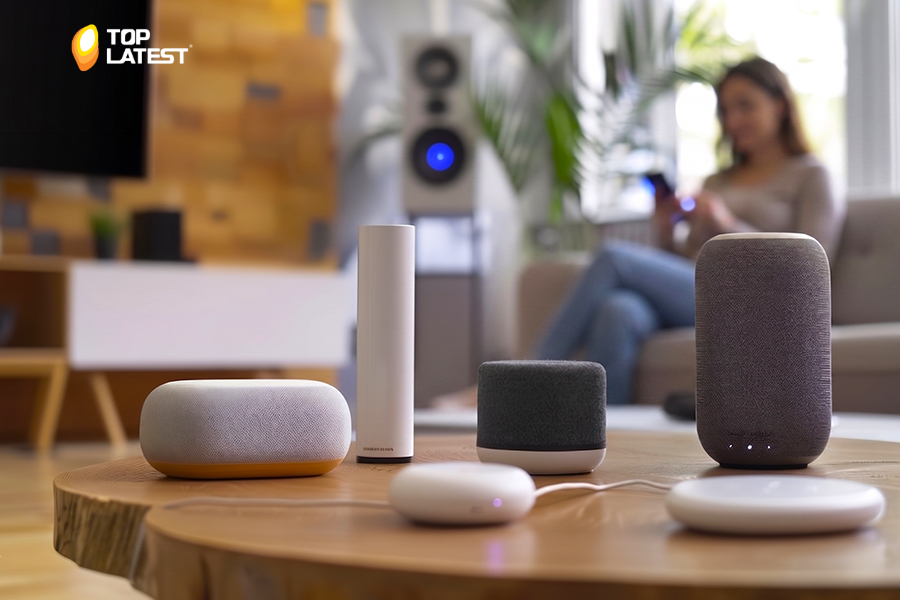
A voice assistant serves as the central control point for your smart apartment. Amazon Alexa, Google Home, and Apple HomeKit are the three dominant ecosystems available in the UAE, and each has distinct strengths. Alexa has the widest device compatibility and supports Arabic voice commands, making it a natural fit for a multilingual household. Google Home integrates tightly with Android devices and Google services, while Apple HomeKit appeals to iPhone and iPad users who prioritise privacy-first architecture.
Smart displays like the Amazon Echo Show and Google Nest Hub add a visual layer, letting you view security camera feeds, control lighting scenes, and manage your calendar from a single screen. For most apartment setups, starting with one voice assistant and building around its ecosystem is the most efficient approach. The Matter protocol, now supported by all three major platforms, is also making it easier to mix devices across ecosystems without compatibility issues, giving residents flexibility without being locked into a single brand.
Smart Plugs and Energy Monitors
Smart plugs are among the most affordable and versatile smart home devices available. Brands like TP-Link Tapo, Meross, and Eve offer Wi-Fi connected plugs that turn any standard appliance into a controllable device. You can schedule your coffee maker, set your water heater to run during off-peak hours, or cut standby power to entertainment systems when they are not in use.
Energy monitoring plugs go a step further by tracking how much electricity each connected appliance consumes. For residents who want to manage their DEWA bills more actively, this data is valuable. You can identify which devices draw the most power and adjust usage habits accordingly. In a city where sustainability is becoming a defining feature of government policy and residential development, energy awareness through smart plugs aligns with the broader direction of the UAE’s built environment. If you are interested in how sustainability shapes property decisions, the guide to sustainable buildings in the UAE on toplatest.ae explores this intersection.
Smart Leak and Smoke Sensors
Water leaks and smoke events can cause significant damage in apartments, and smart sensors provide early detection that standard hardware cannot match. Devices from Aqara, Eve, and Samsung SmartThings detect moisture under sinks, near washing machines, and in bathrooms, then send immediate alerts to your phone. In a high-rise apartment, where a leak can quickly affect multiple floors, early notification gives you time to act.
Smart smoke and carbon monoxide detectors, such as those from Google Nest Protect, go beyond the basic alarm by sending push notifications to your phone and identifying the type of hazard. These are battery-operated, require no wiring changes, and integrate with voice assistant ecosystems for status checks. For apartment owners and landlords managing properties across Dubai, Abu Dhabi, and Sharjah, smart sensors offer peace of mind and practical loss prevention.
How to Build a Smart Apartment Setup That Works for You
The most effective smart apartments are not the ones with the most devices. They are the ones where every device serves a clear purpose and works within a unified system. Before purchasing anything, choose your primary ecosystem: Alexa, Google Home, or Apple HomeKit. That decision determines which devices communicate seamlessly and which sit in isolation.
Start with climate control and lighting, as these offer the most immediate impact on comfort and energy costs. Add security devices based on your needs, then layer in automations like motorised curtains and smart plugs as your setup matures. A complete one to two bedroom apartment setup in Dubai typically ranges from AED 3,000 for a basic configuration to AED 15,000 for a comprehensive system. Most devices are wireless and removable, making them well suited for renters who want to take their investment with them when they move.
For buyers exploring newly built apartments, many off-plan developments in Dubai now include pre-installed smart home infrastructure. Communities in Dubai Hills Estate, Mohammed Bin Rashid City, and Dubai Creek Harbour are among those integrating smart-ready wiring from handover. If you are evaluating new developments with built-in smart features, the guide to top off-plan property locations in Dubai on toplatest.ae provides a useful starting point.
Considerations for Renters and Apartment Owners
Renters in Dubai benefit from the fact that nearly all popular smart home devices are wireless and install without structural changes. Smart bulbs replace existing ones, IR climate controllers stick to walls with adhesive, video doorbells run on battery power, and smart locks replace only the interior cylinder. When your lease ends, you remove everything and reinstall the original hardware.
For apartment owners, the calculus is slightly different. Investing in smart features can enhance both the rental yield and resale value of your property. Properties equipped with smart home technology in Dubai increasingly attract higher tenant demand and can command a rental premium. Dubai’s position as a city that prioritises innovation means that tech-enabled apartments align naturally with what tenants and buyers are looking for. For more on what makes Dubai a strong destination for living and investing, explore the guide to why Dubai attracts expats and families on toplatest.ae.
Making Your Dubai Apartment Work Smarter
Smart home technology is no longer reserved for luxury villas or newly built penthouses. Apartments across every price range and community in Dubai can benefit from devices that manage climate, lighting, security, and energy with precision. The key is starting with devices that address your most immediate needs, building around a single ecosystem, and scaling gradually.
Whether you are a renter looking for portable, deposit-safe upgrades or an owner investing in long-term property value, the devices covered in this guide are designed to perform well in the specific conditions of apartment living in the UAE. Explore more property insights and lifestyle content on toplatest.ae to support your next move in the UAE property market.
Sources
- Grand View Research, UAE Smart Home Market Size and Outlook Report
- Renub Research, United Arab Emirates Smart Home Market Analysis 2025 to 2033
- Statista, Smart Home Market Forecast for the United Arab Emirates
- Dubai Electricity and Water Authority (DEWA), Residential Electricity Tariff and Conservation Guidelines
- Samsung Electronics, SmartThings Home Dubai Multi-Device Experience Launch
Frequently Asked Questions
Amazon Alexa, Google Home, and Apple HomeKit are the three primary ecosystems available in the UAE. Alexa offers the widest device compatibility and supports Arabic voice commands, making it popular among Dubai’s multicultural residents. Google Home integrates well with Android devices, while Apple HomeKit suits iPhone users who value privacy. Choosing one ecosystem before buying devices ensures your smart products communicate smoothly. All three now support the Matter protocol, which improves cross-brand compatibility.
Yes, most smart home devices designed for apartments are wireless and removable. Smart bulbs, IR climate controllers, battery-powered doorbells, and adhesive-mounted sensors require no drilling or wiring changes. Smart locks typically replace only the inner cylinder and can be swapped back at lease end. These devices leave no damage and travel with you to your next home. Renters across Dubai, Abu Dhabi, and Sharjah regularly set up systems starting from around AED 3,000 without affecting their deposit.
A basic setup covering climate control, smart lighting, and a video doorbell typically costs between AED 2,500 and AED 5,000 for a one to two bedroom apartment. A mid-tier system adding smart locks, motorised curtains, and a voice assistant hub ranges from AED 8,000 to AED 15,000. Premium setups with full automation can reach AED 35,000 or more. Starting with essentials and expanding gradually is the most practical approach for most residents.
Smart devices can meaningfully lower your DEWA electricity costs, particularly through climate and energy management. Smart thermostats and IR controllers reduce cooling waste by learning your schedule and adjusting AC output when you are away. Smart plugs eliminate standby power draw from idle appliances. Motorised curtains reduce solar heat gain through windows, easing the load on your air conditioning. Combined, these devices contribute to measurable savings on monthly utility bills, especially during the peak summer cooling season across the UAE.
Most wireless smart home devices work well in older Dubai apartments because they rely on Wi-Fi rather than in-wall wiring. Smart bulbs, IR climate controllers, video doorbells, and sensors retrofit into existing spaces without modification. One consideration in older buildings is Wi-Fi signal strength, as thicker concrete walls can weaken coverage. A mesh Wi-Fi system from Eero or TP-Link Deco distributes signal evenly across your apartment. Checking router placement before purchasing helps ensure reliable performance.