
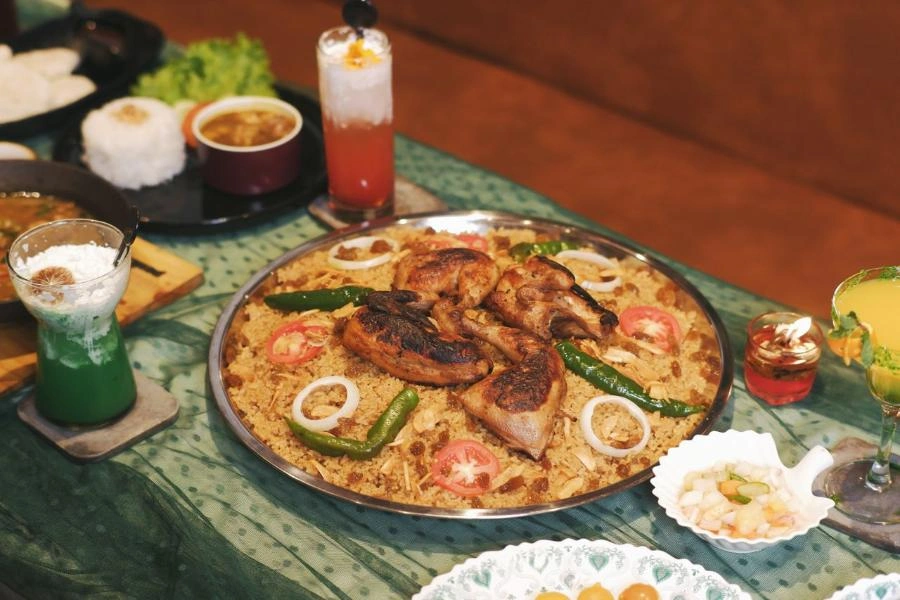
Walk through any food court in Dubai on a Friday night and you will see something that would have seemed unusual twenty years ago. A mandi house plating up biryani style basmati. A cafe serving hummus topped with chaat masala and crunchy sev. A home cook in Sharjah marinating chicken in shawarma spice and tikka yoghurt at the same time. Arab and Indian cooking are quietly merging on UAE plates, and the results are some of the most exciting food coming out of the country right now.
This guide breaks down why the two cuisines blend so naturally on UAE tables, which fusion combinations actually work, and how to recreate the best of them in your own kitchen.
Why Arab Indian fusion is having a real moment in the UAE
The UAE is one of the few places in the world where Indian and Arab populations live side by side at scale. Indian nationals form one of the largest communities in the country, with the Embassy of India in Abu Dhabi placing the figure at roughly 3.5 million people. That is more than a third of the UAE’s total population. Centuries of trade across the Arabian Sea also mean that Indian and UAE kitchens already share ingredients, techniques, and even some signature dishes.
Add the modern context. India and the UAE signed a Comprehensive Economic Partnership Agreement in 2022, lifting bilateral food and spice trade to record levels according to the Indian Ministry of Commerce and Industry. Cardamom, basmati, ghee, and pickles now move both ways at scale. Restaurants and home cooks follow what is on the shelf. The result is a generation of UAE chefs who treat Arab and Indian pantries as one larger toolkit rather than two separate traditions.
Fusion is not a marketing gimmick here. It is the natural outcome of geography, demographics, and daily habit inside the UAE.
The historical spice route that quietly connected both kitchens
Long before food trends had names, dhows sailed between the Indian coast and the Arabian Peninsula carrying cardamom, cloves, black pepper, ginger, and turmeric. Traders brought back rosewater, saffron, and dried lime in return. Many dishes that now feel uniquely Emirati, like machboos, harees, and luqaimat, share direct culinary roots with South Asian cooking. The biryani itself is widely understood to have evolved from older pilaf traditions that travelled east. So when a modern UAE chef plates biryani next to mandi, they are not inventing something new. They are completing a circle that started centuries ago in ports along the coast.
Understanding that history changes how you think about fusion. It is less about mixing two foreign cuisines and more about returning to a shared starting point and reimagining it for today’s UAE table.
The flavour logic: where Arab and Indian kitchens already meet
Look at the spice racks side by side and the overlap is striking. Cardamom, cinnamon, cloves, bay leaf, black pepper, cumin, coriander, dried lime, saffron, and ghee appear in both cuisines, often in the same dish. Long grain basmati rice anchors both biryani and mandi. Yoghurt forms the base of marinades in tandoori chicken and in shish tawook. Flatbread plays the same role at the table, whether it is naan, roti, or khubz.
The distinct notes are also clear, and that is what makes fusion exciting. Indian cooking layers more chilli heat, more turmeric, and more fresh herbs like curry leaves and coriander. Emirati and wider Gulf cooking leans on dried lime, sumac, allspice, baharat, and za’atar. When you let each tradition lend two or three of its signature notes to a dish, you get something that tastes familiar to both communities and new to both at the same time.
Biryani meets mandi: the rice plate marriage that just works
Biryani and mandi are close cousins on the same family tree. Both are slow cooked rice dishes built around marinated meat and warm spices. Biryani uses a layered dum technique with saffron, fried onions, mint, and yoghurt. Mandi uses a slow oven cooked method with smoky charcoal, dried lime, and bone broth.
How to fuse them at home
Marinate lamb shoulder or chicken in a hybrid paste of yoghurt, ginger garlic, baharat, garam masala, dried black lime powder, and a touch of Kashmiri chilli. Cook the meat low and slow with a smoked charcoal hint, mandi style. Layer the cooked meat over saffron and rose water infused basmati rice prepared biryani style with fried onions, mint, and a drizzle of ghee. Seal the pot for a final dum cook of fifteen minutes.
How to serve it
Plate the rice on a wide tray, mandi style, but serve a small bowl of cooling yoghurt raita on the side, biryani style. Add a quick salad of cucumber, tomato, onion, and sumac. The result is smoky, aromatic, and layered, with the silky texture of biryani and the depth of mandi. A version of this dish is increasingly common across UAE home kitchens and is the easiest fusion plate to master first.
Hummus meets chaat: the dip and snack remix changing UAE menus
Chaat is Indian street food at its most playful. Crunchy, tangy, spicy, sweet, all in one bite. Hummus is a smooth, creamy staple across Arab kitchens. Combine them and you get one of the most addictive fusion bites on UAE menus today.
How to build chaat hummus
Start with a classic hummus base of chickpeas, tahini, lemon, garlic, and good olive oil. Spread it on a wide plate. Top with chopped tomato, red onion, fresh coriander, pomegranate seeds, sev or thin gram flour noodles, and a generous dusting of chaat masala. Drizzle with tamarind chutney and a thin green coriander mint chutney. Add a final crack of black salt and a squeeze of lime.
Why it works
Hummus brings creamy fat and earthy chickpea sweetness. Chaat brings acidity, crunch, and bright spice. The two balance each other naturally because hummus already contains tahini and lemon, which echo the tangy citrus core of chaat. Serve with warm khubz, pita chips, or papad shards for scooping. This dish travels easily from the dinner table to a majlis style sharing platter and is one of the most photographed fusion plates on UAE food blogs today.
More Arab Indian fusion recipes worth trying
Shawarma tikka wrap
Marinate chicken thighs in tandoori spice and yoghurt overnight. Cook on a vertical rotisserie or grill pan. Wrap in saj bread with garlic toum, mint chutney, pickled red onion, and shredded lettuce. The smoke of tandoori meets the cream of toum and the freshness of mint. This is the most widely ordered fusion wrap across UAE cafes today.
Butter chicken shawarma platter
Serve thinly sliced shawarma chicken over saffron rice with a small ramekin of butter chicken gravy on the side. Eat the rice and meat with bread one bite, then dip in the makhani sauce the next. The combination delivers Gulf comfort and North Indian richness on one plate and has become a family dinner favourite in Sharjah and Ajman households.
Karak chai with a masala twist
UAE style karak chai is already rooted in Indian masala chai. Add an extra pinch of cardamom and clove and finish with a thread of saffron for a UAE inflected version that pairs perfectly with both kunafa and gulab jamun. It is the easiest fusion recipe on this list and the most likely to become a daily habit.
Mandi flavoured biryani for vegetarians
Use roasted cauliflower, paneer, or jackfruit in place of meat. Apply the same dried lime, baharat, saffron, and biryani layering treatment. A surprisingly elegant vegetarian centrepiece for a multicultural dinner table, and increasingly popular among UAE home cooks catering to mixed dietary needs.
How to build a balanced Arab Indian fusion menu at home
Plan the meal in three layers. Start with two dips or small plates such as chaat hummus and a quick muhammara with chaat masala. Build the centre around one fusion rice plate, like the biryani mandi above, with a side of cooling yoghurt and salad. Close with a light dessert that bridges both traditions, such as basbousa flavoured with cardamom and saffron, or a small bowl of phirni topped with crushed pistachios and rose petals. Serve karak chai or mint tea to finish. The structure echoes both an Arab mezze flow and an Indian thali in a way that feels intentional rather than crowded.
A small tip from UAE home cooks. Always introduce one familiar anchor for each guest at the table. A biryani lover should still recognise their dish in the rice. An Emirati guest should still find the dried lime and baharat they expect. Fusion works best when neither side feels their cuisine has been overruled. Keep one ingredient or technique fully authentic in every dish, and use the other cuisine only to add a clear, intentional accent.
Where to taste Arab Indian fusion across the UAE
Dubai’s most concentrated multicultural neighbourhoods have always been quiet test kitchens for this kind of cooking. Al Karama has long been a hub for South Asian cafes that now sit next to Arab bakeries and mandi houses, making it one of the easiest places to sample chaat hummus or shawarma tikka in a single evening walk.
In Abu Dhabi, mixed community pockets such as Mussafah bring together Indian, Filipino, and Arab kitchens within the same few blocks. Many home cooks experiment privately here, and the area’s casual restaurant scene increasingly reflects that daily exchange between neighbours.
For travellers and newcomers, the older heart of Dubai also offers strong fusion energy. Al Raffa in Bur Dubai sits at a cultural crossroads where Indian and Arab influences have shaped daily menus for decades, and where some of the city’s earliest fusion plates first appeared on street facing counters.
Bringing it together
Arab Indian fusion is not a trend that needs explaining anymore. It is how a generation of UAE residents actually cook and eat every week. The smartest fusion recipes do not try to mash the two cuisines together. They identify the shared ingredients, respect the distinct notes, and let each tradition contribute its strongest flavour signature. Start with biryani meets mandi for the centre of the table and chaat hummus for the start of the meal, and you will already have two dishes that earn repeat requests from family and friends. Explore TopLatest for more guides on living, eating, and settling well across the UAE.
Sources
- Embassy of India, Abu Dhabi
- Ministry of Commerce and Industry, Government of India
- Dubai Department of Economy and Tourism
- Federal Competitiveness and Statistics Centre, United Arab Emirates
- Federation of Indian Chambers of Commerce and Industry
Frequently Asked Questions
Biryani is a layered rice dish cooked using the dum technique, which traps steam to slowly infuse marinated meat, basmati, saffron, fried onions, mint, and yoghurt. Mandi is traditionally cooked in an underground or slow oven over charcoal, using bone broth, dried lime, and warm spices for a smoky aroma. Biryani is creamier and more layered in flavour, while mandi is lighter and smokier, with the meat usually placed on top of the rice.
It is both modern and deeply historical. Trade across the Arabian Sea has connected Indian and UAE kitchens for over a thousand years, which is why dishes like machboos and biryani share so many spices and techniques. Modern fusion cooking simply makes that link visible on a single plate. With Indian nationals forming one of the largest communities in the UAE, fusion dishes have become a natural part of how households cook and eat here today.
Chaat hummus is the easiest starting point because it requires no cooking beyond blending hummus. You assemble it with chopped vegetables, chaat masala, tamarind chutney, and crunchy sev on top. The shawarma tikka wrap is another beginner friendly option. Marinate chicken in tandoori yoghurt, grill it, then wrap with toum, mint chutney, and pickled onion. Both dishes deliver strong fusion flavour with minimal technique and use ingredients easily available across UAE supermarkets today.
Yes, many Arab Indian fusion dishes adapt well. Replace meat in mandi style biryani with cauliflower, paneer, or jackfruit and apply the same spice blend. Chaat hummus is naturally vegetarian and easily made vegan by omitting yoghurt sides. Falafel dusted with chaat masala and a tamarind drizzle is another strong vegan option. Karak chai can be made dairy free using oat or coconut milk, and shared use of legumes and grains makes plant based fusion seamless.
Major hypermarkets like Lulu, Carrefour, and Spinneys stock most Indian and Arab pantry staples side by side. For specialist spices like chaat masala, dried black lime, and baharat, neighbourhood grocery stores in Al Karama, Meena Bazaar, and Mussafah offer fresher and more affordable options. Spice souks in older parts of Dubai and Abu Dhabi are excellent for bulk buying. Online grocery platforms now also deliver ingredient kits curated specifically for fusion recipes across UAE cities.