Pilates has moved from a specialist discipline to a defining feature of the UAE wellness landscape. Across Dubai, Abu Dhabi, Sharjah, and the Northern Emirates, boutique studios are opening at a steady pace, residential developers are weaving Pilates spaces into community amenities, and residents are rebuilding their weekly routines around reformer, mat, and apparatus-based sessions. The appeal is practical as much as aesthetic. For UAE residents balancing demanding careers, long commutes, and climate-driven lifestyle patterns, Pilates offers a structured, low-impact practice that fits the realities of life in the Emirates. The result is a quiet but meaningful shift in how fitness is designed, delivered, and consumed across the country.
The Rise of Pilates in the UAE Fitness Landscape
The UAE health and fitness sector has expanded significantly over the past five years, supported by national wellness programmes, higher disposable income, and growing awareness of preventive health. According to Statista market data on the UAE health and fitness club segment, boutique concepts have captured a steadily rising share of consumer spending, outpacing conventional gym memberships in several prime districts. Within this shift, Pilates has emerged as one of the fastest growing categories, with studio openings concentrated in Dubai prime residential districts and Abu Dhabi island communities.
What was once a specialist offering limited to a handful of studios in Jumeirah and Downtown Dubai is now a mainstream choice. Reformer classes routinely sell out, waitlists for instructor certification programmes are growing, and hospitality groups are integrating Pilates into resident wellness programming. The discipline has also entered the vocabulary of property marketing, with developers highlighting Pilates studios and movement rooms as community anchors rather than optional extras.
Why Pilates Resonates with UAE Residents
Several factors explain the discipline traction in the Emirates.
The first is climate. Outdoor training is comfortable for only part of the year, and indoor, air-conditioned studios offer consistency across all seasons. Pilates does not require large open spaces or extensive equipment setups, which suits the compact, climate-controlled environments common in UAE communities.
The second is lifestyle fit. Many residents work long professional hours and face recurring posture, back, and mobility issues linked to desk-based roles and extended driving time. Pilates addresses these directly through core activation, controlled movement, and spinal alignment work, delivering measurable improvements within a few weeks of consistent practice.
The third is the demographic profile of the UAE. The country attracts a globally mobile population already familiar with wellness-led fitness formats and comfortable spending on premium, instructor-led experiences. These residents arrive expecting high-quality boutique studios and the market has moved quickly to meet that expectation.
The fourth is inclusivity. Pilates is accessible across age groups, fitness levels, and recovery stages, making it a strong fit for the diverse resident base, from young professionals to families, senior citizens, and residents returning from injury or pregnancy.
Studio Formats Gaining Ground Across the Emirates
Reformer-Focused Boutique Studios
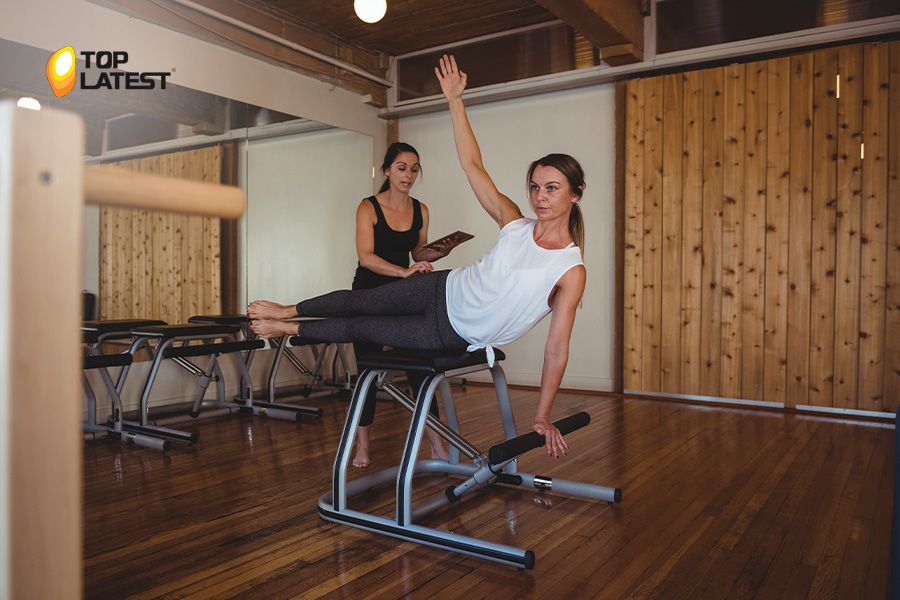
The reformer-focused boutique studio is the most widely adopted format. These spaces centre their programming around spring-loaded reformer beds, with small group classes typically capped at ten to twelve participants. Reformer Pilates has become the headline offering for most new openings in Dubai, driven by its visible results, strong appeal to time-pressed professionals, and ease of booking in short, focused sessions.
Classical Mat Pilates Spaces
Classical mat Pilates studios form the second category. These spaces focus on floor-based work, props such as magic circles and resistance bands, and traditional sequencing rooted in the original Joseph Pilates method. They attract practitioners interested in the foundational principles of the discipline and often serve as entry points for residents who later progress to apparatus training.
Hybrid Wellness Concepts
Hybrid wellness concepts are the fastest expanding category. These studios combine Pilates with complementary services such as physiotherapy, nutrition consulting, infrared sauna sessions, cold plunge pools, and recovery lounges. They respond to a growing resident preference for integrated wellness experiences delivered under one roof, rather than fragmented single-service memberships.
Communities Where Pilates Culture Is Thriving
Pilates adoption is uneven across the UAE, with specific communities emerging as clear hubs. The list below reflects current density and demand.
Dubai Marina and Jumeirah Beach Residence
Dubai Marina and JBR sit at the top of the list. The dense residential population, high concentration of young professionals, and walkable layout make the area a natural fit for boutique fitness. Several of the most established reformer studios in the UAE operate here, and new concepts continue to open along the walkway and within the surrounding residential towers.
Downtown Dubai and Business Bay
Downtown Dubai and Business Bay follow closely. The clustering of corporate offices, serviced apartments, and premium residences has created consistent demand for early morning and lunchtime classes. Studios in these districts often operate extended weekday schedules to match corporate hours, with express formats designed around the professional calendar.
Jumeirah, Al Wasl, and City Walk
Jumeirah, Al Wasl, and City Walk form the third major cluster. This stretch has long been a wellness destination for Dubai residents, and Pilates studios here tend to lean toward the hybrid wellness model, often paired with cafes, physiotherapy rooms, and lifestyle retail concepts within walking distance.
Saadiyat Island and Al Reem Island, Abu Dhabi
In Abu Dhabi, Saadiyat Island and Al Reem Island lead adoption. The resident profile across these communities aligns closely with boutique fitness, and developers have actively integrated wellness spaces into recent residential launches, including dedicated reformer studios within community clubhouses.
Al Zahia, Aljada, and the Northern Emirates
Sharjah communities such as Al Zahia and Aljada, along with growing residential corridors in Ras Al Khaimah and Ajman, are seeing their first dedicated Pilates studios. Adoption is at an earlier stage but following a clear upward trajectory as the resident base in these areas expands.
How Pilates Fits Into Daily Routines
For most UAE residents who commit to the practice, Pilates has become a two to four session per week routine, often layered with walking, swimming, or occasional strength training. The format works well for early morning sessions before office hours, mid-morning slots for parents after school drop-off, and evening classes for professionals winding down from the workday.
Studios have responded by extending operating hours, introducing express forty-five minute formats, and offering flexible class packs rather than long term memberships. Digital booking platforms, waitlist automation, and app-based class credits are now standard, reducing friction for residents managing busy schedules. The combination of structured programming, measurable progress, and lower injury risk compared to high-intensity training has made Pilates a sustainable long-term practice rather than a short term fitness phase.
The Role of Residential Design and Studio Access
The influence of Pilates extends into residential planning. Developers across Dubai and Abu Dhabi are increasingly incorporating movement studios into podium amenities, often alongside yoga rooms, co-working spaces, and recovery areas. Communities with these amenities tend to see stronger resident engagement with on-site facilities, which supports both lifestyle quality and long-term community value. For buyers and renters evaluating a new home, proximity to a well-run Pilates studio has become a meaningful consideration, similar to how walkability to supermarkets or schools factors into location decisions. Residents exploring community options can review detailed area and lifestyle guides on toplatest.ae to understand how different neighbourhoods compare on wellness amenities.
What to Keep in Mind When Choosing a Studio
A few considerations shape the experience of signing up for a Pilates studio in the UAE.
Instructor credentials matter. Established studios typically employ instructors certified through recognised bodies such as BASI Pilates, Polestar Pilates, STOTT Pilates, or Romana Pilates. Verifying certification supports programming quality and reduces the likelihood of injury during unfamiliar movement patterns.
Equipment ratios are a practical factor. Reformer studios usually operate on a one reformer per participant basis, and class sizes above twelve can dilute the personalisation that makes the format effective. Attention from the instructor during each sequence is often what separates a strong studio from an average one.
Location and timing fit the daily routine. Studios within walking distance or a short drive from home or office are more likely to sustain long-term attendance. Residents evaluating Dubai community options often weigh studio proximity alongside other lifestyle factors such as schools, retail, and commute time.
Trial sessions and introductory packs allow new practitioners to assess instructor style, studio atmosphere, and class intensity before committing to a longer package. Most leading studios in the UAE now offer a discounted first visit specifically to support this evaluation.
A Broader Shift in UAE Wellness Culture
The growth of Pilates studios reflects a wider repositioning of fitness in the UAE. Residents are moving away from treating exercise as short bursts of high-intensity activity and toward building sustainable, body-aware practices that support long-term health. This mirrors national priorities set out through initiatives such as the Dubai Fitness Challenge, led by the Dubai Sports Council, which has consistently drawn millions of participants into daily movement across public parks, community spaces, and private studios. The thirty-day format has helped embed Pilates, yoga, and other low-impact disciplines into mainstream resident routines.
For communities, developers, and residents alike, this shift carries practical implications. Wellness is no longer a bonus feature. It is becoming a core expectation of how neighbourhoods are planned, how properties are marketed, and how residents choose where to live.
A Durable Addition to UAE Living
Pilates has quietly become one of the most influential forces reshaping fitness in the UAE. From boutique reformer studios in Dubai Marina to hybrid wellness spaces in Jumeirah and new studio openings across Abu Dhabi and Sharjah, the discipline is redefining how residents approach movement, recovery, and long-term health. For anyone exploring where to live, how to structure a weekly routine, or how to invest in a home that supports a modern lifestyle, Pilates studios have become a meaningful part of the picture. Explore more lifestyle and community insights on toplatest.ae to see how wellness is shaping neighbourhoods across the Emirates.
Top 5 Primary Sources
- Statista, UAE Health and Fitness Club Market Report
- Dubai Sports Council, Dubai Fitness Challenge Annual Participation Data
- Dubai Health Authority, Preventive Health and Wellness Framework
- Knight Frank, Dubai Residential Amenities and Wellness Trends Research
- UAE Ministry of Health and Prevention, National Wellness Strategy Documentation
Frequently Asked Questions
Pilates has gained strong traction in the UAE because it aligns with the local climate, lifestyle, and resident profile. Indoor, air-conditioned studios allow year-round consistency, the low-impact format suits long professional hours and desk-related posture concerns, and the globally mobile resident base is already familiar with boutique wellness formats. The discipline is also accessible across age groups and fitness levels, making it a natural fit for the UAE diverse community of residents.
Dubai Marina and Jumeirah Beach Residence lead on studio density, followed closely by Downtown Dubai, Business Bay, Jumeirah, Al Wasl, and City Walk. In Abu Dhabi, Saadiyat Island and Al Reem Island have become clear hubs, with wellness spaces integrated into recent residential launches. Sharjah communities such as Al Zahia and emerging residential corridors in Ras Al Khaimah are also seeing their first dedicated studios, reflecting the broader spread of the discipline across the Emirates.
Most UAE residents who practise Pilates consistently attend two to four sessions per week, often combined with walking, swimming, or occasional strength training. This frequency supports steady progress in core strength, mobility, and posture without overloading the body. Many studios offer forty-five minute express formats and flexible class packs, which make it easier to maintain regular attendance alongside demanding work schedules and family responsibilities common across the Emirates.
Residents typically evaluate instructor certification, equipment ratios, class size, location, and studio atmosphere. Credentials from recognised bodies such as BASI, Polestar, STOTT, or Romana Pilates signal strong programming quality. Reformer studios ideally operate on a one reformer per participant basis, with class sizes capped around ten to twelve. Proximity to home or office supports long-term attendance, and trial sessions help new practitioners assess instructor style and intensity before committing to a longer membership package.
Yes, developers across Dubai and Abu Dhabi are increasingly incorporating Pilates and wellness studios into podium amenities, often alongside yoga rooms, co-working spaces, and recovery areas. Communities with these facilities tend to see stronger resident engagement and higher lifestyle appeal. For buyers and renters, proximity to a well-run Pilates studio has become a meaningful factor in home selection, similar to how walkability to supermarkets or schools influences community choice in the UAE.