Lighting shapes how a Dubai home feels long after the sun sets over the Marina skyline. It defines whether a living room feels expansive or intimate, whether a kitchen reads as functional or inviting, and whether a bedroom truly signals rest. In a city where apartments are often finished in high gloss surfaces, marble, and floor to ceiling glazing, the way you light your space carries as much design weight as the furniture itself. This guide walks you through the fixtures that suit UAE homes best, the layered lighting approach professional designers use, and how warm tones can transform a property from cold and clinical to genuinely welcoming.
Understanding the Dubai Lighting Context
Dubai homes come with a particular set of lighting realities. Sunlight is intense for most of the year, and residents rely heavily on tinted glass, blackout treatments, and shaded balconies to manage glare and heat. Indoors, the palette often features reflective materials such as porcelain tiles, mirrored joinery, and lacquered cabinetry, all of which amplify light and can create harshness if fixtures are chosen without care.
Ceiling heights in many Dubai apartments and villas are generous, typically ranging from 2.9 to 3.3 metres in newer developments, which opens up options for statement pendants and multi tier chandeliers that would overwhelm shorter rooms. At the same time, cooling loads make energy efficient lighting a practical priority. DEWA’s Demand Side Management strategy actively encourages LED adoption across residential buildings, and most new handover units already ship with LED downlights as standard.
The Three Layers Every Well Lit Home Needs
Popular lighting design in Dubai follows a three layer principle that professional interior designers apply almost universally. Getting these layers right is the single most impactful change a homeowner can make.
Ambient Layer
Ambient lighting is the general illumination that fills a room and lets you move through it comfortably. In Dubai apartments this is typically delivered through recessed ceiling spots, cove lighting tucked into false ceilings, or a central pendant. The goal is soft, even coverage rather than a single bright source that flattens everything beneath it. A useful rule of thumb is to plan for roughly 20 lumens per square foot of floor area for ambient light in living spaces, and to spread that output across multiple fixtures rather than concentrating it in one.
Task Layer
Task lighting supports specific activities: reading in a lounge chair, chopping vegetables at a kitchen island, applying makeup at a vanity, or working from a study nook. Under cabinet strips, adjustable desk lamps, and directional pendants over islands all fall into this layer. Dubai homes with open plan kitchens benefit enormously from strong task lighting because the ambient layer alone rarely reaches counter level with useful intensity.
Accent Layer
Accent lighting adds depth and personality. It highlights artwork, a feature wall, a bookcase, or the texture of a marble slab. Wall washers, picture lights, and small directional spots are the usual tools. This is the layer most Dubai homeowners underuse, yet it is the one that gives interiors a curated, hospitality inspired quality. A well aimed accent light should deliver roughly three times the brightness of the surrounding ambient wash so the eye reads it as a highlight rather than a smudge.
Fixture Choices That Work Well in UAE Homes
The most widely specified fixtures in Dubai residential interiors, in rough order of popularity, are chandeliers, recessed downlights, pendants, cove and strip lighting, wall sconces, and portable table and floor lamps.
Chandeliers remain the anchor fixture in Dubai living rooms, formal dining areas, and double height entrances. Modern crystal, blown glass cluster designs, and sculptural brass pieces are all in strong demand, particularly in villa communities such as Arabian Ranches, Dubai Hills Estate, and Al Barari. Scale matters more than style: a chandelier should sit roughly two thirds the width of the table or seating group it crowns.
Recessed downlights are the workhorse of Dubai ceilings. Choose fittings with a colour rendering index of 90 or above so skin tones, food, and finishes read accurately. Beam angles of 36 to 60 degrees suit most residential ceilings; narrower beams create scalloped hotspots that look unfinished.
Pendants define kitchen islands, breakfast bars, and stairwells. A three pendant cluster over an island of 2.4 metres or longer is a proven configuration that balances light distribution with visual rhythm.
Cove and LED strip lighting built into gypsum ceilings, joinery, and skirting is a signature look in the UAE. When done well it creates a soft halo that lifts the perceived ceiling height. When done poorly it produces scallops and hot spots, so specify continuous run strips of at least 14 watts per metre and diffused channels.
Wall sconces work beautifully in corridors, either side of beds, and flanking bathroom mirrors. They add a layer that ceiling only schemes miss and free up surface space on nightstands and vanities.
Floor and table lamps are essential for evening ambience. They allow you to dim the ceiling lights entirely and shift the room into a softer mode, which is particularly welcome after long, bright days.
Choosing Warm Tones: Getting Colour Temperature Right
Colour temperature is measured in Kelvin. Lower numbers are warmer, higher numbers are cooler. For residential Dubai interiors, the sweet spot is 2700K to 3000K across almost every room.
2700K delivers a soft, golden hour warmth that suits living rooms, bedrooms, and dining areas. It flatters skin, wood, and warm stone. 3000K is slightly crisper and works well in kitchens and bathrooms where clarity matters but coldness is unwelcome. 4000K and above should be reserved for garages, storage rooms, or specific task areas. In main living spaces they read as clinical and often make expensive finishes look cheap.
Consistency is important. Mixing 2700K downlights with 4000K strip lighting in the same room creates a visible clash that no amount of dimming can fix. When retrofitting, replace all bulbs in a space together and keep the Kelvin rating uniform.
Dimmability is the second half of the warm tone equation. A room lit at 30 per cent output feels entirely different from the same room at full brightness, and dimmable LED drivers are now standard across most quality UAE fixtures. Pair them with rotary or smart dimmers rather than binary switches wherever budget allows.
A useful benchmark is that ambient light should account for around 60 per cent of the total lumen output in a room, task light for about 30 per cent, and accent for the remaining 10 per cent. Adjusting these ratios by scene, through dimmers, is what separates a professionally lit interior from a builder standard one and is entirely achievable within a modest fixture budget.
Room by Room Approach
Living areas benefit from all three layers working together: a chandelier or feature pendant for ambient warmth, floor lamps beside seating for task and mood, and picture lights or wall washers for accent. Aim for at least four separate lighting circuits so you can compose different scenes.
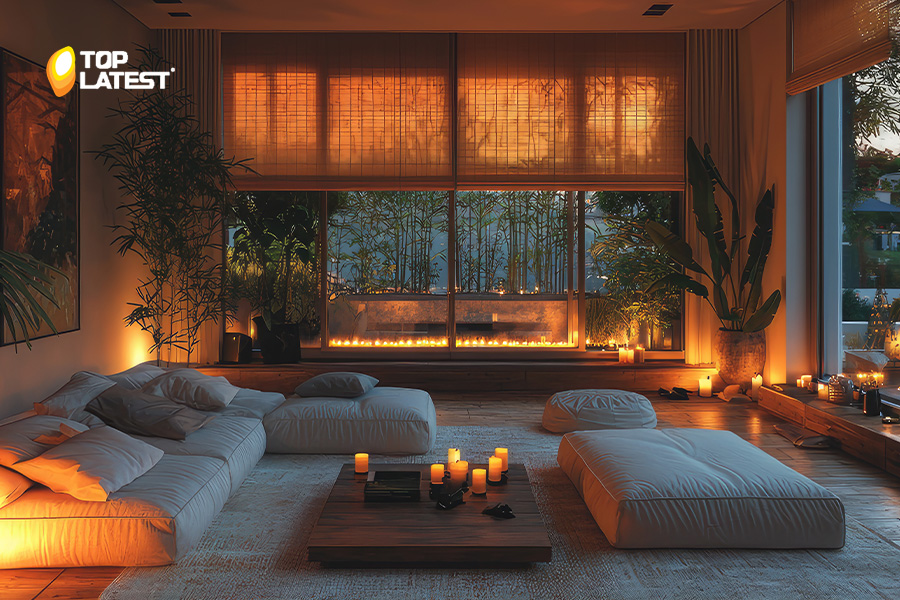
Bedrooms should lean heavily on layered warm tones. Bedside sconces or pendants free up nightstand space and read as more considered than table lamps. A cove detail behind the headboard adds hotel style softness.
Kitchens need honest task lighting over prep zones, warm ambient light across the ceiling, and accent lighting inside glass fronted cabinetry. Under cabinet strips are essential in Dubai kitchens with dark stone counters, which absorb light heavily.
Bathrooms perform best with vertical light on either side of the mirror rather than a single overhead source, which casts shadows on the face. Add a warm dimmable ceiling light for evening use.
Balconies and outdoor terraces deserve dedicated attention given how many Dubai residents use them in cooler months. Weather rated warm white step lights, wall lanterns, and low level planter lights create an evening retreat without attracting insects the way cool white does.
Energy Efficiency and Regulatory Context
The UAE has some of the region’s most established energy efficiency standards for lighting. The Emirates Authority for Standardization and Metrology, working with the Ministry of Energy and Infrastructure, enforces minimum energy performance requirements for lamps sold in the country, which has effectively phased out incandescent and inefficient halogen options. Choosing quality LED fixtures is now the default rather than the exception, and the long term savings on DEWA bills are meaningful in a city where cooling and lighting together account for a large share of residential electricity use.
Smart Lighting: A Practical Consideration
Smart lighting adoption in UAE homes has accelerated as newer developments ship with Wi Fi enabled circuits and voice assistant compatibility as standard. Scene based control, where a single tap shifts a whole apartment from Morning to Evening to Dinner, is genuinely useful rather than a gimmick. Homeowners exploring this route often start with the main living area and bedrooms before extending to the full property, and pairing smart bulbs with a central hub keeps the system responsive.
Bringing It All Together
Lighting is one of the highest impact, lowest disruption upgrades a Dubai homeowner can make. Warm tones, layered fixtures, and considered dimming turn a builder finished apartment into a home that feels genuinely designed. Start with the layers, commit to a consistent Kelvin range, and let each room’s function guide fixture selection. For more ideas on shaping your interiors, explore additional home decor guides on toplatest.ae, browse smart home features that complement modern lighting, or take a look at curated apartment and villa listings if you are still choosing the property that will host these ideas.
Sources
- Dubai Electricity and Water Authority (DEWA) Demand Side Management Strategy
- Emirates Authority for Standardization and Metrology, Ministry of Industry and Advanced Technology
- Ministry of Energy and Infrastructure, United Arab Emirates
- Illuminating Engineering Society (IES) Residential Lighting Recommended Practice
- Knight Frank Dubai Residential Market Review
Frequently Asked Questions
For most Dubai living rooms, 2700K to 3000K delivers the warmth residents expect from a home environment. 2700K reads as soft and golden, suiting relaxed evenings and social gatherings, while 3000K is slightly crisper for spaces that double as work zones. Staying within this range across all fixtures in the room prevents jarring colour clashes between fittings. Anything above 3500K in a main living area tends to feel clinical and undermines the quality of finishes and furnishings.
A well designed Dubai apartment uses three lighting layers: ambient, task, and accent. Ambient provides general illumination through downlights or a central pendant. Task lighting supports activities such as cooking, reading, or grooming through under cabinet strips, desk lamps, and directional pendants. Accent lighting highlights artwork, textured walls, or joinery. Combining all three on separate dimmable circuits allows one room to serve morning, working, and evening moods without changing fixtures or moving lamps around.
Yes, chandeliers remain a signature fixture across Dubai villas and larger apartments, particularly in entrance halls, formal dining rooms, and double height living areas. Contemporary designs in crystal, blown glass, and sculptural metals have largely replaced traditional ornate styles in newer builds. The key consideration is scale relative to ceiling height and the surface below it, with the fixture typically sized at around two thirds the width of the table or seating group it anchors, and hung with generous clearance.
LED lighting is not universally mandated for existing homes, but UAE energy efficiency standards have effectively phased out inefficient incandescent and halogen lamps at the retail level. DEWA actively promotes LED adoption through its Demand Side Management strategy, and most new residential handovers include LED fittings as standard equipment. For homeowners upgrading older properties, switching to LED delivers meaningful reductions in electricity consumption and aligns with the wider sustainability direction of the UAE property market today.
Several changes deliver warmth without construction work. Replace existing bulbs with 2700K LEDs across the whole room to lock in a consistent warm tone. Add table lamps and floor lamps to create pools of low level light in the evenings. Install a plug in smart dimmer if your current fixtures allow it. Introduce accent lighting through picture lights or small directional spots on artwork and textured walls. Together these changes shift the entire atmosphere of a space within a weekend.