
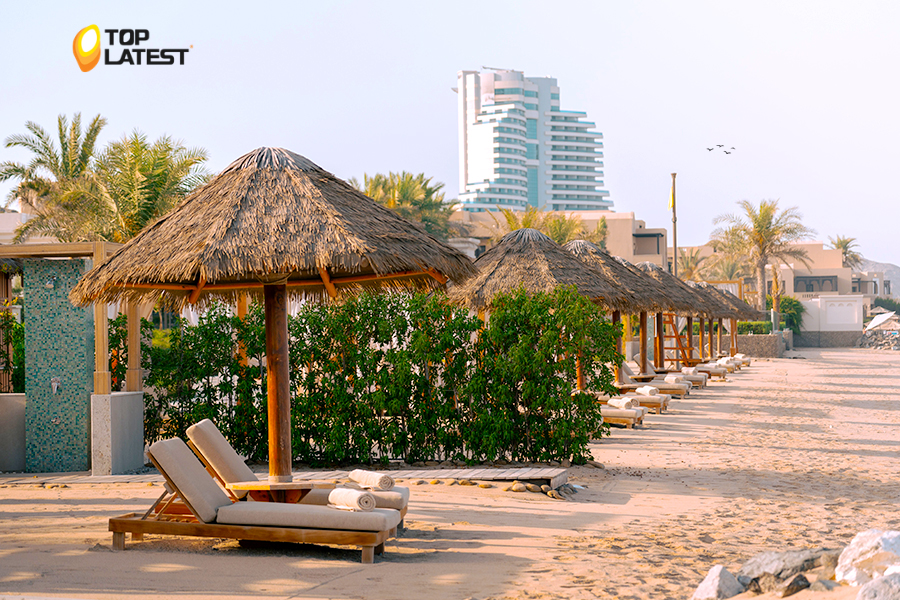
Most beach days in the UAE follow a familiar script: an entry fee, a row of sunbeds, and a crowd by mid morning. The coastlines of Fujairah and Ras Al Khaimah run to a different rhythm. Between the Hajar Mountains and two very different bodies of water, these emirates hold quiet coves, long sand shelves, and reef fringed bays that thousands of residents drive past every weekend without noticing. This guide maps the stretches worth the detour, explains what each one actually offers, and covers the practical details that make the day run smoothly, from timing and access to what you will and will not find when you arrive.
Fujairah sits on the Gulf of Oman, the only emirate with its coastline entirely on the eastern side of the country. The water there is cooler, clearer, and deeper close to shore, and the Hajar Mountains rise directly behind the sand. According to the UAE Ministry of Economy and Tourism, the emirate holds roughly 70 kilometres of sandy coastline, and much of it remains undeveloped between the main resort clusters. Ras Al Khaimah faces the Arabian Gulf in the north, where the shoreline flattens into warm shallow shelves, tidal creeks, and mangrove edges. The Government of Ras Al Khaimah notes that the coastal belt at Al Jazirah Al Hamra stretches around five kilometres and includes mudflats and sand bodies that support significant birdlife, with the coast recognised as an important stop on international migration routes. Two coastlines, two moods, and both within a comfortable drive of the main population centres.
Hidden Beaches in Fujairah Worth Visiting
The east coast rewards anyone willing to park a little further from the obvious signage. These are the stretches that regular visitors return to, ordered by how well established they already are with UAE residents.
Al Aqah Northern Stretch
Al Aqah is the coastline most people picture when they think of Fujairah, but the crowds concentrate directly opposite the resorts. Walk fifteen minutes north along the sand and the density drops sharply. You get the same clear water, the same view of Snoopy Island offshore, and enough space to lay out a towel without negotiating for it. Early morning here is exceptional, with the sun rising straight out of the water and the mountains still in shadow behind you.
Dibba Al Fujairah Shoreline
The northern end of Dibba offers a working harbour on one side and long open sand on the other. Fishing boats come and go through the morning, which gives the beach a lived in character that purely recreational stretches lack. The water sits close to the reef systems around Dibba Rock, so snorkelling visibility is often strong. Parking is straightforward along the corniche road, and small cafes nearby handle the coffee run without a detour inland.
Al Bidya Beach
Directly below the historic Al Bidya Mosque, this stretch pairs a swim with one of the oldest standing structures in the country. The sand is coarser here and the slope into the water steeper, which suits confident swimmers more than young children. What makes it worth the stop is the quiet: even on Saturdays, you will often share the beach with a handful of families and little else. Sunset light against the mosque and the hills behind it is the reason photographers keep coming back.
Murbah and Qidfa Coves
Between the larger towns, the coast road passes a series of small unnamed inlets where the mountains push close to the water. There are no facilities and no shade, which is exactly why they stay empty. Bring everything you need, park sensibly off the shoulder, and you have a private stretch of Gulf of Oman for an afternoon. These pockets are best in the cooler months, when a few hours outdoors is comfortable without infrastructure.
Sharm and Al Rughaylat
North of Dibba, the road narrows and the coastline becomes rockier, opening into small sandy landings between headlands. This is where kayakers and free divers head when they want water to themselves. Access requires a short walk over uneven ground in places, so sturdy footwear matters more than beach sandals. The reward is water clarity that regularly reaches well beyond what the western coast offers.
Hidden Beaches in Ras Al Khaimah Worth Visiting
The northern emirate blends resort coastline with genuinely undeveloped shore. The stretches below run from the most established to the most remote.
Al Hamra and Al Marjan Public Edges
The waterfront around Al Hamra and the causeways of Al Marjan Island carry the emirate’s highest visitor volumes, yet public access points at either end of the developed sections stay noticeably calmer. Shallow, warm, and reliably flat water makes this the most family friendly option in the emirate. Facilities are close at hand, which is useful for a full day out with children rather than a quick swim.
Flamingo Beach
Named for the birds that gather along the nearby creek, this stretch near Bin Majid sits away from the main hotel strip and holds a long, gently shelving sand shelf. The shallows extend far enough that children can wade comfortably, and the calm water suits paddleboarding. Birdlife is the differentiator: bring binoculars in the winter months and the creek behind the beach becomes as interesting as the water in front of it.
Al Rams Shoreline
Al Rams is a fishing village north of the city where the mountains begin to meet the sea. The beach here is functional rather than manicured, with boats drawn up on the sand and a genuine coastal community going about its day. It is a good stop for anyone who wants the coastline without the resort framing, and the drive up from Ras Al Khaimah city takes barely twenty minutes.
Shaam Beach
At the northernmost tip of the country, Shaam offers a pebbled and sandy shore backed by dramatic rock faces. Very few visitors make the drive this far, which is the appeal. The water is clear and deep close in, and the light in the late afternoon against the cliffs is genuinely striking. Facilities are minimal, so treat this as a self contained trip.
Jazirat Al Hamra Coastal Belt
Beside the historic pearling village, the shoreline opens onto mudflats, sandbars, and quiet water that attracts wading birds through the cooler season. This is not a swimming beach in the conventional sense. It is a walking, watching, and photographing coastline, and it pairs naturally with an hour spent exploring the old village buildings just inland.
Factors That Shape the Experience
Season does most of the work here. Between October and April, both coastlines are comfortable for full days outdoors. Through the summer months, early mornings and the hour before sunset remain workable, particularly on the east coast where the mountains bring shade earlier than the flat northern shore.
Tides matter more in Ras Al Khaimah, where the shallow gradient means the waterline can shift substantially between morning and afternoon. On the Fujairah side, surf conditions change with offshore weather, and the same bay can be glassy one weekend and choppy the next. Checking conditions the evening before saves a wasted drive.
Facilities are the main variable. The developed sections in both emirates offer parking, food, and washrooms. The quieter stretches described above generally offer none of these. Carrying water, shade, a bin bag, and a fully charged phone turns an underdeveloped beach from a limitation into an advantage.
Respect for the setting is part of the experience. Several of these areas sit close to protected habitats, including the mountain catchment of Wadi Wurayah National Park inland from the Fujairah coast, and the tidal systems around Ras Al Khaimah’s creeks. Taking rubbish home, keeping distance from nesting birds, and avoiding driving on soft sand or mudflats keeps these places as they are.
Planning a Smooth Coastal Day
From Dubai, the Fujairah coast is roughly a ninety minute drive via the Sharjah to Kalba route or the Masafi road, and Ras Al Khaimah’s shoreline sits about an hour away on the E311. Leaving before seven in the morning avoids most of the traffic in both directions and puts you on the sand at the best hour of the day.
A saloon car handles every location listed here, though the coves along the Fujairah coast road ask for careful parking on the shoulder rather than an attempt at the sand itself. Modest swimwear is standard on public beaches across the UAE, and a cover up for the walk to and from the car is appreciated in the fishing villages in particular.
If you are turning the trip into an overnight, both coastlines have grown their hospitality offering considerably, and the same weekend logic that shapes a stay along the east coast applies to a break at five star hotel stays in Sharjah for anyone splitting the drive.
What These Coastlines Signal for Coastal Living
The quiet stretches described here are not staying quiet by accident, and they are not staying quiet forever either. Infrastructure across both emirates continues to improve, and residents who value proximity to open water are increasingly factoring coastline access into where they choose to live rather than treating it as a weekend luxury.
That shift is visible across the country. Readers drawn to waterfront communities often start by looking at how established coastal neighbourhoods work in practice, and the residential experience at Al Raha Beach illustrates what mature waterfront planning delivers day to day. For anyone weighing a move closer to the northern coastline, rental homes across Sharjah offer a practical middle point between the eastern beaches and the main employment centres, while coastal rental options in Abu Dhabi show how the same lifestyle takes shape in the capital.
A Coastline Worth Returning To
The beaches in this guide are not secrets in the strict sense. They are simply overlooked, sitting a short drive beyond the places most people stop. What they offer is space, water quality that holds up to scrutiny, and a version of the UAE coastline that looks much as it did before the resorts arrived. Start with one stretch on a cool weekend morning, arrive early, carry what you need, and leave the place better than you found it. The eastern and northern shores reward that approach more than almost anywhere else in the country. Explore more coastal and lifestyle guides on toplatest.ae to plan the next trip.
Sources
- Ministry of Economy and Tourism, United Arab Emirates
- Government of Ras Al Khaimah
- The Official Portal of the UAE Government
- Fujairah Environment Authority
- Ras Al Khaimah Tourism Development Authority
Frequently Asked Questions
Fujairah’s quieter stretches include the northern end of Al Aqah, the open sand beside Dibba’s harbour, the shore below Al Bidya Mosque, the small coves between Murbah and Qidfa, and the rocky landings around Sharm and Al Rughaylat. Each sits on the Gulf of Oman with clear water and mountain backdrops behind the sand. Most offer no facilities, so carrying water, shade, and food turns a simple detour into a comfortable half day by the sea.
Ras Al Khaimah’s shoreline runs along the Arabian Gulf, with warm shallow water and a gentle gradient that suits families, wading, and paddleboarding. Quieter options include Flamingo Beach near Bin Majid, the fishing village shore at Al Rams, the northern tip at Shaam, and the tidal belt beside Jazirat Al Hamra. Winter months bring notable birdlife to the creeks, which makes binoculars a worthwhile addition to the bag. Facilities thin out quickly as you travel further north.
October through April is the most comfortable window for full days on either coastline, with mild temperatures and settled conditions. During summer, early mornings and the final hour before sunset remain pleasant, particularly along the Fujairah coast where the Hajar Mountains bring shade sooner. Checking tide and surf conditions the evening before helps, since shallow northern shores shift considerably and east coast bays change with offshore weather. Arriving at first light also secures the calmest water.
The Fujairah coastline sits roughly ninety minutes from Dubai via the Sharjah to Kalba route or the Masafi road, while Ras Al Khaimah’s shore is around an hour away on the E311. Leaving before seven in the morning avoids most traffic in both directions and delivers the best light and the coolest conditions. A standard saloon car handles every location covered in this guide comfortably, and both routes are well surfaced and clearly signposted throughout.
Quieter stretches rarely offer washrooms, shade, parking attendants, or food outlets. Water, a portable sunshade or umbrella, sunscreen, a bin bag, and a fully charged phone cover the essentials for a half day visit. Sturdy footwear helps at rockier access points near Sharm and Shaam. Modest swimwear is standard on public beaches across the UAE, and taking all rubbish home protects these habitats for everyone who follows. A cool box keeps refreshments usable through the afternoon.