
The UAE has quietly built one of the most enrichment-rich learning environments in the region. Beyond the classroom, students in Dubai, Abu Dhabi, Sharjah, and the northern emirates now have access to structured programmes that shape confidence, character, and career readiness. For families relocating or already settled here, understanding the extracurricular landscape has become as important as choosing the right school. This guide walks you through the programmes that consistently attract the highest participation across the country, along with clear context on what each one offers, who it suits, and how to plan around it.
Why Extracurricular Programmes Matter in the UAE
The UAE education ecosystem places genuine value on holistic development. Both the Knowledge and Human Development Authority in Dubai and the Abu Dhabi Department of Education and Knowledge assess schools on wider learning experiences, which pushes institutions to invest heavily in enrichment. For students, this translates into competitive academies, well-funded studios, and access to national-level competitions from an early age. For families, it means extracurriculars are no longer optional add-ons. They are a core part of the schooling decision, the community decision, and often the property decision, as parents weigh proximity to sports campuses, arts centres, and STEM hubs.
Sports Academies and Athletic Programmes
Sport remains the single largest category of extracurricular participation across the UAE, and football sits comfortably at the top. International academies including Real Madrid Foundation, LaLiga Academy UAE, Paris Saint-Germain Academy, and Arsenal Soccer Schools operate multiple training campuses across Dubai and Abu Dhabi, offering structured pathways from grassroots levels through to competitive squads. According to Dubai Sports Council data on youth participation, football, swimming, and combat sports consistently lead enrolments among school-aged children.
Swimming is the second most established discipline, supported by the UAE’s climate and a strong network of aquatic centres such as Hamdan Sports Complex, Aqua Zone, and community pools inside master-planned developments. Tennis has also grown rapidly, with academies at Dubai Duty Free Tennis Stadium, ClayCourts, and the Emirates Golf Club offering ITF-linked training pathways.
Beyond the mainstream, families are increasingly drawn to Brazilian Jiu-Jitsu, which is embedded in Abu Dhabi’s school curriculum through the ADEK partnership with the UAE Jiu-Jitsu Federation. Karate, taekwondo, gymnastics, equestrian sports at Al Habtoor Polo Club, and sailing through Dubai Offshore Sailing Club round out a diverse athletic offering that few regional markets can match. Cricket has also seen a resurgence, with academies at ICC Academy in Dubai Sports City drawing strong enrolments from South Asian expatriate families and increasingly from Emirati students. Padel, one of the fastest-growing racket sports globally, now has junior programmes at dedicated clubs across Al Quoz, Al Zahia, and Yas Island.
STEM, Robotics, and Coding Programmes
Science, technology, engineering, and mathematics programmes have become one of the fastest expanding categories. The UAE’s national ambition around space, artificial intelligence, and advanced manufacturing has trickled directly into after-school learning. The Mohammed Bin Rashid Space Centre runs student-facing initiatives that introduce satellite engineering and space science to secondary learners, while the UAE Space Agency supports curriculum tie-ins for younger students.
Coding academies such as Coding Dojo, Algorithmics, and 42 Abu Dhabi’s youth outreach have made programming accessible from primary years upward. Robotics clubs affiliated with FIRST LEGO League and the World Robot Olympiad are now standard offerings at leading schools, with UAE teams regularly qualifying for global finals. For families interested in this route, community centres in areas like Dubai Silicon Oasis, Masdar City, and Al Reem Island host workshops, hackathons, and maker labs throughout the academic year.
Performing Arts, Music, and Drama
Performing arts programmes have matured significantly over the past decade. Music schools including Melodica, The Music Institute, and Popular Music Institute offer graded instruction aligned with ABRSM and Trinity College London examinations, giving students internationally recognised qualifications. Piano, violin, guitar, and Emirati oud lessons are widely available across residential communities.
Drama and theatre have similarly grown, supported by institutions such as The Junior Theatre and Dubai Drama Group, alongside partnerships with LAMDA for speech and acting examinations. Dance programmes span classical ballet at Royal Academy of Dance affiliated studios, contemporary dance, and culturally rich forms including flamenco, Bollywood, and Arabic dance. For students exploring performance seriously, opportunities to audition for productions at Dubai Opera and Emirates Palace Theatre create a genuine sense of milestone and progression.
Visual Arts and Creative Programmes
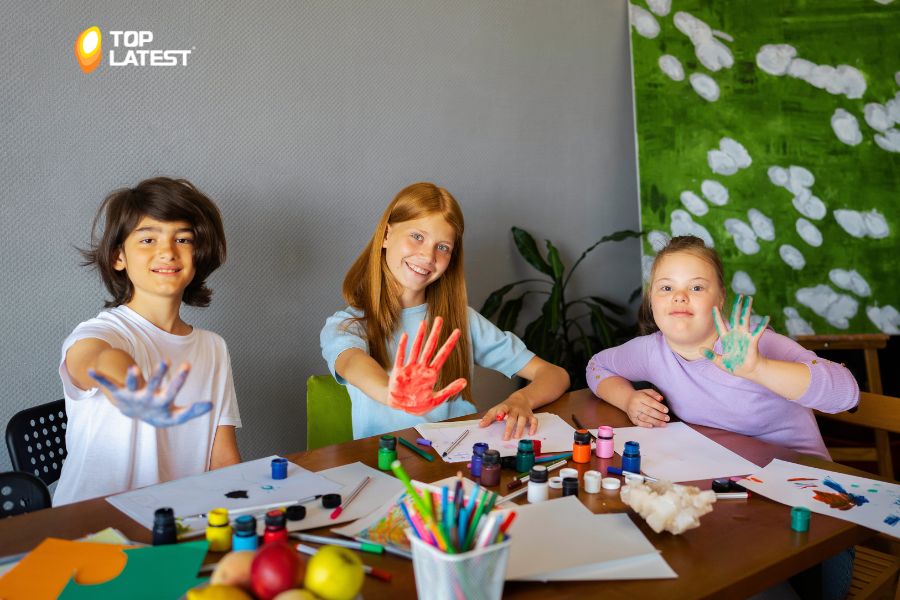
The UAE’s cultural investment through Louvre Abu Dhabi, Sharjah Art Foundation, and Alserkal Avenue has expanded the ecosystem for young artists. Studios and community art schools offer instruction across drawing, painting, sculpture, digital illustration, photography, and film-making. Programmes such as those run by Mawaheb, Tashkeel, and Sharjah Art Foundation’s youth workshops give students exposure to practising artists and real exhibition experience. Creative writing clubs, journalism programmes, and podcasting labs have also gained traction, often linked to student publications or partnerships with local media. Film and animation workshops, supported in part by initiatives connected to the Sharjah International Film Festival for Children and Youth, give students hands-on exposure to storyboarding, directing, and editing at an early age, opening a pathway that increasingly leads to formal study at UAE-based film and media schools.
Leadership, Entrepreneurship, and Life Skills
The Duke of Edinburgh’s International Award, delivered in the UAE through a national operator, remains one of the most popular structured personal development programmes among secondary students. Participants complete sections on skills, physical recreation, service, and adventurous journeys, earning Bronze, Silver, and Gold levels recognised by universities worldwide. Model United Nations conferences hosted at major schools and universities give students negotiation and public speaking experience, while entrepreneurship programmes such as Injaz Al-Arab UAE and Dubai Future Foundation youth initiatives introduce business planning, pitching, and financial literacy. Debate clubs, Toastmasters Youth Leadership, and Round Square membership at select schools further strengthen leadership development.
Language, Cultural, and Heritage Enrichment
Arabic language enrichment, both for native and non-native learners, is widely available and increasingly popular given the UAE’s emphasis on cultural literacy. Beyond Arabic, families frequently enrol children in French, Mandarin, Spanish, and German programmes through certified institutes such as Alliance Française, Instituto Cervantes, and Goethe-Institut Gulf Region. Quran memorisation and Islamic studies programmes are supported through community mosques and dedicated academies, while Emirati heritage programmes at cultural centres in Al Shindagha, Al Ain, and Sharjah introduce students to falconry, traditional crafts, and Bedouin history.
Outdoor, Adventure, and Environmental Programmes
Adventure-based learning has grown alongside the UAE’s investment in outdoor tourism. Scouting through the Emirates Scout Association, desert exploration programmes, mountain expeditions in Hatta and Ras Al Khaimah, and marine conservation initiatives connected to the Emirates Marine Environmental Group offer experiential learning that complements classroom study. Sustainability clubs and Eco-Schools programmes have also become common, with student-led projects around recycling, water conservation, and biodiversity. Rock climbing at facilities such as Adventure HQ and Rock Republic, along with wakeboarding and paddleboarding on the Dubai Marina waterfront, has broadened the definition of physical activity for teenagers looking beyond traditional team sports.
What to Keep in Mind When Choosing a Programme
Several factors shape the experience of any extracurricular pathway. Proximity matters more than many families anticipate, particularly for programmes that meet three or four times a week. Choosing a home in a community with strong on-site facilities or short drives to major academies can meaningfully reduce commute fatigue. Families exploring family-friendly communities across Dubai often find that master-planned neighbourhoods integrate sports, arts, and STEM facilities directly into the residential fabric.
Cost varies widely, from community-run clubs charging modest termly fees to elite academies priced at premium levels. School-based programmes are typically the most affordable entry point, and many schools offer bursaries for competitive squads. Scheduling around examination periods, particularly for IGCSE, IB, and CBSE cohorts, is another consideration worth planning early with the child’s academic calendar.
Skill progression pathways matter as well. Programmes tied to recognised examination bodies, national federations, or international awards provide a clearer sense of milestones and long-term value. For families weighing lifestyle fit against schooling and enrichment access, neighbourhood guides for families in Abu Dhabi and community insights across the UAE offer useful context before committing to a specific area.
Bringing It Together
Extracurricular programmes in the UAE reflect the country’s broader ambition: to educate confident, curious, and capable young people ready for a globally connected future. Whether your focus is athletic excellence, creative expression, technical skill, or leadership, the options available across the emirates are genuinely deep. Approach the decision with the same care you would apply to schooling and community selection, and the returns compound over years rather than terms. Start with one or two well-chosen commitments, review progression at the end of each academic year, and expand from there as your child’s interests and strengths reveal themselves through consistent participation and honest feedback from coaches and instructors. To explore more resources for family-focused living in the UAE, browse the wider lifestyle and community coverage on toplatest.ae or connect with a licensed education consultant for personalised guidance.
Sources
- Knowledge and Human Development Authority (KHDA)
- Abu Dhabi Department of Education and Knowledge (ADEK)
- Dubai Sports Council
- Mohammed Bin Rashid Space Centre (MBRSC)
- The Duke of Edinburgh’s International Award, UAE
Frequently Asked Questions
Football, swimming, and Brazilian Jiu-Jitsu lead sports participation across the UAE, supported by international academy partnerships and school curricula. STEM programmes such as robotics and coding, alongside music, drama, and the Duke of Edinburgh’s International Award, are also widely enrolled. Availability is strongest in Dubai and Abu Dhabi, but Sharjah, Ajman, and Ras Al Khaimah offer substantial options through community centres, sports councils, and school-affiliated clubs across all age groups today.
Most programmes accept children from around three to four years of age, particularly for swimming, gymnastics, ballet, and early music exposure. Structured sports academies typically begin from age five or six, while robotics, coding, and Duke of Edinburgh’s Award pathways are geared toward primary and secondary students. Age brackets vary by provider, so families are encouraged to check entry levels directly with academies, schools, and community centres before enrolling their child in the UAE.
Costs vary based on discipline, provider, and level of instruction. Community-run clubs and school-based programmes often sit at the more affordable end, while elite international academies for football, tennis, or performing arts carry premium fees. Competitive squads and examination-linked instruction usually cost more than recreational participation. Many providers offer termly or annual packages, and school bursaries or sibling discounts can meaningfully reduce the total investment for families across the UAE.
Yes, many programmes carry formal recognition. Duke of Edinburgh’s International Award, ABRSM and Trinity music grades, LAMDA drama examinations, and FIRST LEGO League achievements are widely acknowledged by UAE schools and by universities globally. National federations affiliated with the UAE Jiu-Jitsu Federation, UAE Football Association, and Emirates Athletics Federation also offer certified pathways. These credentials can strengthen university applications and scholarship prospects, particularly for sports, arts, and leadership-focused routes.
Balancing enrichment with academics is a common consideration for UAE families. Most schools publish extracurricular calendars aligned with term structures, and reducing intensity during IGCSE, IB, or CBSE examination periods is standard practice. Choosing programmes with flexible session timings, planning commutes around traffic patterns, and consolidating activities within a single community can help. Families often prioritise two or three commitments that align with the child’s interests and long-term goals rather than spreading too thin.