Emirati desserts carry centuries of coastal trade, Bedouin hospitality, and family memory in every spoonful. From the honey glossed crunch of luqaimat served at Ramadan majlis gatherings to the saffron warmth of khabeesa prepared for wedding feasts, these sweets remain central to how UAE households welcome guests and mark important moments. For residents settling into life across Dubai, Abu Dhabi, Sharjah, and the Northern Emirates, learning to prepare these dishes offers a direct connection to the country’s culinary heritage.
This guide walks you through the most beloved classic Emirati desserts, how they fit into daily and ceremonial life, and how to approach them in your own kitchen with confidence. The focus is on simplicity, authenticity, and the small details that elevate home preparation into something your Emirati neighbours would recognise.
Why Emirati Desserts Matter in Modern UAE Homes
Food is one of the clearest expressions of Emirati identity, and sweets occupy a special place in the national table. During Ramadan, Eid Al Fitr, Eid Al Adha, National Day celebrations, and extended family gatherings, dessert signals generosity, continuity, and respect.
The Dubai Culture and Arts Authority has consistently highlighted traditional sweets as part of the emirate’s intangible heritage, with luqaimat recognised among the most representative dishes of the UAE kitchen.
For expats and newcomers, these desserts offer an accessible entry point into Emirati culture. Many ingredients are now widely available at local supermarkets such as Carrefour, Lulu, and Union Coop, and the recipes themselves have been refined over generations to be forgiving. You do not need specialist equipment or years of practice to serve something genuine. A simple spoon, a saucepan, and a willingness to taste as you go are usually enough.
Luqaimat: The Signature Sweet of the UAE
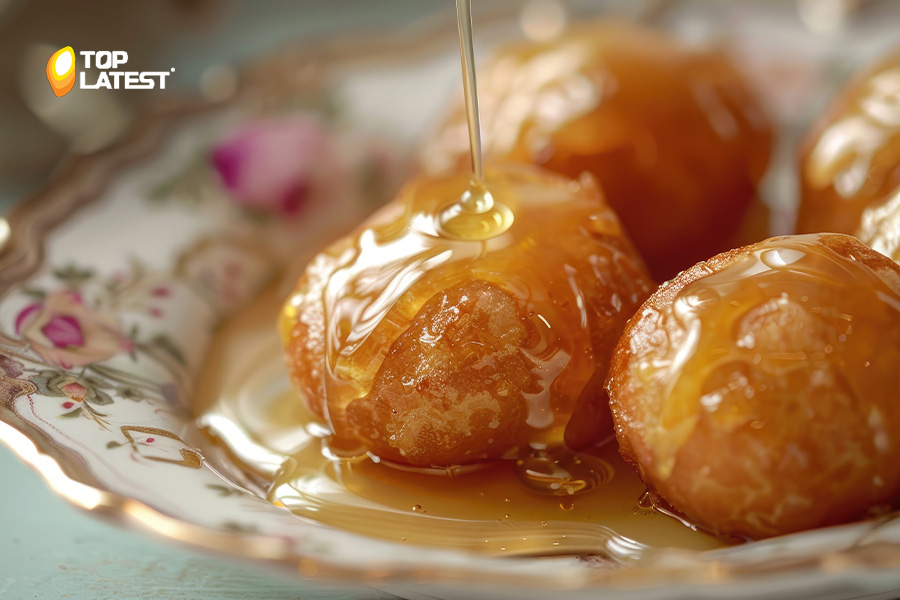
Luqaimat are small, golden dough balls soaked in date syrup, often finished with sesame seeds or saffron. They are the dessert most closely associated with Ramadan iftar across the country and appear at nearly every majlis during the holy month. Luqaimat are also served at weddings, Eid gatherings, and National Day events, giving them year round presence on Emirati tables.
Core Ingredients
The classic recipe uses flour, yeast, sugar, cardamom, saffron, and a touch of yoghurt or milk to produce a soft, slightly stretchy dough. The dough rests for about an hour until it rises, then is scooped into hot oil in small spoonfuls. The result is crisp on the outside and airy inside, with a shell that holds date syrup without turning soggy.
Preparing Luqaimat at Home
A simple approach to a reliable batch:
- Combine two cups of flour, one teaspoon of instant yeast, one tablespoon of sugar, a pinch of salt, and a quarter teaspoon of ground cardamom.
- Add warm water gradually until the batter is thick but pourable, with a texture similar to pancake batter.
- Cover and let it rise for one hour in a warm spot until the surface shows small bubbles.
- Heat oil to medium temperature and drop small portions using two spoons or a piping bag.
- Fry until deep golden, drain briefly, then dip in warm date syrup, known locally as dibs, and sprinkle with sesame seeds.
Serve immediately. Luqaimat are at their best within the first thirty minutes of frying, which is why Emirati households prepare them fresh as guests arrive. For a modern twist, some home cooks add a drizzle of saffron honey or a dusting of cinnamon.
Khabeesa: A Warm, Spiced Classic
Khabeesa is a thick, pudding like dessert made from toasted flour, ghee, sugar, cardamom, and saffron. It is often served at weddings, during Eid, and on cooler winter evenings when a comforting bowl matches the weather. The texture is dense and nourishing, and the aroma of toasted flour mixed with cardamom is unmistakable in any Emirati kitchen that prepares it.
How It Is Made
The process centres on toasting white flour slowly in ghee until it turns a deep golden colour and releases a nutty fragrance. Sugar syrup infused with saffron and cardamom is then stirred in, and the mixture is cooked until it pulls away from the pan. Some families add chopped almonds, pistachios, or a splash of rose water to lift the finish.
Khabeesa rewards patience. The slower you toast the flour, the richer the final flavour. Rushing this stage is the most common reason home attempts fall short of the version served at weddings and formal majlis occasions.
Aseeda: The Celebratory Pudding
Aseeda is a dense wheat based pudding served warm with date syrup or honey, traditionally offered after the birth of a child or at major family celebrations. The Emirati version is smooth, lightly spiced, and generous with the ghee and syrup finish that defines it. Families pass down their technique through demonstration, with grandmothers often leading the preparation.
The dish uses whole wheat flour cooked slowly with water until it reaches a smooth, elastic consistency. Once plated, a well is pressed into the centre and filled with warm ghee, date syrup, or honey. The combination of nutty wheat, rich fat, and sweet syrup is both nourishing and ceremonial, which is why aseeda often marks moments of thanksgiving and milestone family events.
Balaleet: Sweet Vermicelli with Saffron
Balaleet is a sweet dish built on vermicelli noodles, sugar, cardamom, saffron, and rose water, often topped with a thin omelette for the breakfast version. It is most commonly eaten at breakfast during Eid, but a dessert version without the omelette is popular at family dinners year round.
The vermicelli is lightly toasted in ghee, then simmered with sugar, cardamom, and saffron threads until the strands absorb the aromatics. Served warm, balaleet is one of the simplest classic desserts to attempt at home and uses ingredients that are easy to find across UAE supermarkets. A small sprinkle of chopped pistachios on top adds colour and crunch.
Mahalabiya: The Elegant Milk Pudding
Mahalabiya is a delicate milk pudding thickened with cornflour or rice flour, scented with rose water or orange blossom, and finished with crushed pistachios. It has a firm place on the Emirati table, especially during the warmer months when something cool and light suits the climate.
A straightforward version uses whole milk, sugar, cornflour, and a few drops of rose water. The mixture is cooked until it coats the back of a spoon, poured into small bowls, and chilled for a few hours. It pairs well with Arabic coffee and sits comfortably at the end of any meal, formal or casual. Many Emirati households keep a batch in the fridge during Ramadan for a light, cooling finish after iftar.
Chebab with Date Syrup
While chebab is often eaten at breakfast, it deserves a mention in any Emirati dessert guide. These cardamom and saffron pancakes, served with date syrup, cream cheese, or honey, double as a light dessert. The batter uses flour, yeast, sugar, saffron, and cardamom, cooked on a flat pan until lightly browned.
Chebab offer a gentler introduction to Emirati sweets for home cooks who find deep frying intimidating. The flavours are familiar yet distinct, and the dish works well for weekend gatherings or quiet family breakfasts that stretch into the afternoon.
Sourcing Ingredients Across the UAE
Most classic Emirati desserts rely on a short list of pantry staples: date syrup, ghee, cardamom, saffron, rose water, sesame seeds, flour, and yeast. These are easy to find in the UAE, with Al Barakah Dates, Bateel, and major hypermarkets stocking high quality date syrup. Saffron sold at local souks, particularly the Spice Souk in Deira and the souk in Sharjah, often offers freshness and value that supermarket brands rarely match.
For families settling into UAE neighbourhoods, exploring local souks is as much a cultural experience as a shopping trip. Communities such as Al Fahidi in Dubai and the Heart of Sharjah give newcomers a strong sense of the traditional food culture that shaped these recipes, with heritage museums and working souks within easy walking distance. Readers planning weekend outings may find further background on heritage neighbourhoods useful through related UAE lifestyle guides on toplatest.ae.
Serving Traditions Worth Preserving
Emirati desserts are rarely served alone. They sit alongside Arabic coffee, known as gahwa, fresh dates, and sometimes karak chai. Hosts typically serve coffee first, then dessert, then more coffee, in a sequence that signals welcome and invites conversation. Guests are expected to accept at least one serving, and refusing outright is considered impolite in most households.
Understanding these small rituals helps residents engage more meaningfully with Emirati neighbours, colleagues, and friends. A home that offers luqaimat during Ramadan or khabeesa at Eid speaks a shared cultural language that goes beyond simple hospitality. For readers interested in UAE community life, neighbourhood and lifestyle features on toplatest.ae offer additional context on daily rhythms across the emirates.
Bringing Emirati Flavours Into Everyday Life
You do not need to wait for a festival to prepare these desserts. Many UAE residents keep date syrup, cardamom, and saffron on hand year round, making it possible to prepare luqaimat for a Friday brunch or mahalabiya for a quiet weeknight. The ingredients are affordable, the techniques are learnable, and the results consistently impress guests.
For families raising children in the UAE, cooking these desserts together is a practical way to pass on cultural fluency. It gives children a tangible connection to the country they are growing up in, beyond school lessons or occasional heritage events. Weekend baking sessions become small cultural lessons without needing to feel like one.
Final Thoughts
Classic Emirati desserts reward curiosity. The techniques are rooted in centuries of coastal trade and desert hospitality, but the recipes themselves are approachable, flexible, and well suited to modern kitchens. Whether you start with luqaimat, khabeesa, or a simple bowl of mahalabiya, each dish offers a direct connection to the UAE’s culinary heritage and the generous spirit that defines its food culture. For residents looking to deepen their appreciation of UAE lifestyle, food, and culture, exploring further guides on toplatest.ae is a practical next step.
Sources
- Dubai Culture and Arts Authority
- Sharjah Institute for Heritage
- The National
- Gulf News
- Visit Dubai (Dubai Department of Economy and Tourism)
Frequently Asked Questions
Luqaimat has deep associations with Ramadan iftar, majlis gatherings, and family hospitality across all seven emirates. The dish uses accessible ingredients like flour, yeast, cardamom, and date syrup, and the small golden balls are quick to prepare in large batches. Dubai Culture has identified luqaimat as part of the emirate’s intangible heritage, which reflects how closely the dessert is tied to Emirati identity, hospitality, and seasonal celebrations across the country.
Khabeesa is approachable for home cooks who are patient. The main technique involves toasting flour slowly in ghee until it turns deep golden, then stirring in a sugar syrup flavoured with saffron and cardamom. The process takes thirty to forty minutes, and the ingredients are affordable and widely available in UAE supermarkets. Rushing the toasting stage is the most common issue, so steady low heat and consistent stirring produce the richest flavour and best texture.
Major hypermarkets like Carrefour, Lulu, and Union Coop stock most essentials, including flour, yeast, ghee, cardamom, and sesame seeds. For premium date syrup, Bateel and Al Barakah Dates offer reliable quality. The Spice Souk in Deira and the traditional souk in Sharjah are strong options for saffron, cardamom, and rose water, often at better value than supermarket brands and with fresher stock sourced from regional suppliers across the UAE.
Mahalabiya is often the gentlest starting point. The milk pudding uses whole milk, sugar, cornflour, and rose water, with no frying or complex technique required. It takes about fifteen minutes of active cooking, then chills in the fridge until set. Balaleet in its sweet form is also beginner friendly, since the vermicelli cooks quickly and the aromatics do most of the work in building a traditional Emirati flavour profile at home.
Several classic Emirati desserts can be adapted. Luqaimat can be made without eggs and uses no dairy beyond optional yoghurt. Mahalabiya can be prepared with plant based milk, and date syrup replaces refined sugar in many recipes. Khabeesa and aseeda rely on ghee, which can sometimes be swapped for vegetable oil with a modest change in texture. Checking specific ingredients and preparation methods helps accommodate most dietary needs while preserving traditional flavour and overall character.