
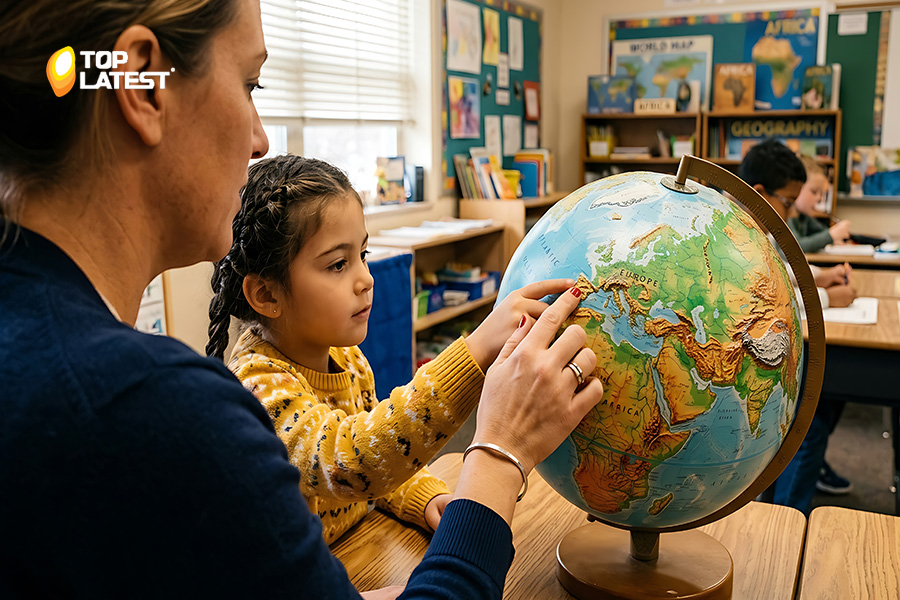
The UAE classroom is one of the most linguistically diverse learning environments in the world. On any given school day, children from more than 200 nationalities move between English instruction, Arabic lessons, and conversations at home in Hindi, Tagalog, Russian, French, Urdu, or dozens of other languages. For expat families settling in Dubai, Abu Dhabi, Sharjah, or the Northern Emirates, this reality shapes a central question: how can parents and schools work together so children grow confident in two or more languages?
Bilingual learning in the UAE is not a niche educational experiment. It is the everyday context in which expat children build literacy, friendships, and long term academic identity. The following guide looks at how UAE schools approach bilingual development, what parents can do at home, and how to choose a school that genuinely supports multilingual growth.
The UAE’s Multilingual Classroom Reality
The UAE’s expat population shapes nearly every school. According to the Knowledge and Human Development Authority (KHDA), private schools in Dubai alone serve students from more than 180 nationalities, with English, Arabic, Indian, American, British, and IB curricula operating side by side. In Abu Dhabi, the Department of Education and Knowledge (ADEK) oversees a similarly diverse private school ecosystem that reflects the city’s wide expat demographic.
For most expat children, the school day happens primarily in English, while Arabic appears as a mandatory subject under UAE Ministry of Education guidelines. Home language, meanwhile, is often a third or even fourth layer. This creates a rich but demanding environment where children are rarely learning only one language at a time.
This linguistic density is not accidental. UAE education policy has long treated Arabic as a cultural anchor while recognising that global curricula, international teaching staff, and multinational student bodies all require English as a working medium. For expat families, the practical outcome is that children can retain their heritage language, build genuine English literacy, and develop Arabic competency inside a single school ecosystem, provided the home environment supports that balance.
How UAE Schools Structure Bilingual Learning
Every private school in the UAE, regardless of curriculum, is required to teach Arabic. The structure differs for Arab and non Arab students:
- Native Arabic speakers follow Arabic as a first language, aligned with the UAE Ministry of Education framework.
- Non native Arabic speakers follow Arabic as an additional language, with increasing weekly instruction hours in the early years.
Beyond Arabic, many schools also offer French, Spanish, German, Mandarin, Hindi, or Urdu as elective or supplementary languages, depending on the curriculum and student demographics. International Baccalaureate schools often formalise bilingual learning through the Language A and Language B framework, where students study their strongest language alongside an additional one at a defined proficiency level.
British curriculum schools frequently integrate modern foreign languages into Key Stage 2 and Key Stage 3. American and Indian curriculum schools typically embed Arabic and one additional language, with support classes available for students who join mid year.
Arabic as a Core Pillar
Arabic instruction is non negotiable in UAE schools, and parents often ask how seriously to treat it. The practical answer is: very seriously. Arabic grades appear on school reports from the early years and are factored into school inspections conducted by KHDA in Dubai and ADEK in Abu Dhabi.
For expat children, Arabic exposure delivers more than compliance. It helps them read street signs, interact with Emirati classmates, and build cultural fluency in the country they are growing up in. Children who begin Arabic in Foundation Stage or Kindergarten typically develop stronger pronunciation and reading comprehension than those who start later, which is why early exposure matters.
Supplementary Arabic tutoring is widely available across the Emirates, and many centres design programmes specifically for non native speakers at different proficiency levels. Weekend conversation clubs and immersive summer camps are increasingly common in Dubai and Abu Dhabi, giving children a chance to use Arabic beyond the classroom in low pressure settings.
Protecting the Home Language
One of the most consistent findings in bilingual research, including guidance from the British Council, is that strong first language skills support, rather than compete with, second language learning. A child who reads confidently in their home language usually transitions more smoothly into English literacy at school.
Practical steps that work in UAE households include:
- Keeping the home language as the primary language of family conversation, meals, and bedtime routines.
- Building a small home library in the home language, including picture books, chapter books, and age appropriate magazines.
- Using video calls with grandparents and extended family as regular, unhurried language practice.
- Attending community language schools or weekend classes offered by cultural associations across Dubai, Abu Dhabi, and Sharjah.
Many expat families underestimate how quickly a home language can fade when children spend seven hours a day in English. Deliberate daily use is the single most effective protection, and it costs nothing more than consistency.
The Role of Parents in Bilingual Development
Parents do not need to be language teachers to support bilingual growth. What matters more is consistency, exposure, and attitude. Children who sense that their home language is valued are far more likely to maintain it into adolescence and adulthood.
Useful habits include:
- Reading aloud in the home language every day, even for ten minutes.
- Avoiding mixed language sentences where possible, so children hear each language in its full grammatical form.
- Encouraging children to write short messages, cards, or journal entries in the home language.
- Celebrating cultural festivals and traditions in the home language, which naturally expands vocabulary.
For Arabic and other school languages, parents can support without needing fluency themselves. Reviewing school communication, meeting the Arabic teacher, and showing interest in classwork signals to the child that the language matters.
Choosing a School That Supports Bilingual Growth
School choice is one of the biggest decisions expat families make after relocating, and language support is a meaningful factor. Families exploring communities across Dubai, Abu Dhabi, and Sharjah often weigh school access alongside housing, which is why many parents review family friendly neighbourhood guides on toplatest.ae before shortlisting a school.
Questions worth asking during school tours include:
- How is Arabic taught for non native speakers, and what resources are available for students who join mid year?
- Does the school offer in class language support or pull out English as an Additional Language sessions?
- What is the ratio of qualified Arabic teachers to students?
- Are home languages recognised in library collections, cultural events, or International Day activities?
- How does the school communicate with parents who do not speak English fluently?
Schools that take bilingualism seriously tend to have visible signs: multilingual signage, celebrated mother tongue days, library sections in multiple languages, and bilingual newsletters that address parents in more than one language.
Community and Extracurricular Support
Bilingual learning extends well beyond the classroom. The UAE offers a strong network of cultural centres, embassies, community schools, and private tutors supporting dozens of languages. Weekend Arabic clubs, French Alliance programmes, Indian cultural schools, and Russian learning centres operate across the Emirates, often at accessible fee levels. Libraries in Dubai, Sharjah, and Abu Dhabi hold multilingual collections, and public reading events frequently feature stories in Arabic and English together. Families settling into new communities often find language groups through parent networks, residents associations, and faith communities. For families still exploring where to live, community guides on toplatest.ae can help identify areas with strong school and cultural infrastructure.
Long Term Benefits for Expat Children
Children who grow up genuinely bilingual or multilingual in the UAE gain more than linguistic skill. They develop cognitive flexibility, cultural adaptability, and a professional edge that often shapes their university and career options later. Universities across the UAE and internationally recognise bilingual proficiency, and employers in sectors ranging from aviation to hospitality to government relations actively value it.
Perhaps most importantly, children who maintain their home language keep a direct connection to extended family, heritage, and identity. In an expat context, that connection is a form of stability that supports emotional wellbeing throughout the school years and well into adulthood.
Bilingual children in the UAE also tend to adapt quickly when families relocate between emirates, change schools, or move internationally for university. The habit of switching between languages, codes, and cultural contexts builds a form of resilience that monolingual peers often take longer to develop. For families whose work keeps them mobile across Dubai, Abu Dhabi, Sharjah, and beyond, this flexibility can shape not only academic outcomes but also the ease with which a child settles into each new chapter.
Building a Bilingual Future with Confidence
Supporting bilingual learning for expat children in the UAE is a shared effort between schools, families, and communities. The infrastructure is in place: curricula are strong, Arabic is a protected core subject, and multilingualism is woven into daily life. What makes the difference is parental intention, consistent home language use, and school choices aligned with the family’s language goals.
For families planning the move or settling into a new community, exploring relocation and lifestyle guides on toplatest.ae can help connect school decisions with housing, lifestyle, and community fit. Where specific curriculum or language support questions arise, connecting with a qualified education consultant or the admissions team of shortlisted schools remains the most reliable next step.
Sources
- Knowledge and Human Development Authority (KHDA)
- Abu Dhabi Department of Education and Knowledge (ADEK)
- UAE Ministry of Education
- British Council
- UNESCO
Frequently Asked Questions
Yes. All private schools in the UAE, regardless of curriculum, are required to teach Arabic under Ministry of Education guidelines. Non native Arabic speakers follow Arabic as an additional language, with weekly instruction hours increasing in the early years. Arabic grades appear on official school reports and are reviewed during KHDA and ADEK school inspections. Expat parents are encouraged to view Arabic as both a cultural asset and an academic requirement from the first year of schooling.
Consistency matters most. Families who use the home language for daily conversation, bedtime stories, meals, and extended family calls tend to raise confident bilingual children. Weekend community language schools, home libraries, and cultural celebrations also help. Avoiding frequent language mixing in a single sentence helps children build strong grammatical foundations. Even ten minutes of daily reading in the home language can meaningfully slow the fading effect that long school hours in English otherwise create.
Earlier is generally stronger. Children exposed to multiple languages from infancy or early years develop more natural pronunciation, listening skills, and reading comprehension. However, bilingualism can be supported successfully at any age with consistent exposure and practice. UAE schools accept new students year round, and Arabic as an additional language is designed to accommodate learners who begin later. The key factor is daily, meaningful exposure rather than the exact starting age of formal instruction in any language.
Approaches differ. International Baccalaureate programmes formally structure bilingual learning through Language A and Language B frameworks. British, American, and Indian curriculum schools all teach Arabic and often offer additional modern foreign languages. The depth of home language recognition varies by school rather than curriculum, so families are encouraged to ask about EAL support, Arabic teaching staff ratios, and multilingual resources during school visits. Strong bilingual culture usually shows in signage, library content, and cultural event programming.
The UAE offers a wide network of language and cultural resources. Dubai, Abu Dhabi, and Sharjah public libraries hold multilingual collections, and many cultural centres run weekend classes in Arabic, French, Hindi, Urdu, Russian, Mandarin, and more. Embassies and community associations often operate heritage language schools for their citizens abroad. Parent networks, residents associations, and faith communities also provide informal language exposure, giving children consistent conversational practice beyond the classroom week after week.