Living well in a UAE apartment and living lightly on the planet are no longer separate goals. With the UAE Net Zero 2050 strategy shaping building standards, rising summer temperatures influencing cooling loads, and residents increasingly weighing lifestyle alongside sustainability, interior choices have become one of the most direct levers available to apartment dwellers. From the paint on your walls to the curtains covering your windows, every decision carries a thermal, environmental, and lifestyle consequence.
This guide walks through the climate-conscious interior choices that deliver real results in UAE apartments, grounded in local climate realities, regulatory context, and the materials and products widely available across Dubai, Abu Dhabi, Sharjah, and the Northern Emirates. The focus throughout is on practical, achievable interventions that improve comfort while reducing environmental footprint, suitable for owners, renters, and investors alike.
Why Interior Choices Shape Your Apartment’s Climate Footprint
Residential cooling is the single largest driver of household electricity use in the UAE. According to the Dubai Electricity and Water Authority, air conditioning accounts for the majority of a typical residence’s power bill during peak summer months. That makes the interior envelope, meaning the materials, finishes, and layout decisions inside your apartment, directly connected to both your energy bill and your overall emissions footprint.
Interior choices influence how much heat is absorbed, retained, or reflected inside a space. They affect indoor air quality, water consumption, and the lifecycle impact of the materials used. For apartment residents, these decisions carry particular weight because the structural envelope is often fixed, meaning interior finishes become the primary opportunity to improve comfort and efficiency without altering the building itself.
Dubai Municipality’s Al Sa’fat green building rating system and Abu Dhabi’s Estidama Pearl Rating programme both encourage sustainable practices at the building level, but residents retain significant influence through their interior choices, from paint and flooring to appliances and soft furnishings.
Smart Cooling and Thermal Design Choices
Managing heat is the foundation of climate-conscious interiors in the UAE. Thermal performance begins with how surfaces, finishes, and layouts handle solar gain and ambient heat loads throughout the long summer season.
Light-coloured walls, ceilings, and flooring reflect more light and keep ambient temperatures lower. Matte finishes in neutral palettes, including off-white, sand, soft greige, and pale stone, reduce the cooling load without compromising on contemporary aesthetics. Darker accent walls can still feature in design schemes, but keeping dominant surfaces reflective makes a measurable difference across sustained summer months.
Thermal-mass flooring like porcelain, ceramic, and natural stone retains cooler temperatures through the day and releases warmth slowly, helping stabilise indoor conditions. These materials pair well with the UAE’s climate and remain among the most widely adopted choices in Dubai and Abu Dhabi apartments. Positioning furniture to avoid blocking AC vents, keeping air pathways clear, and allowing natural circulation across living spaces further supports efficient cooling without additional energy input.
Low-VOC Paints, Finishes, and Sealants for Healthier Interiors
Indoor air quality is a cornerstone of climate-conscious living. Volatile organic compounds, released from conventional paints, varnishes, adhesives, and sealants, affect both health and the environmental footprint of a home. Low-VOC and zero-VOC paints have become widely available across UAE retailers, with manufacturers such as Jotun, Dulux, and National Paints offering regionally compliant lines suited to the local climate.
Water-based finishes, formaldehyde-free wood treatments, and non-toxic sealants reduce the chemical burden inside sealed, air-conditioned spaces. For apartments where windows remain closed for much of the year due to high outdoor temperatures, this choice carries a disproportionate impact on indoor air quality and resident wellbeing over time.
Sustainable and Locally Sourced Furniture
Furniture selection sits at the intersection of style, durability, and environmental impact. Locally crafted or regionally manufactured pieces reduce shipping emissions and support a growing network of UAE-based sustainable furniture brands.
Materials to prioritise include FSC-certified timber, reclaimed wood, bamboo, rattan, and recycled metal. Pieces built to last often outperform fast-furniture alternatives in both environmental and financial terms. Modular sofas, extendable dining tables, and multi-use storage units reduce the need for replacement as household needs evolve over time.
Second-hand platforms, vintage dealers across Al Quoz, and curated upcycled showrooms in Dubai Design District provide meaningful alternatives to new purchases. Across Abu Dhabi, independent furniture ateliers are increasingly focused on circular design principles that keep materials in circulation longer and reduce landfill impact.
Water-Wise Fixtures and Fittings
Water scarcity shapes much of the UAE’s long-term resource strategy. Interior choices that reduce consumption include aerated taps, dual-flush cisterns, low-flow showerheads, and water-efficient dishwashers and washing machines. Many of these products carry the Emirates Authority for Standardization and Metrology water conservation label, which signals compliance with national efficiency criteria.
Smaller interventions matter as well. Choosing laundry hampers that encourage full-load washing cycles, installing hands-free sensor taps in guest bathrooms, and placing water-efficient appliances near plumbing lines all contribute to lower household water use with minimal effort or cost.
Lighting Choices That Lower Consumption
LED lighting has become the standard across new UAE developments, but many older apartments still carry halogen or CFL fittings. Transitioning to LED reduces lighting-related electricity use substantially while offering longer lifespans and lower heat emission, which indirectly supports cooling efficiency within the apartment.
Layered lighting, combining ambient, task, and accent sources, allows residents to use only the fixtures needed at any time. Dimmable systems, smart bulbs, and motion-sensor fittings in hallways and bathrooms refine consumption further. Warm-tone LEDs between 2700K and 3000K create a residential ambience without the harsh output of older low-efficiency bulbs, pairing comfort with efficiency.
For residents evaluating interior upgrades alongside a move, our Dubai apartment living guides on toplatest.ae explore how different community layouts influence natural light, ventilation, and the overall feel of a home.
Window Treatments Built for the UAE Climate
Windows are among the largest sources of heat ingress in a UAE apartment. Thermal-lined curtains, blackout drapes, honeycomb cellular shades, and solar-reflective roller blinds reduce solar gain significantly during the long summer season.
Layering treatments, for example sheer curtains for daytime light control combined with heavier drapes for peak sun hours, provides flexibility without sacrificing natural light. Reflective window films applied directly to glass are another widely adopted intervention in apartments across Dubai Marina, Downtown Dubai, and Yas Island, where floor-to-ceiling glazing is common. These films reduce UV penetration, lower surface temperatures, and extend the life of interior textiles exposed to prolonged sunlight.
Textiles, Rugs, and Soft Furnishings
Soft furnishings carry a substantial embedded footprint. Natural fibres such as organic cotton, linen, hemp, jute, and wool outperform most synthetic alternatives on biodegradability and indoor air quality. Recycled polyester remains a reasonable alternative where durability or budget demands it.
Rugs made from jute, sisal, or wool bring warmth to tiled flooring while supporting acoustic comfort inside apartments. Washable covers extend lifespan and reduce the need for frequent replacement. Choosing fewer, higher-quality pieces often outperforms a rotating cycle of trend-driven textiles over the long term, aligning financial, aesthetic, and environmental goals in one direction.
Integrating Greenery and Biophilic Design
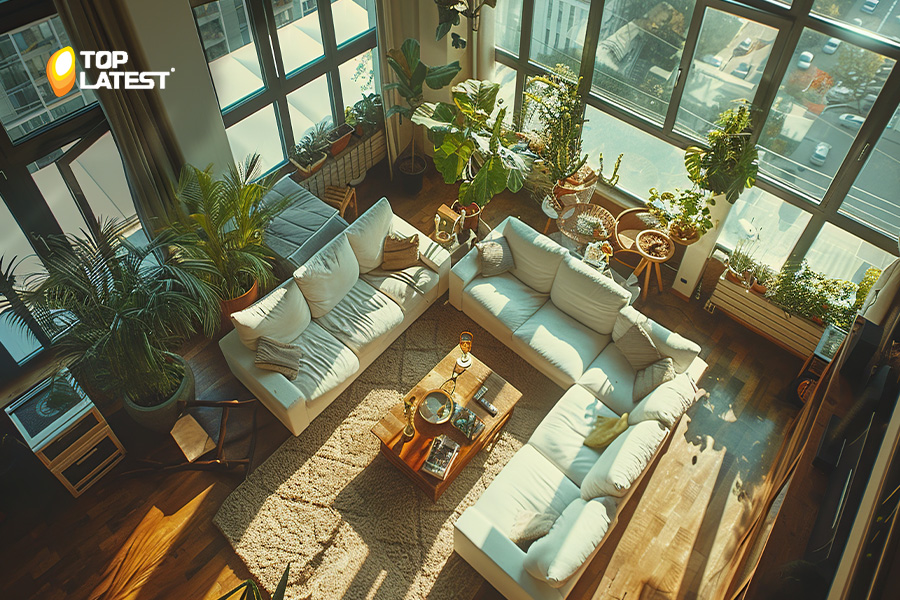
Indoor plants improve air quality, reduce perceived temperatures, and support wellbeing. Species that thrive in the UAE’s indoor conditions include snake plants, pothos, ZZ plants, areca palms, and rubber plants. Grouping plants near windows and in living areas creates micro-humidity pockets that support both residents and the plants themselves.
Biophilic design extends beyond plants. Natural materials such as timber, cane, stone, and clay bring tactile warmth and reduce reliance on petroleum-based composites. For a deeper look at the lifestyle advantages of these design directions, our UAE lifestyle and home living features on toplatest.ae cover related interior and community topics in depth, from furnishing to layout.
Smart Home Technology for Everyday Efficiency
Smart thermostats, programmable AC controllers, occupancy sensors, and energy monitoring plugs make efficiency effortless. Devices compatible with DEWA’s Smart Living initiatives allow residents to track consumption patterns and adjust habits accordingly.
Scheduling cooling cycles, pre-cooling rooms before peak hours, and automating lighting based on occupancy are among the most practical applications. Over time, these interventions produce substantial consumption reductions without requiring daily attention. Integration with voice assistants and smartphone dashboards gives residents clear visibility into their household footprint and the actionable data needed to improve it.
Residents comparing apartments with smart home features already installed can explore options on toplatest.ae’s Dubai apartment listings to see how newer developments integrate these systems from the design stage.
Bringing It Together
Climate-conscious interiors in UAE apartments do not require a complete overhaul. The most meaningful progress comes from layered, intentional choices made over time. Starting with cooling, air quality, and lighting delivers the strongest early returns, with sustainable textiles, furniture, and water fixtures compounding results over the longer term.
For UAE residents, the benefits extend beyond environmental impact. Lower bills, improved indoor air quality, better thermal comfort, and homes that reflect contemporary design sensibilities all follow from thoughtful interior planning. As the UAE continues to advance its sustainability roadmap through programmes like Al Sa’fat and Estidama, apartment-level decisions become an integral part of that collective progress.
Residents exploring their next home can connect with experienced property specialists through toplatest.ae to find apartments that align with both lifestyle and climate-conscious priorities.
Sources
- Dubai Electricity and Water Authority (DEWA), Sustainability and Conservation guidance
- Dubai Municipality, Al Sa’fat Dubai Green Building Rating System
- Abu Dhabi Urban Planning Council, Estidama Pearl Rating System
- Emirates Green Building Council, Sustainable Interiors and Energy Efficiency research
- Ministry of Climate Change and Environment (MOCCAE), UAE Net Zero 2050 Strategic Initiative
Frequently Asked Questions
The highest-impact choices center on cooling efficiency, lighting, and indoor air quality. Light-coloured reflective finishes, thermal-mass flooring like porcelain and stone, LED lighting systems, low-VOC paints, and heat-reducing window treatments collectively lower energy consumption and improve daily comfort. Smart thermostats and water-efficient fixtures amplify these results further over time. Together, these interventions address the dominant sources of household environmental footprint in UAE apartments without requiring structural modifications or large-scale renovation projects for owners or renters.
FSC-certified timber, bamboo, rattan, reclaimed wood, natural stone, organic cotton, linen, jute, and wool consistently perform well in UAE apartments. These materials balance durability with lower lifecycle impact and are widely available through local showrooms across Dubai Design District, Al Quoz, and specialist retailers. Recycled polyester works where moisture resistance really matters. Prioritising fewer, higher-quality pieces typically delivers stronger long-term environmental and financial outcomes than frequent furniture replacement cycles driven by short-lived design trends.
Interior choices directly influence how much solar heat enters, how long it stays, and how efficiently cooling systems operate. Reflective finishes, thermal-lined curtains, light-coloured walls, tiled flooring, and strategic furniture placement all reduce the cooling load. Combined with LED lighting that emits less heat and smart thermostats that optimise cycles, residents can meaningfully lower monthly electricity bills. Since cooling drives most residential energy use locally, interior design becomes a direct contributor to household efficiency.
Yes, low-VOC and zero-VOC paint lines are available through major regional retailers and manufacturers including Jotun, Dulux, National Paints, and specialist eco-focused brands. Water-based wood treatments, formaldehyde-free adhesives, and non-toxic sealants are also stocked across home improvement outlets in Dubai, Abu Dhabi, and Sharjah. These options support healthier indoor air quality in sealed, air-conditioned apartments and have become increasingly accessible as awareness of indoor environmental quality continues to grow across UAE communities.
Smart home technology automates efficiency through programmable thermostats, occupancy sensors, LED lighting controls, and real-time energy monitoring. In the UAE, where cooling dominates household consumption, pre-cooling schedules and zone-based temperature management produce substantial savings. DEWA’s Smart Living initiatives support integration with household systems, allowing residents to track usage patterns. These tools make sustainable habits effortless, turning everyday routines into measurable reductions in electricity and water consumption across apartments in Dubai, Abu Dhabi, and beyond.